
The International Energy Agency’s governing board meets Thursday, and Reuters reports the market focus is the speed of Europe’s planned diesel stock release after prices surged to record highs in many markets.
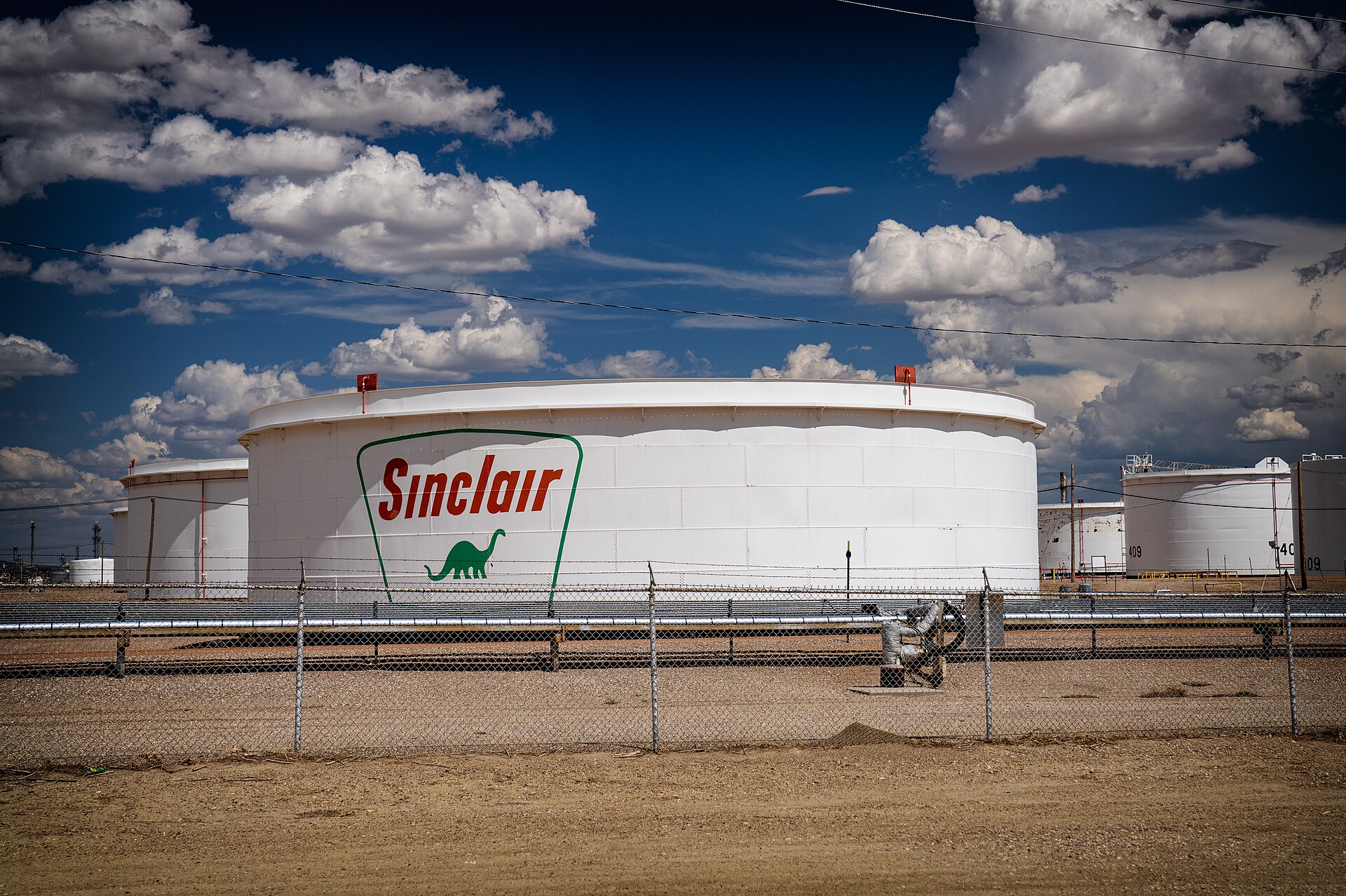
Photo: Fuel storage tanks at a refinery, via Wikimedia Commons
Here is a sentence you do not hear often about emergency oil stocks: it is not really about how much you release. It is about how fast.
That, according to Reuters reporting on October 14, is the question hanging over the International Energy Agency's governing board when it meets on Thursday. Europe plans to release diesel from emergency stocks. Markets, traders and drivers all know barrels are coming, in some form. What they do not yet know — and what Reuters says will be the focus on Thursday — is the tempo. A release that lands in weeks can change a price. A release that dribbles out over months can become a press statement with a very long tail.
Why diesel, and why now
Diesel is not a niche fuel, and that is the whole problem. According to Reuters, diesel powers transport, agriculture and industry. When its price jumps, the jump does not stay at the pump. It moves into the cost of moving food, delivering goods, running machinery and heating the systems that depend on it. Reuters reported that diesel prices have surged to record highs in many markets as supplies from Russia and the Middle East fell, threatening to push inflation and the cost of living higher and adding to pressure on governments.
Previously has covered plenty of oil-price spikes that were mostly about crude. This one, as Reuters frames it, is specifically about a refined product that economies burn every day and cannot easily substitute in the short run. You can announce a strategic intention in an afternoon. You cannot conjure a different truck fleet by Friday.
According to Reuters, Russian diesel exports have collapsed due to Ukrainian attacks on refineries and self-imposed overseas sales restrictions. At the same time, according to Reuters, supplies from the Middle East Gulf have fallen. Put those two losses together and, according to the analyst cited by Reuters, you get an estimated shortfall that a well-timed stock release could, at least on paper, broadly offset — but only if the timing lines up with the hole it is meant to fill.
The analyst case: pace is the variable
Abhishek Kumar, an analyst at Sparta Commodities, told Reuters that the pace of the draw is the key variable. This story paraphrases his assessment in our own words, because the logic matters more than any single line: a release completed over roughly 20 to 30 days would amount to a major intervention, while the same idea spread over several months would have a relatively smaller impact.
Kumar added, according to Reuters, that a draw of 50 million barrels over 30 days could broadly offset an estimated loss of 1.6 million barrels per day of exports from Russia and the Middle East Gulf. Do the simple arithmetic that Reuters' figures invite and the shape of the argument becomes clear. Fifty million barrels over thirty days is a flow of roughly one and two-thirds million barrels a day — in the same neighborhood as the estimated daily loss. Spread that same fifty million over, say, four months, and the daily flow falls to a fraction of the gap. Same headline number, completely different market event.
That is why Thursday matters more than the announcement that preceded it. Coordinated stock releases live or die on details that sound boring in a communiqué — start dates, daily rates, which countries contribute what, whether the barrels are diesel or crude — and are anything but boring to the people paying record prices to keep trucks moving.
Trump, the midterms, and a threatened export ban
Politics is not hovering politely in the background of this story. It is in the room. According to Reuters, President Donald Trump told European Union countries to draw down emergency inventories or face a potential U.S. diesel export ban, as he seeks to lower prices ahead of the November 3 midterm elections.
Read that carefully, because Reuters' reporting connects three things that do not always sit comfortably together: European emergency inventories, American domestic politics, and the price American voters see when they fill up. A potential U.S. export ban, as described by Reuters, would be a lever aimed at keeping more fuel at home and pushing prices down there — while simultaneously pressuring European governments to use their own stocks faster. European leaders have their own voters, their own inflation numbers and their own winter coming. Thursday's IEA meeting is where those pressures are supposed to be turned into a schedule.
There is an irony here that does not need much embellishing. Emergency stocks exist for emergencies, and governments are always reluctant to spend them, because an empty reserve is its own kind of vulnerability. Every barrel released now is a barrel that has to be bought back later, possibly at a price nobody likes. But a reserve that is never used while prices hit records starts to look less like insurance and more like a very expensive museum of fuel. Thursday is, in part, an argument about which of those risks the IEA's members fear more.
The 400-million-barrel shadow
Background matters here, and Reuters supplied it. According to Reuters, the IEA launched a 400-million-barrel withdrawal in March in response to shortages caused by the U.S.-Iran war. That was, by any standard, an enormous coordinated move. It also means Thursday's discussion does not start from a full, untouched reserve and a blank page.
According to Reuters, last week the IEA said accelerating previously announced releases could rapidly bring another roughly 100 million barrels to market. Reuters noted that this raised questions about how much of that supply is genuinely additional, rather than earlier barrels simply moving faster. That distinction — new barrels versus faster barrels — is not pedantry. If Thursday's outcome is mostly an acceleration, markets will price it differently than they would a fresh, additional draw. And to be fair to the acceleration idea, faster can matter enormously for diesel right now, which is the entire point Kumar made to Reuters. Faster is only a lesser outcome if the market needed more; if the market needed sooner, acceleration is the intervention.
So Thursday has at least three questions folded inside it, all traceable to Reuters' reporting. How many barrels? How much of it is diesel, the product actually in shortage? And over how many days will it actually arrive? The first question gets the headline. The third one, if Kumar is right, gets the price move.
What happens if the release is slow
Imagine the disappointing version, because markets certainly will. The board meets, members affirm cooperation, and the draw is spread over many months. According to Kumar's assessment reported by Reuters, that kind of draw would do much less. Prices that have already surged to record highs in many markets, according to Reuters, would be left to find relief from ordinary supply returning — from refineries, from exporters, from routes that, according to Reuters, have been disrupted by attacks and restrictions. That is not a plan so much as a hope with a meeting attached.
Now imagine the fast version. A concentrated release over 20 to 30 days, largely diesel, arriving while the estimated daily loss from Russia and the Gulf is still the live number. According to Kumar's figures reported by Reuters, that could broadly offset the loss. It would not rebuild refineries or end a war. It would buy time — which, in fuel markets in autumn, with winter demand ahead, is sometimes the most valuable commodity of all.
Previously is not in the business of pretending a stock release is a permanent fix. It is, by definition, borrowed supply. But borrowed supply delivered at the right speed can break a price spike's momentum, give refiners and importers room to adjust, and lower the temperature of an argument that now stretches from European capitals to American midterm campaigns. Delivered slowly, it can do almost none of that while still spending the reserve.
That is the stakes-filled simplicity of Thursday. The IEA's governing board, according to Reuters, will discuss the scale and timing of further releases. Scale will get quoted. Timing will decide. When the details land, read the calendar before you read the barrel count — the analysts watching diesel already are.