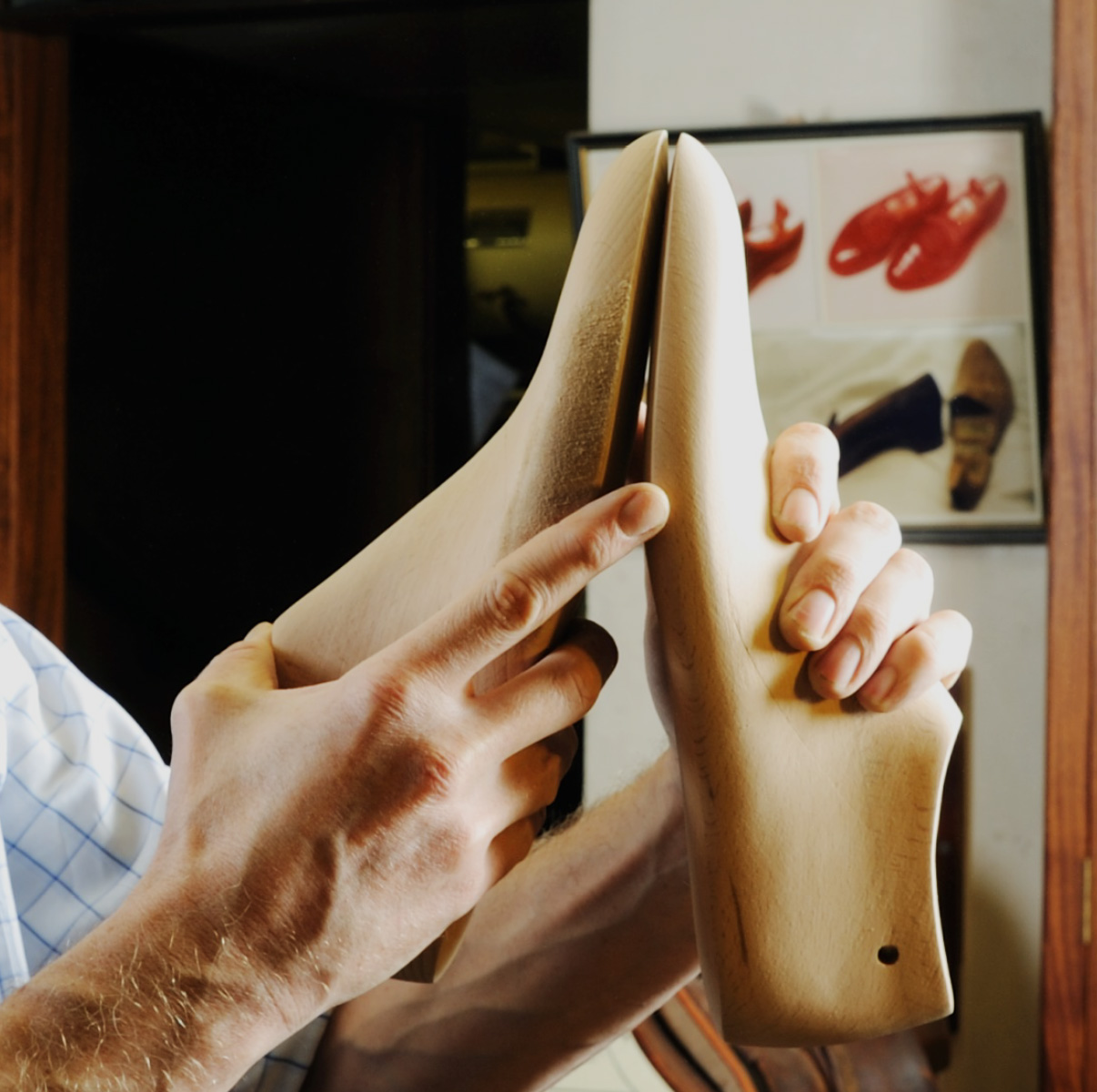

Every bespoke shoe at John Lobb begins as a block of wood. Maple, beech or hornbeam, well-grained and solid. Before any leather is cut, the firm's last maker carves that block into a precise model of one customer's foot — not a standard size, not an average, but the foot itself, its outlines, indentations and protrusions recorded one by one. The shoe will be built around that wooden foot. Then the last goes onto the shelves at 9 St James's Street, joining the many thousands the firm retains, so the second pair, and the tenth, start from the same remembered shape.
This is the London firm — John Lobb Ltd, family-owned, founded in 1849 and working from St James's since the 19th century. It shares a name and an ancestor with the separate ready-to-wear company owned by Hermès, and the two have been distinct businesses for decades. What happens in the St James's workshop is the older arrangement: one customer, one last, a pair of shoes made by a relay of specialists whose job titles have barely changed.
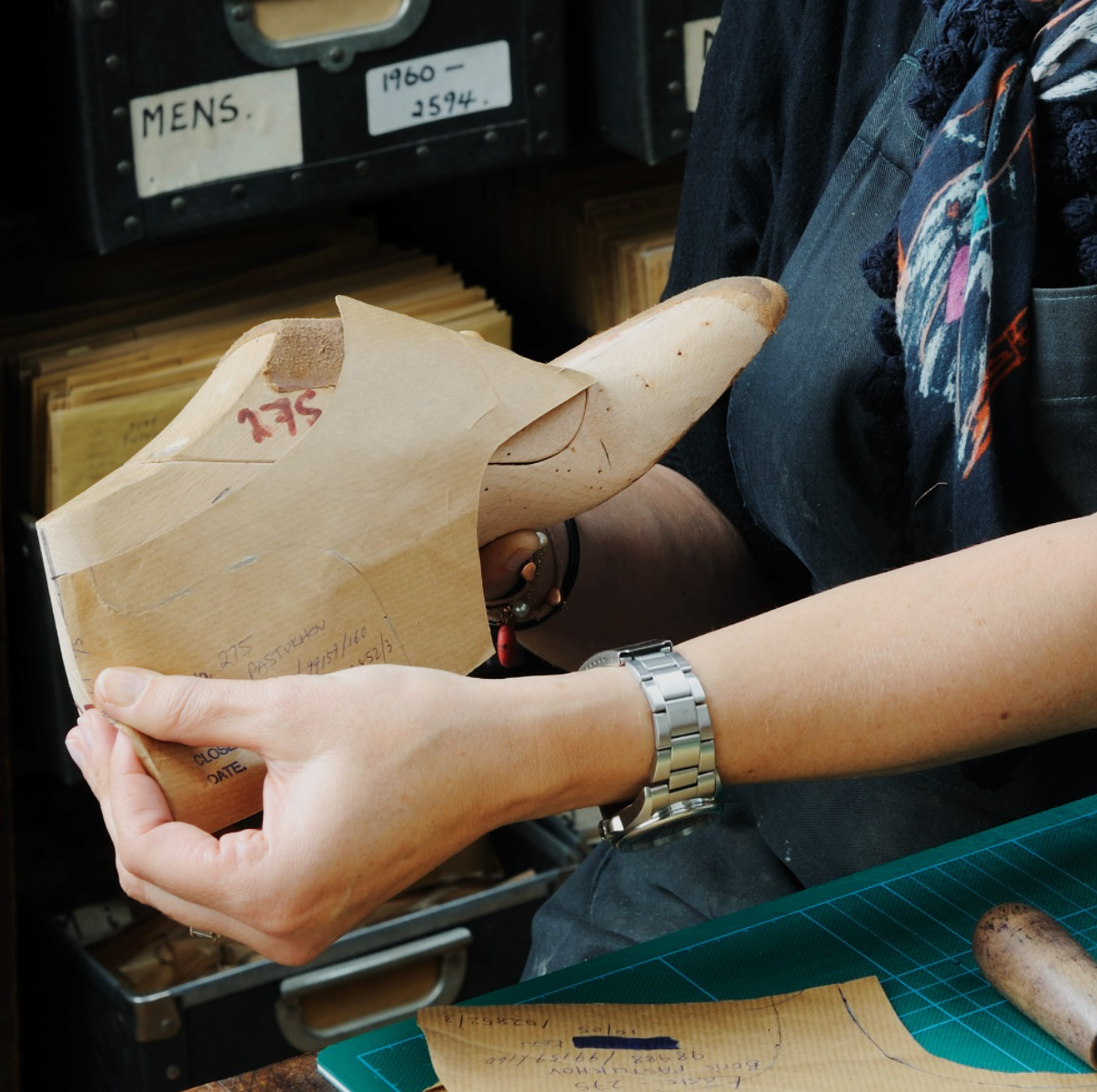
The relay starts with the fitter, who measures and examines the feet and writes down far more than length and width. Those notes, with tracings of the foot, go to the last maker. From the last, the pattern cutter cuts the pattern to the shape of the wood and the style the customer has chosen. Then the clicker studies the hides and cuts the eight pieces of leather that form the upper of each shoe, matching colour, weight, grain and flexibility to the job each piece has to do. The closer sews, stiffens and lines those pieces and shapes them around the last. The rough stuff cutter prepares everything underneath — welts, stiffeners, heel lifts, soles — from oak-bark tanned leather. The maker joins upper to sole and can state the exact number of stitches to the inch a given shoe needs. The socker fits the thin leather sock that covers the innersole, the piece carrying the shop's name and its royal warrants printed in gold, plus any padding the customer's feet require. A tree maker fits wooden shoe trees exactly to the finished pair, and the polisher brings the shoes up last. The firm is plain about the timescale: the process lasts months, where a factory article takes minutes.
BBC Four filmed a day in that workshop for Handmade: By Royal Appointment, first broadcast on 13 June 2016 — pencilled outlines on brown paper, leather cut and stitched, heels hammered on, the final polishing. The episode is not currently available to stream, which leaves the firm's own account as the standing record — a good one. Lobb calls a pair of its shoes a work of art unique to its owner, and for once the claim is structural: the shoe cannot exist for anyone else, because the wooden foot it was built on belongs to one person.
Previously's Take
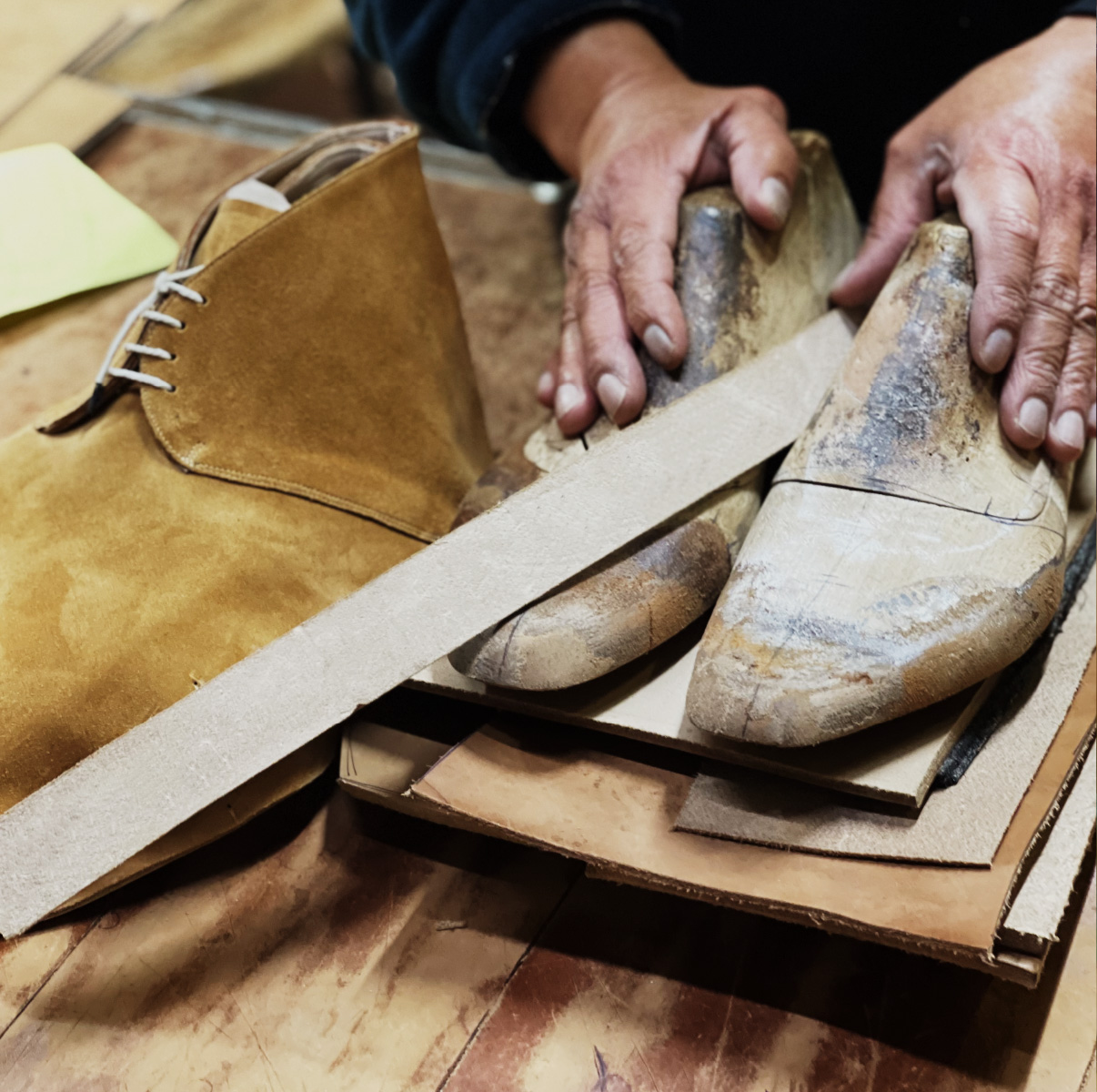
The last is the part of bespoke shoemaking nobody wears, and it is the part that matters most. A factory keeps your size. Lobb keeps your shape — carved once, kept for decades, and pulled down from the shelf whenever you come back. That shelf of wooden feet is the real customer list: the product is not the shoe. The product is being remembered accurately.
The numbers
Sources · 3 sources
- John Lobb Ltd (johnlobb1849.com) — The Craft: the maker's own ten-stage account of the process, and its workshop photography
- BBC Four — Handmade: By Royal Appointment, John Lobb Shoes (programme record, first broadcast 13 June 2016)
- John Lobb Bootmaker — company history and the London/Paris distinction (reference record)
Photographs: John Lobb Ltd · John Lobb Ltd · John Lobb Ltd