
For more than 50 years, the world's clocks have paused, just barely, to stay honest with the planet underneath them. Every so often, timekeepers inserted an extra second — a leap second — so that Coordinated Universal Time, known as UTC, would not drift away from the time told by Earth's own rotation. This week, that practice came to an end.
Nature reported that member states of the General Conference on Weights and Measures, known by its French initials CGPM, voted at their 28th meeting outside Paris, in Versailles, on October 15, 2026, to abolish the leap second. In its place, according to Scientific American, delegates adopted a system that will allow UTC to drift by as much as one full hour — 3,600 seconds — from Earth-rotation time, known as UT1, before any correction is made. That eventual, much larger correction has already been given a name: the leap hour.
Smithsonian Magazine also reported the vote and its central trade-off. Under the old rules, UTC was never allowed to stray more than 0.9 seconds from UT1. Under the new rules, the two measures of time will be allowed to separate far further, and the fix, when it finally comes, will be a single large adjustment rather than a steady series of small ones. Supporters argued that the change protects the digital systems that now run on UTC, while accepting that clock time and solar time will slowly part company.
A historic vote in Versailles
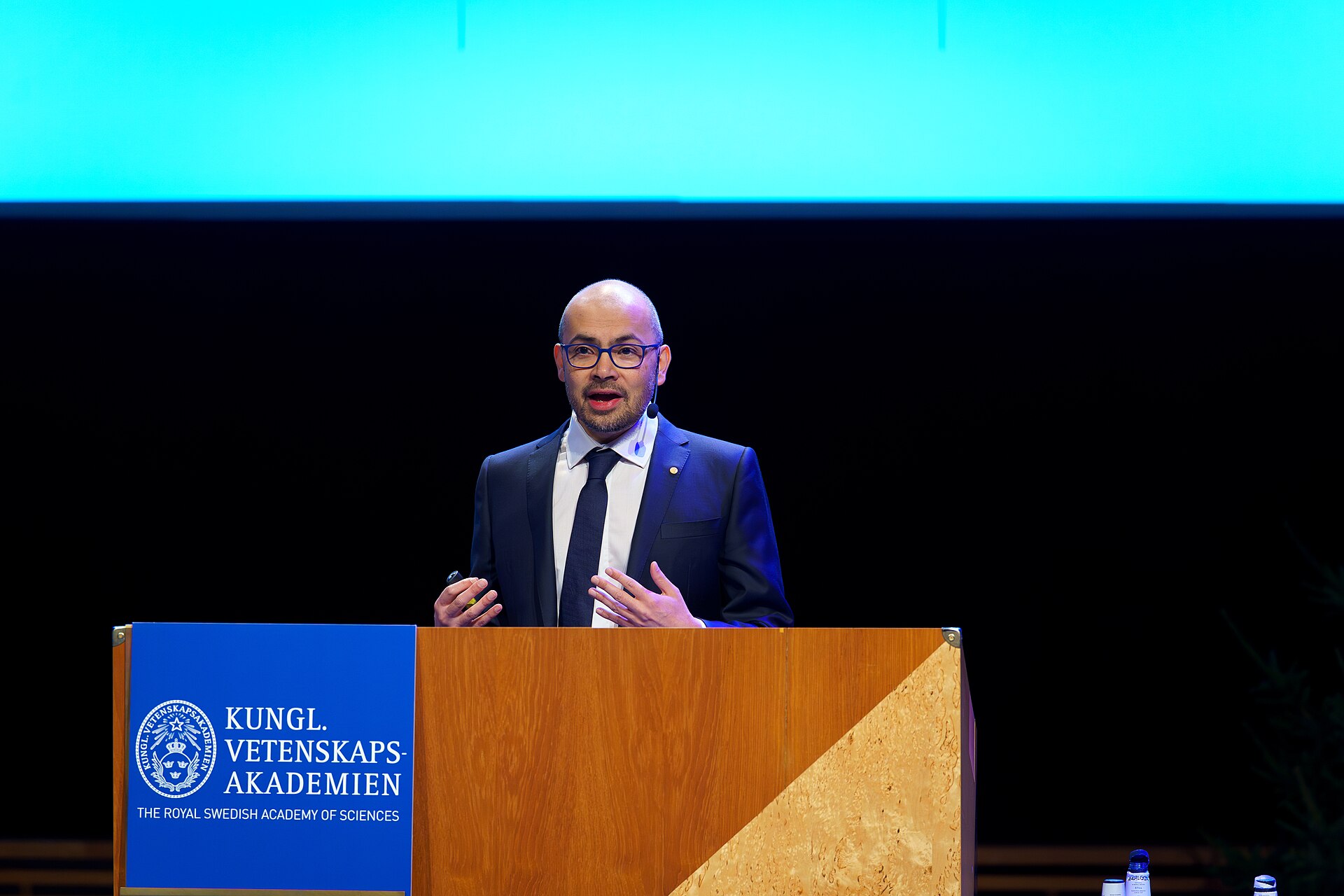
Noël Dimarcq, who introduced the resolution, framed the decision in sweeping terms. "This is a historical moment, a decisive step for UTC," Dimarcq said, according to the reporting on the vote. The remark captured the scale of what delegates were doing: not tweaking a technical rule, but ending a system that had governed civil timekeeping since the early 1970s.
Georgette Macdonald of the National Research Council of Canada sounded a similar note about the long view. "This decision will ensure the continuity and relevance of UTC for centuries to come," Macdonald said. That emphasis on continuity was at the heart of the case for change. A time standard, backers argued, is only useful if the networks, satellites and computers that depend on it can trust that it will not jump unexpectedly.
Dr Setnam Shemar of the UK National Physical Laboratory, speaking via The Guardian, put the timeline plainly: "After 30 years of debate, the leap second is making way for the leap hour." Thirty years is not an exaggeration of the argument's age. Metrologists, astronomers and engineers have debated the leap second for decades, split between those who wanted clock time to keep tracking the Earth's rotation and those who wanted an unbroken, continuous scale for modern technology.
Why one second caused so much trouble
The leap second exists because the Earth is not a perfect clock. Its rotation speeds up and slows down slightly, affected by tides, weather, earthquakes and the movement of material deep inside the planet. Atomic clocks, by contrast, are extraordinarily steady. A second is defined by 9,192,631,770 oscillations of the cesium-133 atom, under the definition adopted in 1967 and described by Smithsonian Magazine and The Conversation. Hold those two kinds of time side by side long enough, and they drift apart.
Since 1972, leap seconds have been added 27 times to close that gap and keep UTC within 0.9 seconds of UT1. The most recent addition came at the end of 2016. Notably, a leap second has never been subtracted. Every adjustment so far has been an extra second inserted, usually at the end of June or December, making that minute 61 seconds long instead of 60.
To a person watching a clock, a single second is nothing. To a computer network, it can be a genuine hazard. Abrupt adjustments risk disruption to computing, telecommunications, GPS and other satellite navigation systems, energy networks and transport systems, all of which rely on precise, predictable timestamps to order events, route data and locate objects. Engineers have long worried that a system coded on the assumption that every minute has 60 seconds will stumble when one suddenly has 61. Past leap seconds have been blamed for outages and glitches, and each new one required careful preparation across global infrastructure.
The negative leap second nobody wanted to test
The debate sharpened in recent years for an unexpected reason: the Earth started spinning slightly faster. That faster rotation raised the prospect of something that has never happened — a negative leap second, in which a second would need to be removed rather than added to bring UTC back in line with UT1.
That prospect worried specialists precisely because it was untested. Digital systems have at least had decades of practice, however imperfect, at handling a second being added. They have never handled a second being taken away. A first-ever negative leap second would have meant asking software, satellites and networks around the world to perform a maneuver none of them had ever performed in production, on a deadline set by the planet itself. For many delegates in Versailles, avoiding that gamble was a powerful argument for ending the system now, on a planned timetable, rather than waiting for the Earth to force the issue.
What changes, and when
According to the reporting by Nature, Scientific American and Smithsonian Magazine, the change takes effect with continuous UTC from May 20, 2027. From that point, UTC will no longer be nudged back toward UT1 one second at a time. It will simply run, unbroken, while the gap between atomic time and Earth-rotation time is allowed to grow up to the new one-hour limit.
In practical terms, almost nothing will feel different. The gap grows extremely slowly. A leap hour, on current understanding, likely will not be needed for hundreds to thousands of years. Anyone reading this story, and everyone they will ever meet, will live their entire life under a UTC that never needs that correction. Sunrises and clock noon will separate by seconds, then eventually by minutes, over spans of time far longer than a human lifetime — a drift that matters to astronomers and timekeepers, but not to a morning alarm.
What will change immediately is the risk profile for technology. Network operators, satellite controllers and software engineers will no longer need to plan around irregular, planet-driven insertions that arrive on a few months' notice and behave slightly differently in every system. The timestamps that order financial trades, coordinate power grids, guide aircraft and position phones will flow continuously, with no surprise 61st second and no unprecedented missing one.
Two kinds of time, finally allowed to differ
Underneath the engineering argument sits an older, almost philosophical question: what is time supposed to track? For most of human history, time was the sky — the Sun crossing the meridian, the Earth turning beneath it. Atomic time replaced that with something far more precise and far more abstract: a count of oscillations in an atom, identical everywhere and indifferent to weather, tides or earthquakes.
The leap second was the compromise between those two ideas, a stitch holding atomic time to astronomical time. Abolishing it does not make Earth-rotation time disappear. UT1 will still be measured and published, and astronomers and others who need to know exactly where the Earth is pointing will still use it. What changes is that civil time — the time on phones, computers, departure boards and trading floors — will no longer be forced to follow it second by second.
That is why supporters described the Versailles vote as a decision for centuries, not for the next news cycle. The delegates were not merely retiring an awkward technical fix. They were choosing, on behalf of a civilization that now runs on networked machines, an unbroken river of seconds over a clock that pauses to wait for the planet. The leap second had a good run: 27 appearances in 54 years, each one a reminder that our most precise invention still answered to a spinning rock. From May 20, 2027, it will answer to itself — until, hundreds or thousands of years from now, somebody finally has to schedule the leap hour.
Read more from Previously in the News section and explore more science and technology coverage in Browse.
Sources · 3 sources
- Nature — https://www.nature.com/articles/d41586-026-03329-z
- Scientific American — https://www.scientificamerican.com/article/scientists-vote-to-end-leap-seconds-redefining-how-the-world-keeps-time/
- Smithsonian Magazine — https://www.smithsonianmag.com/smart-news/its-official-timekeepers-have-gotten-rid-of-the-leap-second-and-introduced-the-leap-hour-instead-180989685/