
PHOENIX, TUESDAY, OCTOBER 13, 2026
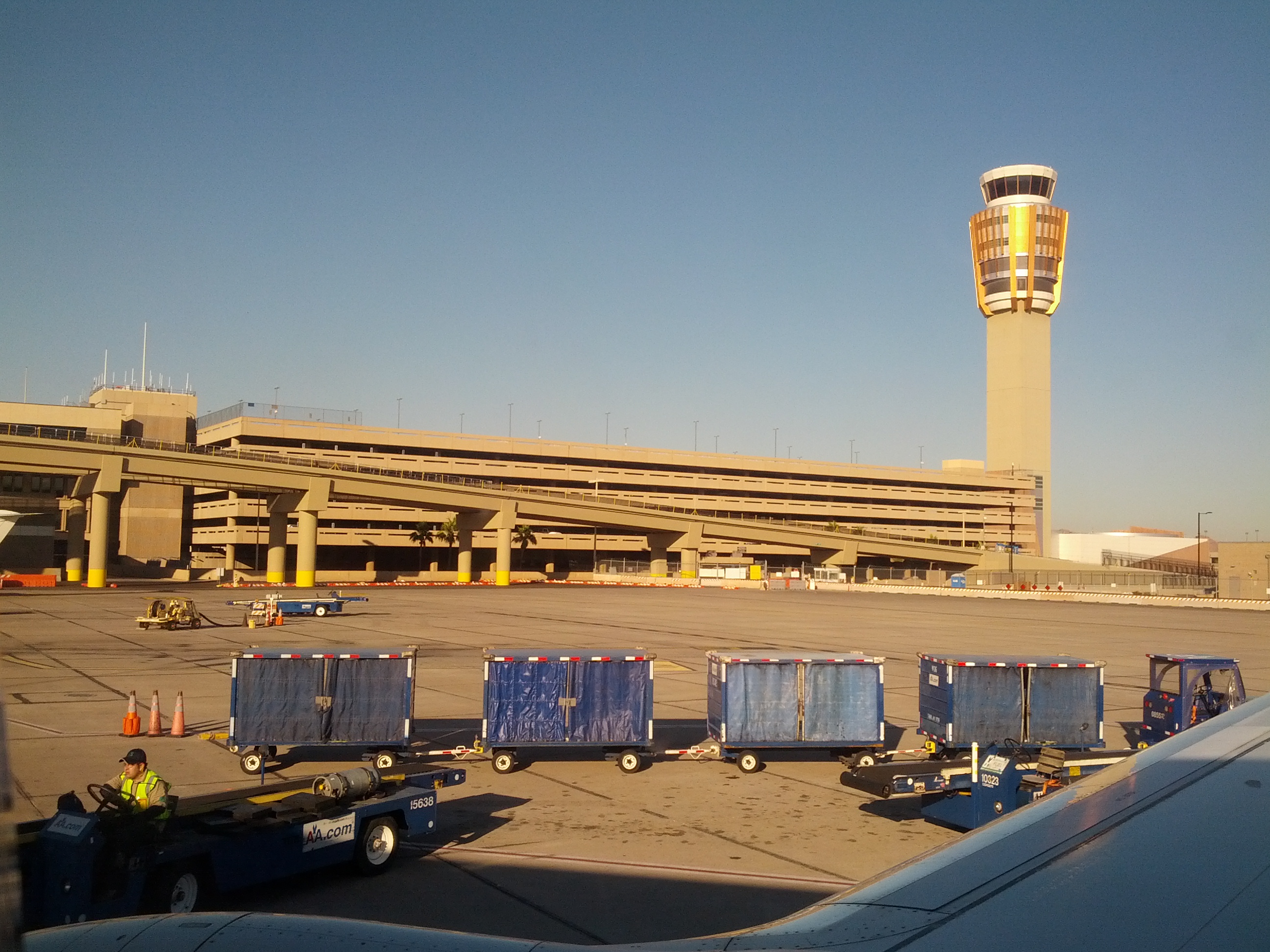
If Monday was the warning, Tuesday was the sequel. The Arizona Republic reported that the Federal Aviation Administration ordered a ground stop at Phoenix Sky Harbor International Airport on Tuesday morning, effective at 6:30 a.m., as storms continued to move through metro Phoenix and low ceilings settled over the field. The stop expired at about 9 a.m., according to the FAA’s National Airspace System Status, but the morning’s damage was already in the system: as of 10:30 a.m., a departure delay remained in effect, and FlightAware counted 132 delayed flights and one cancellation at Arizona’s largest airport. This is our midday update to the story we first covered this morning in our earlier Sky Harbor report, with the numbers now firmed up through mid-morning.
The shape of the disruption tells you how ground stops actually work on travelers. The stop itself lasted roughly two and a half hours, but a ground stop does not end when it expires — it echoes. Aircraft that were supposed to depart Phoenix in the first morning bank left late or not at all, which means the planes and crews scheduled to fly later departures started their day out of position. The FAA put average delays at about 30 minutes as of mid-morning and expected that figure to decrease as the day went on, the Republic reported, which is the profile of an airport recovering rather than collapsing: painful at breakfast, manageable by lunch, mostly a memory by dinner — unless you were one of the travelers whose specific flight carried the morning’s problems forward. One hundred thirty-two delayed flights is not a shutdown. It is, however, 132 planeloads of people re-doing the math on connections, pickups and plans.
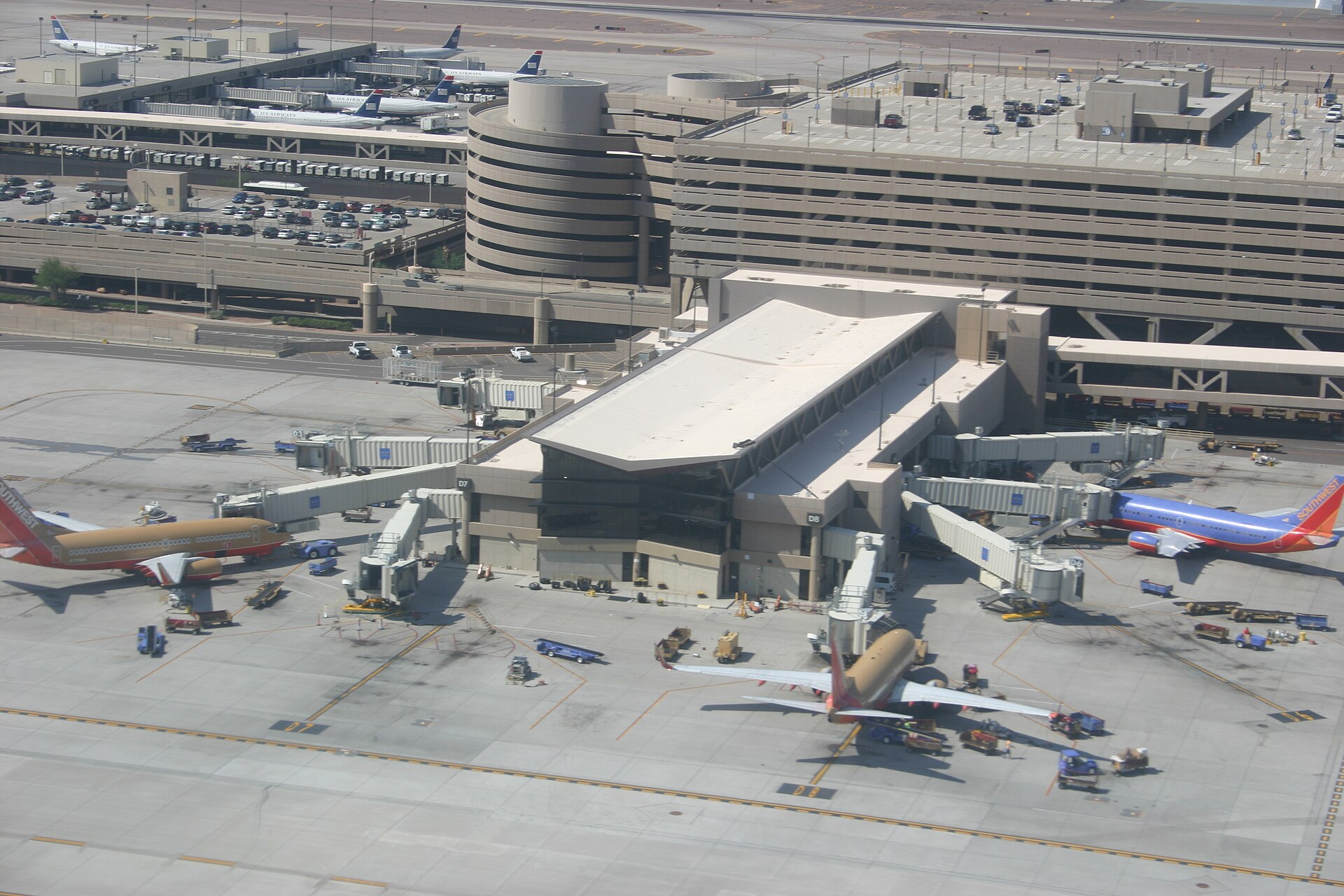
It is worth pausing on the vocabulary, because the Republic’s explainer — drawn from the FAA’s own definitions — clears up the two terms that dominate every storm-day argument at the gate. A ground stop is the blunt instrument: aircraft are held on the ground, full stop, when conditions make it unwise to keep traffic moving. A ground delay is the calibrated version: instead of holding everything, the FAA assigns flights headed into the affected airport later departure times, spacing arrivals so the airport receives only what it can handle in the weather it has. And the point travelers most often get wrong: the FAA does not cancel flights. Airlines do. The FAA manages the flow of traffic through the national airspace; the decision to cancel a specific flight — because a crew timed out, an aircraft never arrived, or a schedule could no longer be stitched back together — belongs to the airline operating it. That is why, on a morning like Tuesday’s, one flight to the same city can leave twenty minutes late while another is canceled outright.
Tuesday also did not happen in isolation, and that is what made it sting. According to the Arizona Republic, Monday, Oct. 12 was the rougher day at Sky Harbor, with more than 200 flights delayed or canceled amid repeated ground stops and ground delays as the same unsettled pattern parked over the Valley. Back-to-back weather days are harder on an airport than one bad day, for a simple mechanical reason: the system starts day two already tired. Aircraft that were supposed to overnight in one city woke up in another. Crews are closer to their legal duty limits before the first departure pushes back. The first bank of morning flights — the departures that feed connections across the country — has less slack in it than it did twenty-four hours earlier. Phoenix is a connecting hub for the entire Southwest, which is why a ceiling problem over one desert airfield becomes a missed connection in a dozen other cities by noon. For the regional picture, see our latest Southwest coverage.
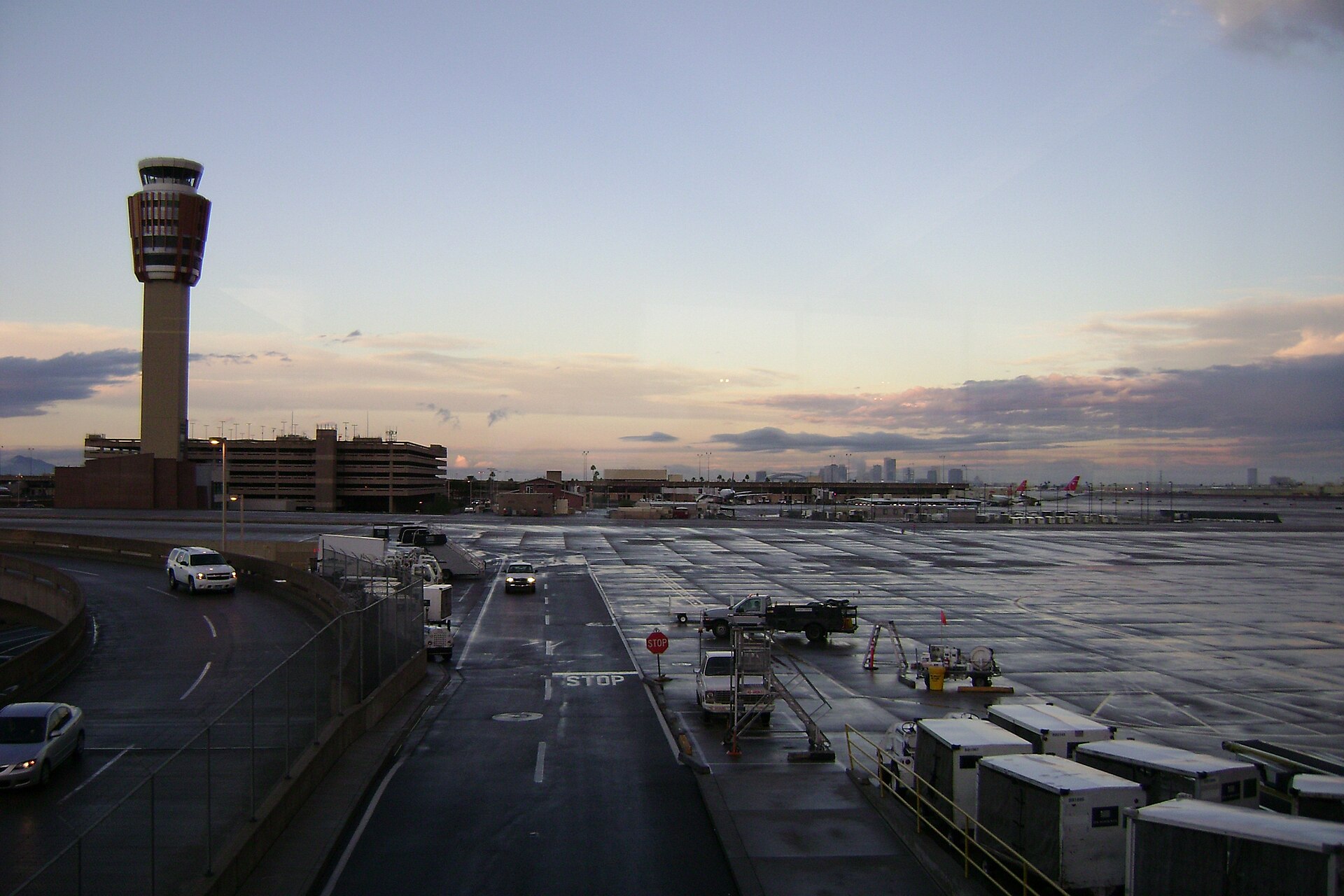
The weather itself was a classic October pattern shift rather than a single violent storm. Morning showers were likely, with a 70 to 75 percent chance of rain during parts of the morning and winds generally from 5 to 15 mph — breezy, not destructive. The operational problem was the ceiling: low clouds sitting over the field are enough, on their own, to slow an airport that is built, day in and day out, around clear desert skies and long sightlines. Phoenix runs on good weather the way other hubs run on concrete and concrete alone. When the desert forgets to act like the desert, the schedule finds out quickly. FOX 10 Phoenix, in its Tuesday forecast, tied the rain to a cold front moving through the state, with scattered showers Tuesday morning and gusty winds of 30 to 40 mph or more in Arizona’s High Country, where the same front arrives with more muscle than it shows in the Valley.
The good news, for anyone still staring at a departure board, is the back half of the forecast. FOX 10 Phoenix expects a high near 79 degrees in the Valley on both Tuesday and Wednesday, with sunshine returning Wednesday and temperatures climbing back to the low-to-mid 80s by the weekend — in other words, a quick return to the postcard version of Phoenix in October. If that forecast holds, Tuesday’s ground stop becomes a two-day story rather than a week-long one, and Sky Harbor’s recovery task is the ordinary kind: work the backlog down through the afternoon, get aircraft and crews back where the schedule expects them to sleep, and start Wednesday clean.
Practical advice for the rest of today is unchanged from every weather day, because it works. Check your airline’s app or flight-status page before you leave for the airport, and keep checking it — the airline’s information will move faster than any general report, including this one, because only the airline knows what it intends to do with your specific aircraft and crew. If you are connecting through Phoenix today, look at your options early rather than at the gate; rebooking seats disappear fastest on disrupted days. If you are picking someone up, track the flight, not the scheduled arrival time. And keep the morning in perspective: 132 delays and a single cancellation, on the second day of a storm pattern, at one of the busiest airports in the Southwest, is a rough morning — not a meltdown. The ceiling lifts, the desert dries, and Phoenix gets back to being the place planes leave on time. It just had to wait until about 9 a.m. on Tuesday to start.
Sources · 3 sources
- Over 100 Phoenix flights delayed, canceled after ground stop Arizona Republic · Oct 13, 2026
- FOX 10 Phoenix, Tuesday forecast and cold-front coverage, Oct 13, 2026
- FAA National Airspace System Status, Phoenix Sky Harbor ground stop and delay advisories, Oct 13, 2026





