WASHINGTON
A congressman from the Bronx wants to change what the word "buy" means in a game store. U.S. Representative Ritchie Torres, a Democrat representing New York's 15th Congressional District, announced on October 15 that he plans to introduce the Power To The Players Act, proposed federal legislation that would treat a purchased video game as a product its buyer owns — not a license a publisher can revoke — and would require games with online features to offer an offline mode before their servers are shut down. The announcement, reported by Ars Technica and covered by Kotaku, Destructoid, Stevivor and mxdwn Games, makes Torres the latest lawmaker to take up a fight that players have been waging on their own for more than a year. It is important to be precise about what this is: a proposal, announced in a press release, that has not yet been formally introduced in Congress. There is no bill text, no announced list of cosponsors, and no committee date. Nothing in it is law.
According to Ars Technica's reporting on the announcement, the bill would direct the Federal Trade Commission to establish regulations protecting consumers' ability to own and play the games they purchase. Inven Global, whose account was summarized by Stevivor, listed three core commitments. First, buying a game would give the consumer ownership of it rather than a license to play it. Second, games with online functionality would be required to provide an offline mode before the servers supporting them are shut down. Third, buyers would keep the right to transfer or resell the games they have purchased — a right that no major digital storefront currently offers in any meaningful form.
"A rental disguised as a sale"
Torres framed the proposal in the plainest possible terms. "When you pay for a game, you should own it," he said in the announcement, as quoted by Destructoid and mxdwn Games. "Consumers must have the right to own, the right to play, and the right to transfer the games they buy. A game that can be taken away the moment a company pulls the plug is not a purchase. It is a rental disguised as a sale. Families in the Bronx and across the country save up to buy these games, and they deserve better than a license that can vanish at any time." Speaking to Kotaku in a phone interview, Torres put the same idea even more simply: "I think there should be a simple rule: if you pay for it, you own it."
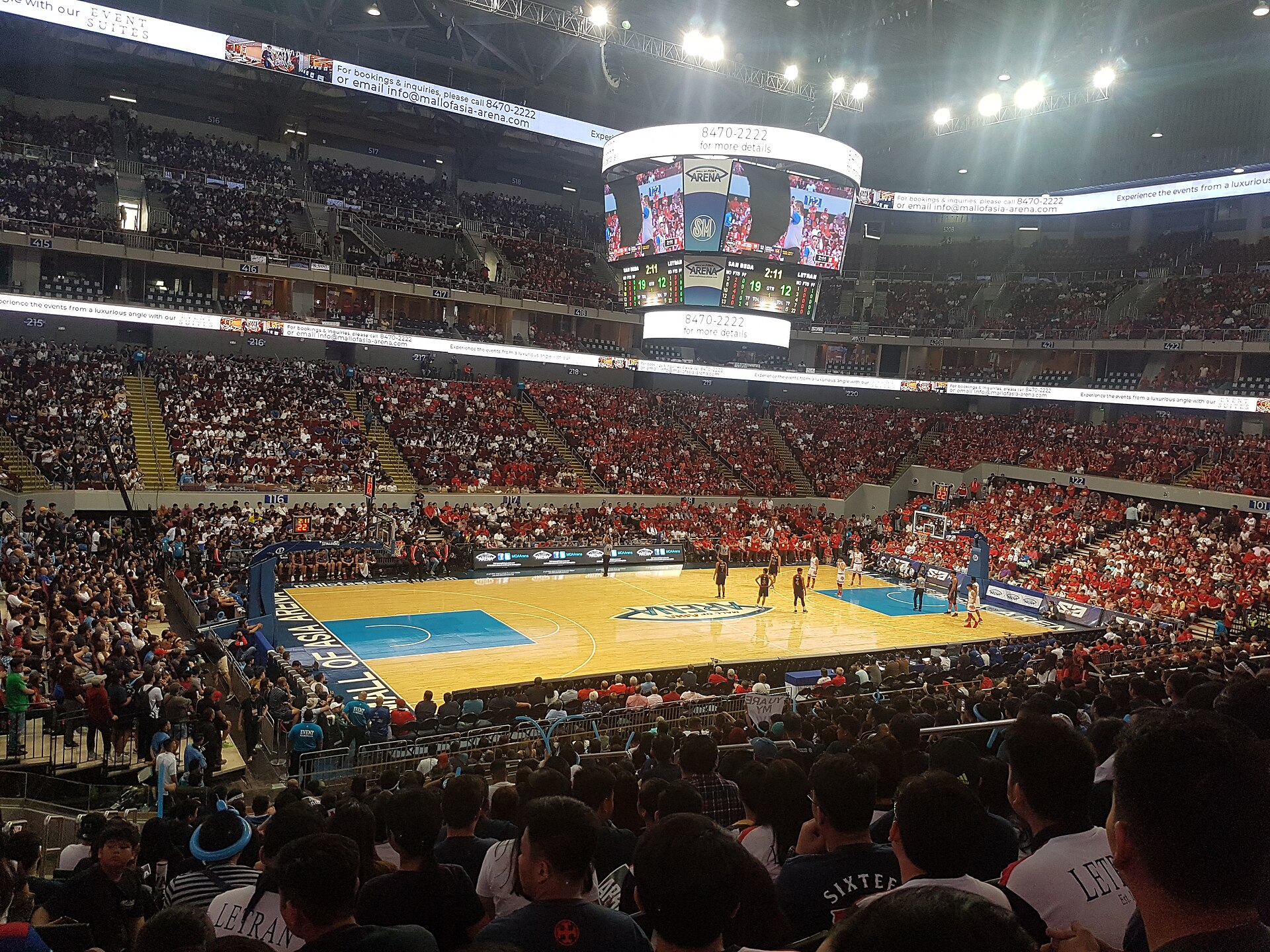
The example his office reached for will be familiar to anyone who buys sports games. As Kotaku reported, NBA 2K25 was the fifth best-selling game of 2024 in the United States, a title millions of players bought at $69.99 — $99.99 for the All-Star Edition, as Dexerto noted. Just over two years after launch, 2K has confirmed the game will be removed from digital storefronts on October 30, 2026, and its online servers will shut down on December 31, with online-dependent modes including MyCAREER, MyTEAM, multiplayer and online leagues becoming unavailable from January 1, 2027. Reporting by mxdwn Games, citing 2K's own server-shutdown notice, adds the nuance that matters: owners will still be able to redownload the game and play supported offline modes such as Play Now, MyNBA, The W and MyWNBA. The whole game does not vanish. But the modes many players spent the most money and the most hours inside are exactly the ones scheduled to disappear.
Why this fight, and why now
The announcement lands in the middle of a long-running argument about digital ownership that has intensified as the industry moves away from physical media. Kotaku noted that the debate caught fresh momentum over the summer with the news that Sony will end production of PlayStation discs for its next console generation — a shift that would push every buyer of the next PlayStation toward downloads, where the license model rules. The Stop Killing Games campaign, which grew out of frustration with games being rendered unplayable when publishers end support, gathered nearly 1.3 million verified signatures in the European Union, as FPSHub reported — only for the European Commission to decline to impose a legal obligation in June and offer talks on a voluntary industry code instead. In California, a state-level Protect Our Games Act stalled in a Senate committee, with the Entertainment Software Association opposed, according to the same reporting. Torres's proposal is the argument's arrival at the federal level in the United States.
Ars Technica, in the reporting summarized by Stevivor, noted one significant limit in the design: the announcement does not require publishers to keep servers online indefinitely. Some earlier proposals did demand exactly that, and drew criticism over the cost of maintaining infrastructure for old games forever. Requiring an offline mode instead is a cheaper ask for publishers — but, as Ars Technica also observed, the wording could still meet pushback, because games built from the ground up as online-only experiences would have to be restructured to support offline play at all. The transfer right may be the hardest sell of the three: letting players resell a digital game the way they once traded in a disc would upend storefront economics, and heavy industry opposition is widely expected if the bill advances.
The same week, the other side of the argument
The week of the announcement happened to supply two vivid illustrations of how much power publishers hold over games after release — and how directly players can push back. On October 13, Sega and Creative Assembly launched Total War: Shogun 2 – Complete Edition, a reworked version of the beloved 2011 strategy game. Within hours, players were flagging performance problems, long-standing bugs carried over unfixed, and artwork they said showed clear signs of AI upscaling — unit cards with merged faces and extra fingers became the story's defining images, as GameSpot and Video Games Chronicle reported. The Steam rating collapsed to overwhelmingly negative. On October 15, Sega pulled the Complete Edition from sale entirely and moved to reinstate the original 2011 version while it investigates. "We're aware that Total War: Shogun 2 – Complete Edition has fallen short of both your expectations and our own standards," the publisher said in a statement quoted by Shacknews and VGC. "We agree that the current experience is not where it needs to be." Existing owners keep access to the edition they bought — a small but telling detail in a week about what ownership means.

Jagex supplied the second illustration the same day. On October 15, less than two weeks after unveiling RuneScape Reignited at RuneFest — a fresh-start mode with its own economy, its own leaderboards and no trading with veteran players — the studio cancelled it outright. In a YouTube update and blog post reported by Gamereactor, PC Gamer and GamesRadar, creative director Mod Ryan said, in the update reported by Gamereactor, that the studio had heard "a ton of different perspectives" from players. Ryan concluded plainly, in the same update: "It is clear that we missed the mark on this, and so we are not moving forward with it." Ryan explicitly tied the reversal to the last time Jagex did not listen — the Evolution of Combat update that split the community more than a decade ago and, by his telling, took over a decade to recover from. The December 2 update, a ten-day membership trial and the 2027 roadmap all proceed without Reignited.
Neither episode is a story about servers being switched off, and neither is governed by anything Torres has proposed. But together they show the terrain his bill is aimed at: an industry where the product a player paid for can be altered, withdrawn or cancelled after the sale, and where the only reliable counterweight so far has been organized player anger. The Power To The Players Act asks whether that counterweight should be written into consumer law instead — with the FTC, rather than a review-bomb campaign, doing the enforcing.
What happens next
For now, the honest answer is: process. Stevivor, citing Inven Global, reported that the bill has not yet been formally introduced; once it is, it would need committee review and votes in both chambers before any of its three rights could take effect, and the FTC would then have to write the actual regulations. Torres has not announced cosponsors, and no bill text has been published to test how "ownership" would be defined against decades of licensing case law. What the announcement does establish is that the ownership argument — own it, keep playing it, transfer it — now has a named bill, a named sponsor and a test case with a shutdown date circled on the calendar. NBA 2K25's servers go dark on December 31 whether Congress moves or not. The question the Power To The Players Act puts to the industry is whether the next game gets to go dark with them.
Follow the business of play on our games front, catch up on the morning's other stories on the news front, and keep an eye on the biggest release on the horizon in our games coverage.
Sources · 7 sources
- Stevivor, US Rep Ritchie Torres Announces Power To The Players Act, summarizing Ars Technica and Inven Global, Oct. 2026
- Kotaku, Rep. Ritchie Torres Announces Congressional Legislation To Protect Video Game Ownership, Oct. 2026
- Destructoid, New York congressman joins fight for video game ownership, Oct. 2026
- mxdwn Games, Congressman Proposes Bill to Protect Video Game Ownership and Offline Play, Oct. 17, 2026
- GameSpot, Sega Pulls Total War: Shogun 2 Remaster After Backlash, Oct. 2026
- Shacknews, Sega apologizes for & delists Total War: Shogun 2 - Complete Edition, Oct. 2026
- Gamereactor, Player Criticism Brings RuneScape Reignited to an End, Oct. 16, 2026