SUNDAY, OCTOBER 18, 2026
SoftBank has never been a company that thinks small, and its latest reported interest is a reminder of that. Reuters reported on October 16, citing Bloomberg News and a source familiar with the matter, that SoftBank Group is considering acquiring Allied Universal in a deal that could value the United States security services provider at about $18 billion. That is not a tuck-in purchase or a quiet minority stake. That is SoftBank looking at one of the most human, boots-on-the-ground businesses imaginable — guards at buildings, venues and major events — and seeing, of all things, a robotics story.
Start with what is actually known, because the reporting is careful about it and so should we be. Bloomberg News first reported the interest, according to Reuters. Deliberations are preliminary. No final decisions have been made, including on price. SoftBank, listed in Tokyo as 9984.T, declined to comment to Reuters, and Allied Universal did not immediately respond to a Reuters request for comment. In deal language, that combination — preliminary, no final decision, no comment — means this could become an $18 billion acquisition, could become a negotiation at a different number, or could become nothing at all. Anyone telling you it is done is getting ahead of the sources.
What Allied Universal actually does
Allied Universal provides security staffing for businesses, venues and major events. If you have walked into an office tower, a stadium, a convention or a large public gathering in the United States, there is a fair chance the person checking credentials, watching a lobby or working the perimeter was part of exactly this kind of operation. It is labor at enormous scale, repeated every day, in places where reliability matters more than glamour.
The detail in the Reuters reporting that should catch a business reader's eye is the data center piece. Allied has a growing presence in the data center industry, supporting both the development and the operation of facilities. Data centers are where the artificial intelligence boom becomes physical: land, power, cooling, construction and then round-the-clock operation. A company that helps secure and support those sites is not standing next to the AI economy. It is standing inside its fence line.
That helps explain why a security staffing company would even appear on SoftBank's radar. On the surface, guards and AI sound like different centuries. Underneath, the connection is location and repetition. Data centers need trusted people on site now, and they are also exactly the kind of controlled, structured environments where automation tends to arrive first — fixed routes, defined checkpoints, cameras, sensors and clear rules about who belongs where.
The robots are the logic, not a gimmick
Reuters reported that the potential deal complements founder Masayoshi Son's increasing focus on AI, including exploring AI-powered robots across industries and strengthening the infrastructure needed to support the technology. With Allied, the reporting said, SoftBank would look to eventually replace some staff with robots for certain security tasks, though humanoid-like security workers will likely take more time, according to the sources in the report.
Read that sentence slowly, because it contains both the ambition and the honesty. Some staff, some tasks, eventually — and the humanoid version takes longer. That is a very different claim from the science-fiction version where a robot guard rolls up next week and takes everybody's badge. Security work is full of judgment calls, awkward human moments and situations that do not follow a script. A robot can patrol a route, watch for an open door and flag an anomaly. Handling a confused visitor, a tense crowd or a medical emergency in a lobby is a different job, and the reporting does not pretend otherwise.
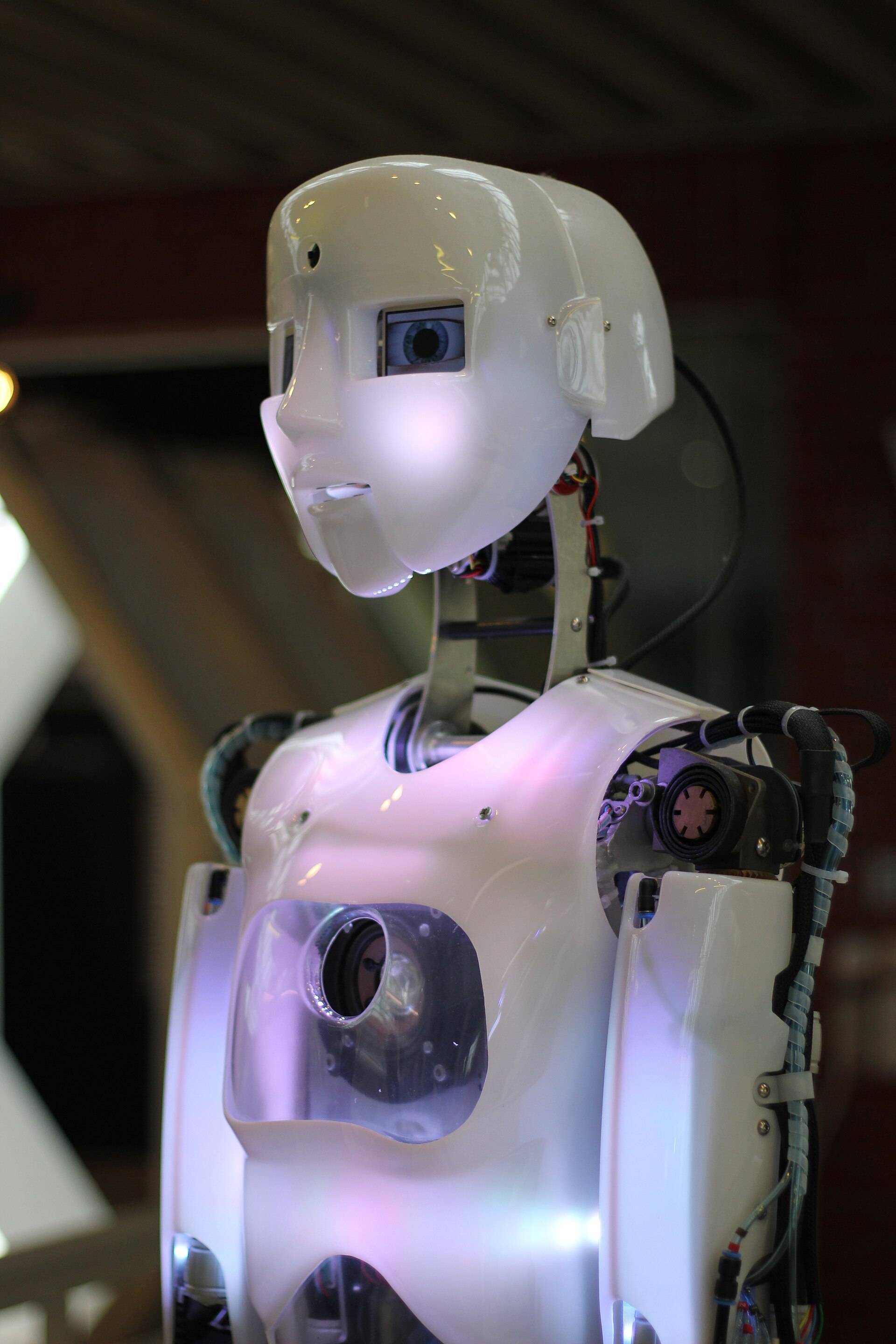
Still, the direction is unmistakable. Son is not just buying AI software and hoping the world finds uses for it. The pattern in the reporting is infrastructure plus deployment: strengthen the facilities AI needs, acquire robotics capability, and then own businesses where robots could actually be put to work. Allied, under that logic, is not only a security company. It would be a living test bed — thousands of real sites, real clients and real shifts where you can learn which tasks machines can handle and which ones stubbornly need a person.
This is a very SoftBank kind of bet
If the name SoftBank makes you think of enormous checks and equally enormous arguments about them, there is a reason. Reuters noted the company's history as an early investor in Alibaba, the majority owner of Arm and a major backer of WeWork, with large technology bets made through its Vision Fund. That short list tells the whole story of the house style: Alibaba was the legendary early win, Arm is the chip architecture at the center of modern computing, and WeWork became the cautionary tale everyone reaches for when they want to argue that scale is not the same thing as a sound business.
The Allied interest fits that same appetite for scale, but with a twist. This is not a pre-revenue app with a pitch deck. Security services are physical, contracted and operational. The revenue logic is easier to explain than a lot of Vision Fund-era stories: clients pay for coverage, sites need staffing, and large events and facilities cannot simply opt out of security. The risk is different, too. Labor costs, retention, training, liability and reputation are the business. Automate too aggressively or too clumsily and you do not get efficiency — you get clients who no longer trust the coverage.
That tension is probably the most interesting part of the whole report. The bull case writes itself: a huge installed base of sites, a growing data center footprint, and a parent company determined to push AI and robotics into real operations. The bear case writes itself just as fast: a preliminary price tag around $18 billion for a people-heavy business in an industry where trust is the product and a single bad incident can define a brand. Both cases can be true at once, which is usually the sign of a deal worth watching rather than a deal worth cheering on sight.
The ABB deal is the tell
Reuters placed the Allied interest alongside another move that makes the strategy harder to dismiss as talk: last year, SoftBank agreed to acquire Swiss engineering group ABB's robotics business for $5.4 billion. Put the two together and the picture sharpens. One deal buys robotics capability from an established engineering company. The other, if it happens, would buy one of the largest stages in America on which to use it.
There is a name for that in business: vertical integration, though Son's version has its own flair. Instead of selling robots to security companies and hoping they buy, SoftBank would own the security company. Instead of guessing which warehouse, campus or data center tasks can be automated, it would have operating data from the inside. And instead of treating data centers purely as someone else's construction boom, it would have a services business already growing inside that world.
None of that guarantees the deal closes, or that it works if it does. Integrating a business built on human reliability with a strategy built on eventually replacing some of that labor with machines is delicate work, and the people who currently do those jobs will, reasonably, be listening very carefully to what any buyer says next. The reporting gives us the intent as the sources described it — some tasks, over time, with humanoid workers further away — and that careful phrasing may matter as much to employees and clients as the headline number matters to investors.
What happens next
For now, the honest status is simple. A report, attributed by Reuters to Bloomberg News and a source familiar with the matter, says SoftBank is considering the acquisition at a valuation of about $18 billion. Deliberations are preliminary. No final decisions have been made, including on price. Neither company confirmed the story to Reuters — SoftBank declined to comment and Allied did not immediately respond.
So file this where it belongs: not under done deals, but under signals. Masayoshi Son is telling the market, through the pattern of his moves if not through a press release, that AI is not finished when the model is trained or the data center is built. In his telling, it walks the perimeter, checks the door and learns the site. Whether Allied Universal becomes the company where that happens is the $18 billion question — and on the evidence published so far, it is still very much a question. For more from our business desk, see Previously's news coverage.
Sources · 2 sources
- Reuters — SoftBank considering $18 billion Allied Universal acquisition reporting, October 16, citing Bloomberg News
- Bloomberg News — original report as cited by Reuters