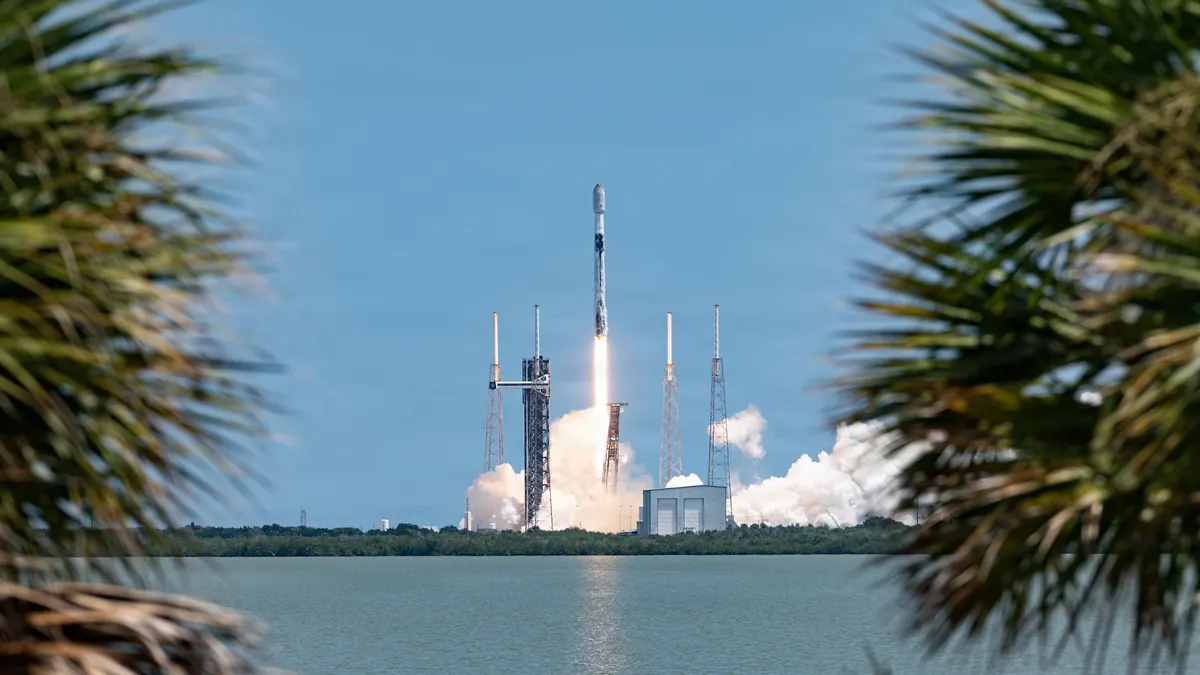

Florida's Space Coast gets one of its favourite kinds of alarm clocks on Tuesday: a rocket going up before the sun does. SpaceX is targeting early Tuesday morning for the launch of its Bandwagon-5 rideshare mission from Cape Canaveral Space Force Station, with the possibility of a glowing “space jellyfish” appearing in the sky before sunrise, FOX 35 Orlando reported.
The Falcon 9 is scheduled to lift off from Space Launch Complex 40 during a one-hour window opening at 6:30 a.m. ET on October 20 — 3:30 a.m. for Previously readers on the West Coast. If the launch is delayed, a backup opportunity is scheduled for Wednesday, October 21, during the same window. FLORIDA TODAY's launch schedule lists the mission on a southeast trajectory, with no sonic booms expected back at the coast.
Thirty-two payloads, one rocket
Bandwagon-5 will carry 32 payloads into orbit, including cubesats, microsatellites and reentry vehicles, according to FOX 35. Among them is the Starfall reentry demonstration capsule, and Exolaunch is managing 20 of the rideshare customer payloads aboard, according to KarmActive's mission preview.
That is the whole idea of a rideshare. Smaller satellites and spacecraft that cannot fill — or do not need — a dedicated rocket share a single Falcon 9, splitting a launch none of them could justify alone. The Bandwagon line serves mid-inclination orbits, between the polar and equatorial paths used by most large government satellites, which makes it a distinct product from SpaceX's sun-synchronous Transporter rideshares. Tuesday's flight profile is described the same way by launch trackers: a mid-inclination low-Earth orbit, aimed southeast out over the Atlantic.
The launch will mark the 19th flight of this Falcon 9 first-stage booster, which has previously supported missions including Crew-9, the Firefly Blue Ghost Mission 1 lunar lander flight, Fram2 and multiple Starlink launches, FOX 35 reported. After stage separation, the booster is expected to land on the droneship A Shortfall of Gravitas in the Atlantic Ocean.
Why Monday didn't happen
Tuesday was not the first try. SpaceX scrubbed Monday's primary launch attempt for Bandwagon-5 because of unfavourable weather in the booster recovery zone, according to multiple mission previews — not because of any issue with the rocket or its payloads. That distinction matters: a recovery-weather scrub says the seas where the droneship waits were too rough to promise the booster a safe landing, which has become an almost routine reason for East Coast delays in SpaceX's reuse era. The rocket, in other words, was ready; the ocean was not.
The rescheduled window keeps the same basic flight profile, and the same early start for everyone involved — SpaceX planned to begin its live webcast about 15 minutes before liftoff, and FLORIDA TODAY's Space Team planned live coverage starting 90 minutes before the window opened.
The jellyfish in the room
The reason a routine rideshare is drawing a wider audience on Tuesday is the clock. The so-called space jellyfish effect occurs when sunlight illuminates a rocket's exhaust plume high in the atmosphere, creating a glowing, bulb-shaped cloud that can spread across the sky. It is most likely during launches around dawn, when the ground is still dark but the rocket has climbed high enough to catch sunlight that has not yet reached the surface.
Whether the effect appears on Tuesday will depend on atmospheric conditions, the rocket's trajectory and the exact timing of liftoff within the window. A launch at the start of the window, deep in pre-dawn darkness, gives the plume its best chance to glow; a delay toward sunrise washes the contrast out. Residents across parts of Central Florida will have the closest view, and past dawn plumes have been photographed far beyond the Space Coast — but no forecaster can guarantee the show, and SpaceX has not promised one.
How to watch, and why rideshares move slowly
For viewers, the practical details are simple. The launch window falls about 55 minutes before the approximately 7:25 a.m. sunrise in Central Florida, which is exactly the geometry the jellyfish effect needs: the ground is dark, but the upper atmosphere the rocket climbs through is already lit. The plume typically becomes visible from about five minutes after launch as it enters sunlit airspace, and observers along the East Coast and Gulf states with clear skies are advised to face east and watch shortly after 6:30 a.m. ET. The effect is visible to the naked eye and does not require a telescope. SpaceX's own webcast was planned to begin about 15 minutes before liftoff.
The pace behind the mission is worth understanding, too. Not all Falcon 9 cadence looks the same: Starlink missions fly at roughly one dedicated launch per week, because SpaceX controls that manifest end to end, while rideshare missions like the Transporter and Bandwagon series have launched roughly once every four months, because SpaceX has to wait until enough third-party customers have signed up and had their hardware integrated to fill a single rocket, according to an analysis cited by Tech Insider. That gap is the clearest sign of how different the rideshare business is from SpaceX's core Starlink operation, even though both fly on the same Falcon 9 hardware — and it is why a 32-payload Bandwagon flight is an event in its own right, not just another line on the launch calendar.
What to watch
Three things decide the morning. First, the weather — both at the pad and, as Monday proved, out at the recovery zone. Second, the count: a clean climb through stage separation, a droneship landing for a booster flying for the 19th time, and then the long sequence of deployments as 32 separate customers' hardware is released into orbit. Third, the sky itself in the minutes after liftoff, for anyone on the East Coast who steps outside and looks east.
Previously covers SpaceX's working cadence as it happens — see the desk's recent report on the CRS-35 Dragon docking at the International Space Station. If Bandwagon-5 lifts off as targeted, this story will be updated with the launch result, the booster landing and the deployment sequence. If the weather wins a second day, the backup window on Wednesday morning is already on the calendar.
Sources · 5 sources
- FOX 35 Orlando — SpaceX targets Tuesday morning launch from Cape Canaveral; 'space jellyfish' possible
- FLORIDA TODAY — When is the next rocket launch from Florida? Tuesday, October 20: SpaceX Bandwagon-5
- KarmActive — SpaceX scrubs Monday launch: Bandwagon-5's 32 payloads and space jellyfish now target Tuesday 6:30 a.m.
- Space Launch Schedule — Falcon 9 Block 5 Bandwagon-5 (Dedicated Mid-Inclination Rideshare)
- Tech Insider — SpaceX scrubs Bandwagon-5 launch, targets Oct. 20