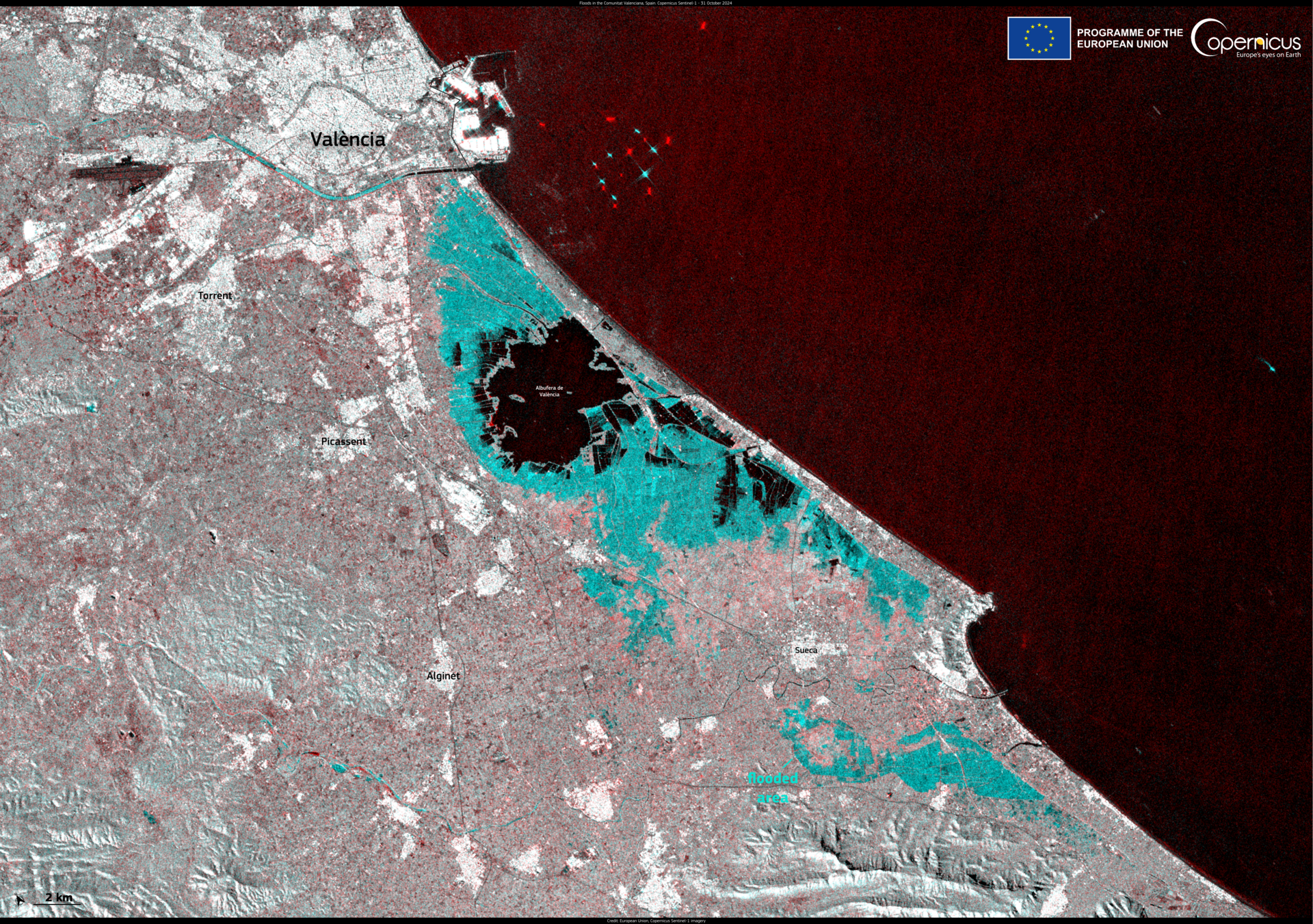

Eastern Spain is counting the cost of another brutal Mediterranean storm. Torrential rain from the system named Storm Adam pummelled the Valencia region, Alicante, Catalonia and the Balearic Islands, unleashing severe flooding that left at least four people dead, inundated streets and forced many residents to stay indoors, authorities said on Monday, in reporting carried by Al Jazeera and Reuters photography from the scene.
The downpours dumped as much as 700 litres of rain per square metre in just 24 hours in some areas of the Valencia region — an extraordinary volume in a place where entire months can pass with a fraction of that total. Floodwaters swept away parked cars, submerged roads and cut off residents, some of whom had to be airlifted to safety by emergency crews after climbing onto their roofs.
Four deaths, town by town
Two of the victims were found in the coastal resort of Oliva, one of the areas worst hit by Sunday night's storms. One was a 79-year-old woman found in her home. Another was a 64-year-old man who suffered a fatal heart attack at a local campsite, where local reports said the flooding had prevented him from receiving proper medical attention in time.
The third victim died in the Sagunto area, north of Valencia city, after going into the sea on Sunday, and a fourth — a woman in Catalonia — fell into a rain-swollen stream, according to firefighters there. Valencia regional president Juan Francisco Pérez Llorca told reporters on Monday, while the count was still being assembled, “We are talking about three deaths,” urging caution as authorities assessed the damage. The confirmed toll rose to four as the day went on, and officials have not ruled out that the numbers could change again as water recedes and crews reach cut-off areas.
Because this is a death toll from a fast-moving disaster, Previously is reporting only the figure carried consistently across multiple independent outlets — Al Jazeera, AnewZ and The Sun's Irish edition among them — and attributed to Spanish authorities, emergency services and public broadcasters RTVE and TVE.
Hundreds of rescues, thousands evacuated
Security forces carried out more than 400 rescues in the Valencia region, both by air and by land, according to government representative Pilar Bernabé. The Civil Guard separately said nearly 100 rescues had been carried out in Valencia and Alicante on Monday, and more than 2,000 people were evacuated, mainly in Oliva.
The human scenes behind those numbers were described by the people running them. Oliva's deputy mayor, Salvador Llopis, told state broadcaster TVE that emergency services were rescuing trapped residents, particularly elderly people stuck inside their homes with water up to their waists — some of whom had climbed onto tables and furniture to stay above the floodwaters. In Pego, further south, Mayor Enrique Moll told regional broadcaster À Punt radio that several people were still waiting to be evacuated by helicopter from their roofs, and that all access routes to the town were blocked.
On Monday morning, some 800,000 residents were under shelter-in-place orders. That figure was reduced to 87,000 people in eight municipalities by late afternoon, and authorities ordered residents in around 100 municipalities to remain indoors for several hours at the peak of the storm. Most restrictions were lifted by early afternoon as conditions improved, the regional government said.
“It's a disaster” — again
In Els Poblets, northeast of Alicante, cars and vans were left piled on top of one another by the force of the water, as residents tried to salvage what they could from their homes on mud-covered streets. “The village, well, it's a disaster,” resident Javier Fornez said. “Some people have lost everything all over again, just like in 2007, when exactly the same thing happened.”
That sense of repetition hangs over the whole emergency. The scenes recall the catastrophic flooding that killed more than 230 people in the Valencia region two years ago, in 2024 — a disaster that reshaped Spanish politics and emergency planning. Officials moved faster this time, with early shelter orders, a heavy military and Civil Guard deployment, and rescues launched while the rain was still falling. Whether that faster response kept a bad storm from becoming another mass-casualty event is the question Spanish commentators were already asking on Monday night.
A hotter, wetter Mediterranean pattern
Spain's national weather agency, AEMET, had issued warnings for very heavy and persistent showers and thunderstorms along the coast. The agency also announced on Friday that last month was mainland Spain's hottest September on record, following its warmest summer between June and August. Mediterranean storms of this kind draw their energy from warm sea water, and Spanish meteorologists have repeatedly warned that hotter autumn seas raise the ceiling on how much rain a single system can drop on the coast.
For now, the immediate work is local: pumping out basements in Oliva, clearing the piled cars in Els Poblets, restoring blocked access routes into towns like Pego, and accounting for everyone in the places the water cut off. Readers following Previously's wider world coverage can also read the desk's report on Zelenskyy's talks in Oslo on the war and European security, and its earlier coverage of the curfews imposed in France after a weekend of unrest — a reminder that it has been a hard week, in different ways, along the whole northern Mediterranean shore.
The storm moves north
AEMET's own figures underline how exceptional the rainfall was: Pego, in Alicante province, recorded 632 millimetres of rain in 36 hours, and several places in southern Valencia and northern Alicante received more than 500 millimetres over the same period, AnewZ reported. The agency issued several red alerts, urging residents to avoid travel and seek higher ground, and more than 100,000 students in the Valencia region had their classes suspended. The storm was expected to move toward Catalonia on Monday afternoon, particularly the provinces of Barcelona and Girona, where more than 100 millimetres could fall in less than 12 hours on soil already saturated by previous storms.
What happens next
Authorities will update the toll and the rescue count as crews finish sweeping the worst-hit streets, and the regional government is expected to detail damage assessments and aid for the towns that flooded. The political argument — about drainage, building on flood plains, and how warnings are issued — followed the 2024 disaster for months, and it is likely to return quickly once the water is gone. Previously will update this story if the confirmed toll or the official rescue figures change.
Sources · 4 sources
- Al Jazeera via Antigua Tribune — Four dead as torrential rain batters eastern Spain
- The Voice, citing Reuters and Spanish authorities — Spain floods kill four as torrential rain inundates eastern regions
- AnewZ — Spain floods: Storm Adam kills four, thousands evacuated
- The Sun (Ireland) — Storm Adam claims fourth victim as flash floods batter Spain