
October 13, 2026
The Falcon 9 lifted off on time at 6:33 a.m. Eastern from Cape Canaveral, its booster returned to Landing Zone 40 minutes later, and Cargo Dragon C211 is now in orbit with about 6,300 pounds of science and supplies bound for a Thursday docking.
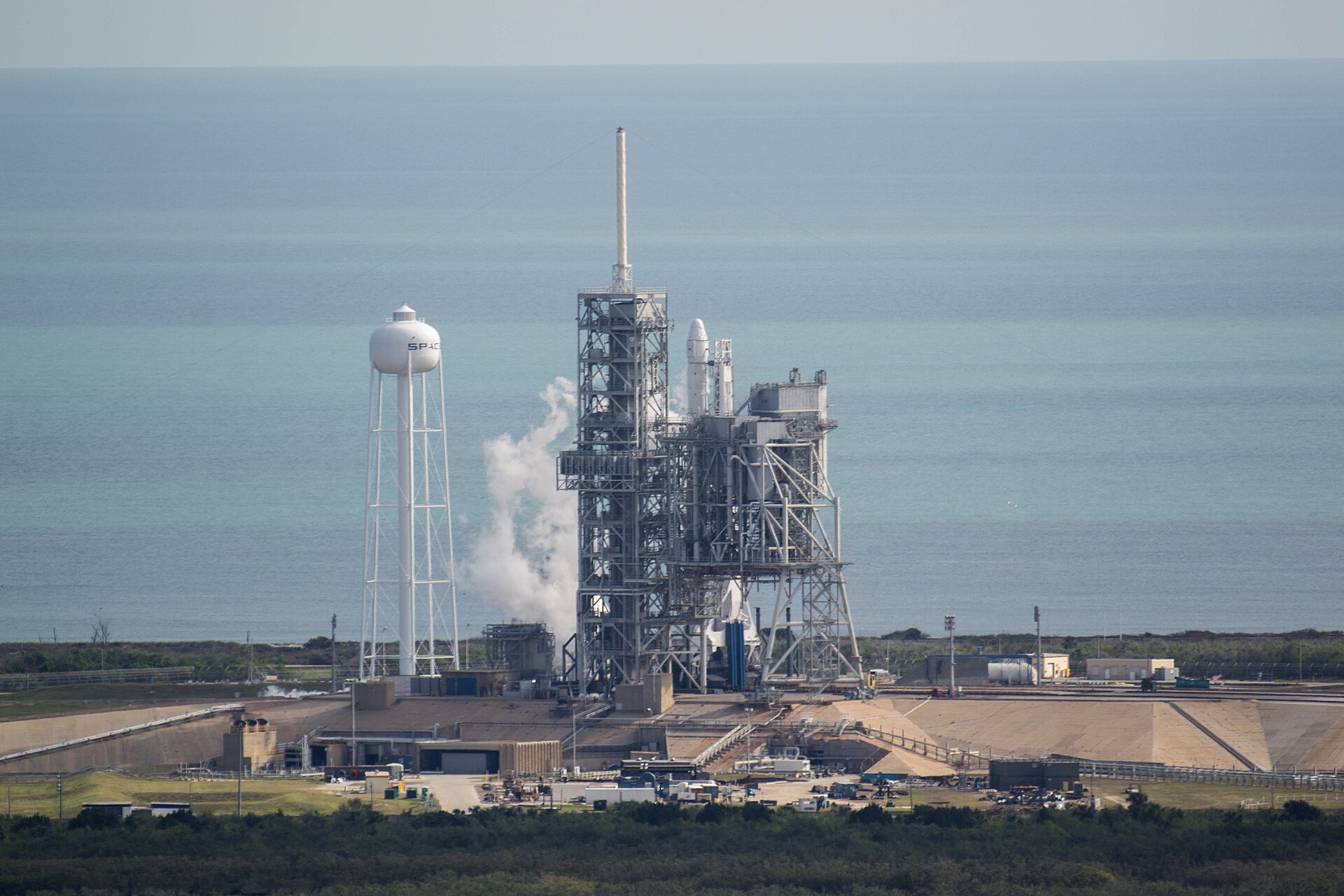
It went exactly when it had to, and it went clean. A SpaceX Falcon 9 lifted off at 6:33 a.m. Eastern on Tuesday, October 13, from Space Launch Complex 40 at Cape Canaveral Space Force Station, carrying the Cargo Dragon spacecraft C211 toward the International Space Station on the CRS-35 resupply mission. The launch window was instantaneous, so there was no room for a hold or a second try that morning — and none was needed. Florida Today’s live coverage reported weather better than 95 percent favorable under clear skies, and the rocket rose on schedule into a still-dark Florida sky, beginning a two-day chase that is scheduled to end with an autonomous docking at the station on Thursday morning. This outcome follows our pre-launch preview of the CRS-35 mission, which laid out the cargo, the timing and the sky show Space Coast residents were hoping to see.
A Clean Liftoff Before Sunrise
CRS-35 is SpaceX’s 35th cargo mission to the station under NASA’s Commercial Resupply Services contract, and by the numbers it was a routine departure — which, for a supply run to an orbiting laboratory, is exactly the point. Dragon separated in orbit and is now flying on its own, using its thrusters to gradually raise and adjust its path toward the station over the next two days. The spacecraft doing the flying is no newcomer. Cargo Dragon C211 is on its fourth flight, having previously supported the CRS-26 mission in November 2022, CRS-29 in November 2023 and CRS-33 in August 2025. Reuse has quietly become the normal rhythm of station logistics: the same capsule comes home, gets refurbished, fills up again and goes back.
The timing, as always with station missions, was dictated by orbital mechanics rather than convenience. The station’s path had to pass over the Cape at the right moment, which is why the window was instantaneous and why liftoff came well before sunrise at the Cape, which was not until 7:21 a.m. For early risers along Florida’s east coast, that combination — a powerful rocket climbing through darkness toward sunlight high above the Atlantic — is the recipe for one of the prettiest sights in spaceflight, and Tuesday morning delivered it.
The Booster Came Home, and the Sky Lit Up
The first stage that pushed Dragon uphill had its own job to finish. Booster B1096, flying for the eighth time, turned around after stage separation and returned to Landing Zone 40, near the launch site, touching down at about 6:41 a.m. Eastern — roughly eight minutes after liftoff. Its earlier flights include the KF-01 mission, the IMAP science mission, NROL-77, GPS III-9, CRS-34, NROL-95 and a Starlink mission, a resume that spans commercial, science, navigation and national-security payloads. Because this was a return to land rather than a landing on a drone ship at sea, the booster’s descent produced sonic booms that were heard across Brevard County, the familiar double-thump that tells the Space Coast a rocket has come home.
At about 6:39 a.m., while the upper stage was still climbing, watchers got the other signature of a pre-dawn launch: the so-called space jellyfish. High in the atmosphere, sunlight — already up at altitude even though the ground below was still dark — illuminated the rocket’s expanding exhaust plume, turning it into a glowing, billowing shape that appears to hang and drift in the sky. Florida Today photographers captured views of the effect as it spread over the coast. It is not a trick or an anomaly; it is simple geometry, exhaust gas catching the sun before the sun reaches the people watching from below, and on a clear morning like Tuesday’s it can be visible for hundreds of miles.
What Dragon Is Carrying to the Station
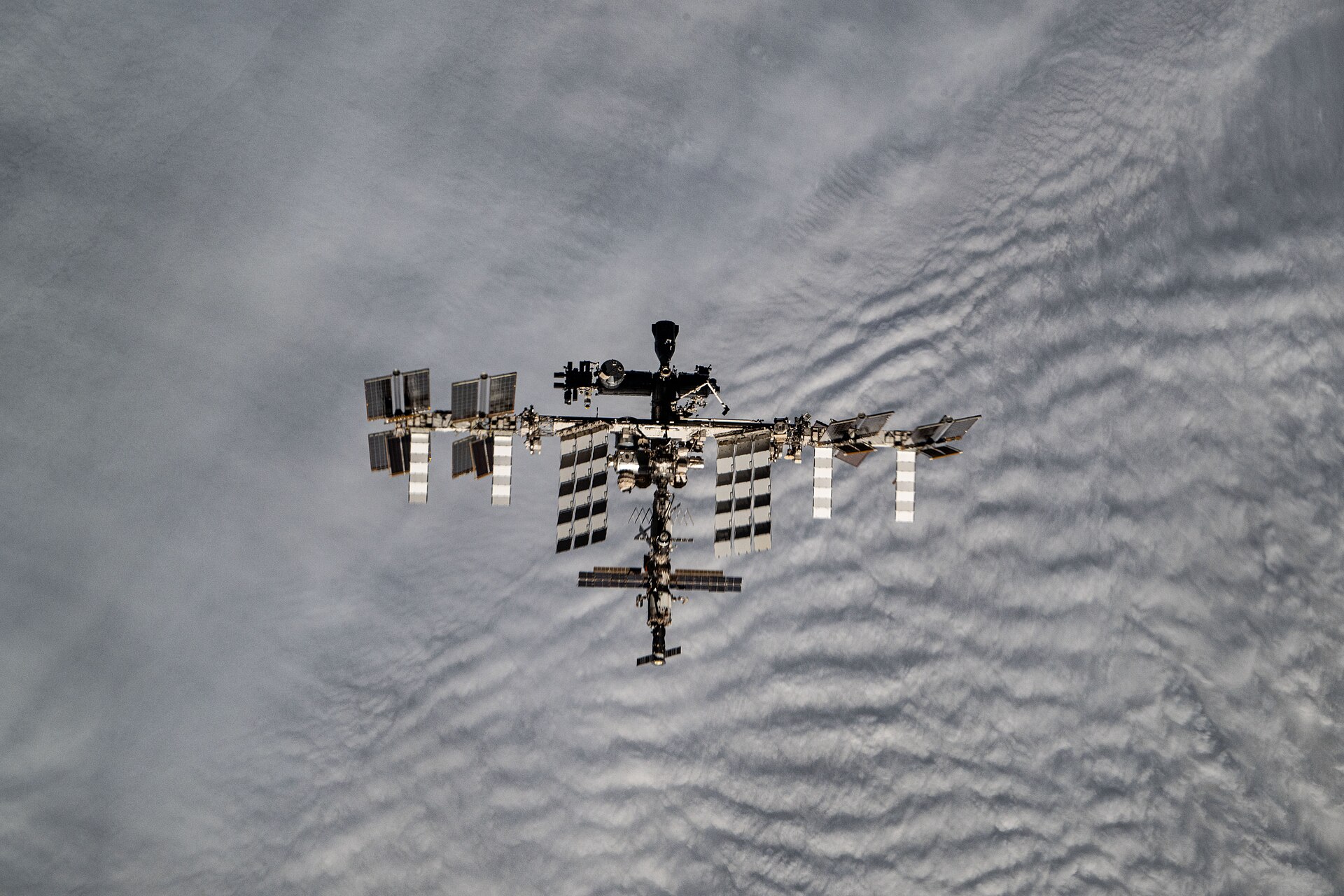
Inside and behind the capsule is about 6,300 pounds of cargo, by NASA’s accounting — NASASpaceflight put the figure at 6,322 pounds, or 2,867 kilograms. The biggest hardware rides in Dragon’s unpressurized trunk: the final pair of International Space Station Roll-Out Solar Arrays, known as iROSA, the unrolling power blankets that have been modernizing the station’s aging electrical grid. Once installed, this last set completes that long-running power upgrade, giving the laboratory the electrical headroom its newest science demands.
The science manifest is characteristically varied. It includes hardware for manufacturing artificial retinas in microgravity for LambdaVision, work aimed at therapies that could help restore vision on Earth; 3D heart-tissue models for studying cardiac biology and drug responses; an experiment on how an unconventional form of glass forms in orbit; and a brain-organoid study that researchers hope will reveal targets for neurological disease research. There is also a hometown payload: a hydrogel radiation-shielding experiment built by students at Florida Tech in Melbourne, a short drive from the launch pad, designed to test materials that could one day protect crews on longer voyages.
And then there is the part of the manifest the crew will notice first. Dragon is carrying fresh food — apples, oranges, grapefruit, blueberries, peppers and tomatoes, along with pizza kits — plus holiday items for a crew that will spend the season in orbit. Fresh produce is a small fraction of the mass and an outsized fraction of the morale, one reason cargo arrivals are treated as events aboard the station rather than mere deliveries.
Two Days to the Station, Then About a Month in Orbit
From here, the mission settles into its long, quiet middle. Dragon will spend roughly 52 hours catching up to the station, and is scheduled to dock autonomously at about 11:00 a.m. Eastern on Thursday, October 15 — 15:00 UTC — at the space-facing, or zenith, port of the Harmony module. NASASpaceflight reported that astronauts Anil Menon and Joshua Kutryk will monitor the arrival from inside the station. Waiting to receive the delivery is the Crew-13 expedition, which arrived on October 1; the zenith port itself was freed up when the Crew-12 Dragon departed and splashed down off California on October 8, a return Previously covered in our Crew-12 splashdown story.
Dragon is expected to remain attached to the station for about a month. When it leaves, it will bring time-critical research samples and hardware back with it and splash down off the coast of California, closing the loop on a mission that began in darkness over Florida and ends in the Pacific. For now, though, the hard part is done and done on time: the rocket flew, the booster landed, the jellyfish showed up, and a capsule full of solar arrays, science and fresh fruit is in orbit, chasing the station. Follow the rest of Tuesday’s developments in the nightly news wrap-up and across the Previously news front.
Sources · 3 sources
Reporting based on coverage from Florida Today’s live launch coverage, NASA’s mission coverage announcement and NASASpaceflight’s CRS-35 reporting. Facts cross-checked across at least two independent outlets before publication.





