
MENLO PARK THURSDAY, OCTOBER 15, 2026
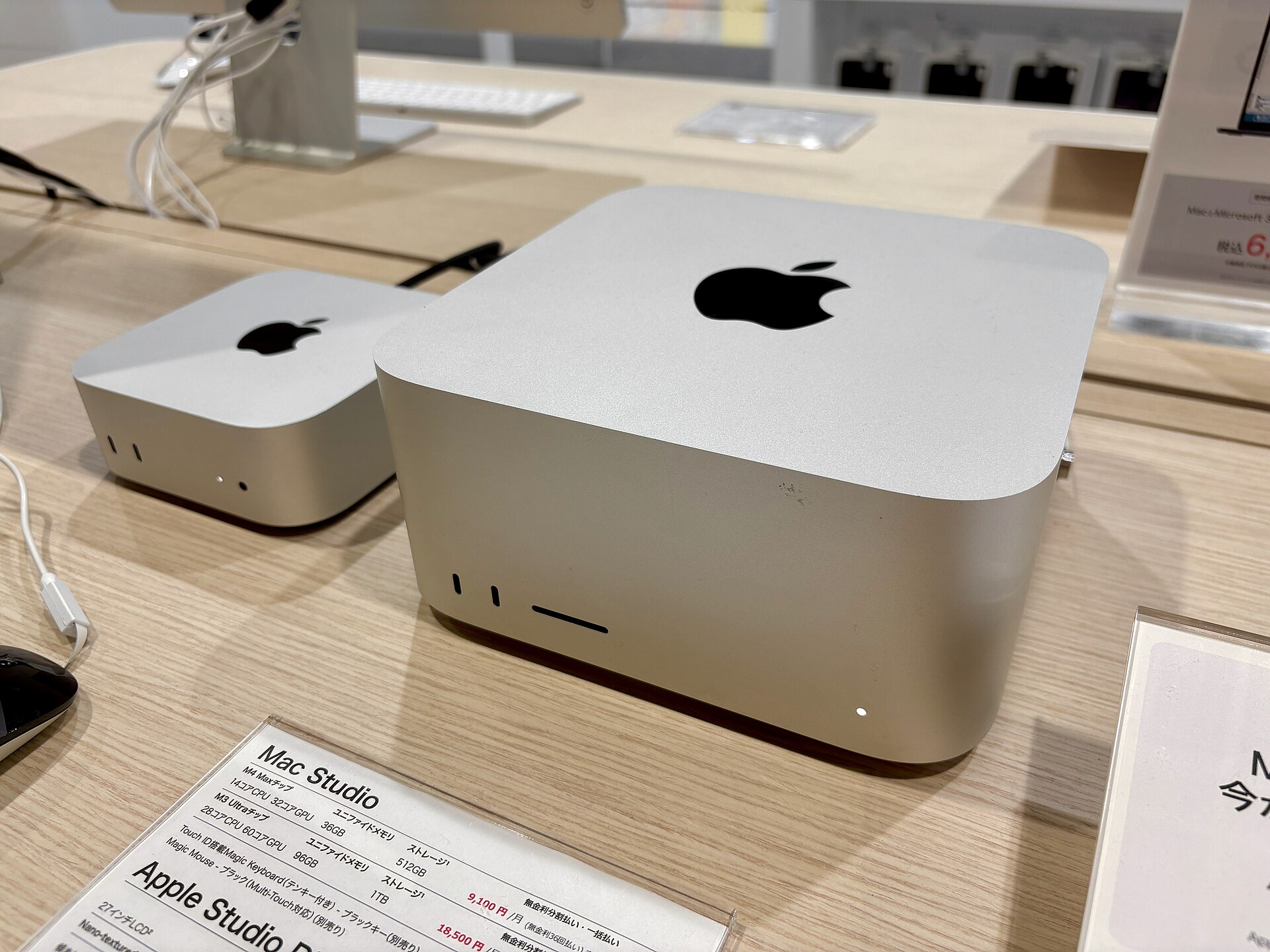
The two companies have spent the better part of a decade sniping at each other over privacy, advertising and control of the iPhone. On Thursday, they stood on the same side of an announcement. Meta released Muse Spark Open, the most capable open-weight AI model it has ever published, and said it had worked directly with Apple to make the enormous system run locally on Apple's highest-end desktop, the Mac Studio — no data center, no cloud account, just two to four machines sitting on a desk.
The collaboration followed months of joint work between the two engineering teams, according to both companies, and it is the first time Apple and Meta have publicly partnered on anything in years. Meta's AI chief, Alexandr Wang, said the effort brought leading agent capabilities to the desktop for the first time on Apple's new M5 Ultra Mac Studios. Mark Zuckerberg announced the release publicly, and Apple CEO John Ternus replied in kind — a small, cordial exchange that would have been unthinkable between these two companies five years ago.
An 816-billion-parameter model you can download
Muse Spark Open is built on a mixture-of-experts design: it carries 816 billion parameters in total, but only about 42 billion are active for any given token, which is what makes a model this size even remotely practical to run. It accepts a context window of 1 million tokens — enough to swallow an entire codebase or a shelf of documents at once — and it is natively multimodal, taking in text, images, video and audio. Meta aimed it squarely at work rather than chat: coding, long multi-step tasks, reasoning that unfolds over many steps, and software engineering.
Meta bills it as the most capable open-weight model released in the United States to date. The weights are free to download — from Hugging Face, Amazon SageMaker AI, Google Cloud Model Garden and Microsoft Foundry Models — under a license that allows limited commercial use, and hosted API access is available through Baseten, Fireworks AI, Groq, Modal, Nebius, OpenRouter and Together AI for anyone who does not own the hardware. It is the open half of a two-track week for Meta's rebuilt AI operation under Wang: a smaller open model, Muse Glimmer, arrived in August for local use on Macs and PCs, and the company's closed flagship, Muse Wonder, launched earlier this week through its API only. Meta says Spark Open went through its internal risk-assessment process — the Advanced AI Scaling Framework — before being cleared for open release.

Two Mac Studios, one supercomputer
The Apple side of the deal is a piece of software called MLX, Apple's open-source framework for running machine learning on its own chips. Apple updated MLX to support Muse Spark Open — improving how connected Macs talk to each other and adding support for the M5 Ultra's GPU Neural Accelerators — so the model can be split across several machines linked by Thunderbolt 5, with the framework distributing the work between them.
The reason Macs can do this at all is unified memory: on Apple silicon, the GPU draws from the same pool as everything else, and an M5 Ultra Mac Studio can be configured with up to 512GB of it, at 1.2 terabytes per second of bandwidth. That matters because Muse Spark Open's compressed weights alone occupy roughly 493GB, according to Apple's research — too much for any single machine once you leave room to actually run. Two 512GB Mac Studios pool about a terabyte of unified memory, which Meta describes as the two machines behaving like one supercomputer; four 256GB machines can hold the model instead. In Apple's benchmarks, a four-machine setup generated more than 36 tokens per second at an 8,192-token context — not data-center speed, but a practical, responsive pace. Meta demonstrated the model doing real work on the local rig: using its Muse Code tool to fix bugs, add features and complete a build of Ice Cubes, an open-source Mastodon app, and driving DaVinci Resolve to review footage, pick out usable clips and crop them for vertical video.
The catch is the hardware bill
None of this is cheap. The M5 Ultra Mac Studio starts at $5,499 in base form, but the memory configurations Muse Spark Open needs push the price hard: a machine with 256GB of memory starts at $10,799, the 512GB version is not shipping until later this month, and a four-machine rig runs well past $40,000. This is professional equipment aimed at development teams and researchers, not a toy for the curious.
The pitch for paying it is control. A model running locally keeps sensitive code and data inside the building instead of sending it to someone else's cloud, and heavy users stop paying per-query fees to hosted providers. It is a trade Meta's own engineers have already made: the company bought hundreds of Macs earlier this year so its developers could run AI agents locally. For teams that cannot justify the hardware, the same model is one API call away — which is rather the point of releasing it openly.
Why two rivals need each other
For Apple, every demonstration of serious AI work running on a Mac instead of a warehouse of Nvidia chips is an argument for the silicon it designs — and the timing is not accidental. Apple's consumer AI story has had a rough stretch: the new Siri that arrived last month drew criticism for trailing its rivals, its 2024 arrangement to wire OpenAI's ChatGPT into Siri has underperformed and curdled into litigation (Apple sued OpenAI in July, alleging trade-secret theft; OpenAI has denied it), and Apple has leaned on a separate deal with Google to bring Gemini into Apple Intelligence. Partnering with model makers while its hardware does the showing-off is increasingly what Apple's AI strategy looks like.
For Meta, the prize is the open-weight crown. The strongest open models of the moment are heavily Chinese — Alibaba's Qwen, DeepSeek and Moonshot's Kimi among them — and Meta AI chief Alexandr Wang framed the release in exactly those terms. Wang told the Wall Street Journal: “We think that a lot of the world will run on open models, and they should be American.” Meta concedes the Chinese open models are still ahead on some software-development tasks. Having its flagship open model run beautifully on the desktop developers already prize gives the pitch a credibility a download link alone never could. The human bridge mattered too: former Apple executive Daniel Gross, now at Meta, played a key role in the collaboration, according to reports of the announcement.

A thaw, not — yet — a friendship
Some history is required to see why a model release counts as news about a relationship. Apple and Meta have not publicly partnered since roughly 2017, and the relationship hit bottom in 2021, when Apple's App Tracking Transparency changes let iPhone users refuse the cross-app tracking Meta's advertising business depended on. Meta estimated in early 2022 that the change would cut that year's revenue by about $10 billion, and the sniping between Tim Cook and Zuckerberg over privacy and business models ran for years.
What changed, in part, is the corner office: John Ternus succeeded Cook as Apple's CEO last month and has been visibly more willing to work with former adversaries. But neither company is calling this a reconciliation. Representatives of both declined to say whether the Muse Spark Open work is the start of a deeper relationship, and investors, for now, are treating it as an interesting footnote — both stocks were essentially flat on Thursday. The honest read is narrower and still significant: when the most useful thing in AI this week needed a home, Meta's model and Apple's machines turned out to need each other. Whether developers build on a model that wants a five-figure desk to run at full size — and whether runs-on-a-Mac becomes a standard line in AI launches — is the story to watch from here.
More from Previously
- Apple CEO John Ternus Lands the TIME Best Inventions Cover With the iPhone Duo
- Anthropic Told Investors Revenue Jumped to $16.8 Billion — and the Market's First Reaction Was Worry
Sources · 4 sources
- CNBC — Apple and Meta team up to make Muse AI model run on Mac computers
- Wall Street Journal — Meta and Apple, Longtime Foes, Team Up to Put Open-Weight AI on Macs
- MacRumors — Meta and Apple Bring Muse Spark Open AI Model to Mac Studio
- AppleInsider — Apple and Meta partner to bring powerful AI to Mac Studio