
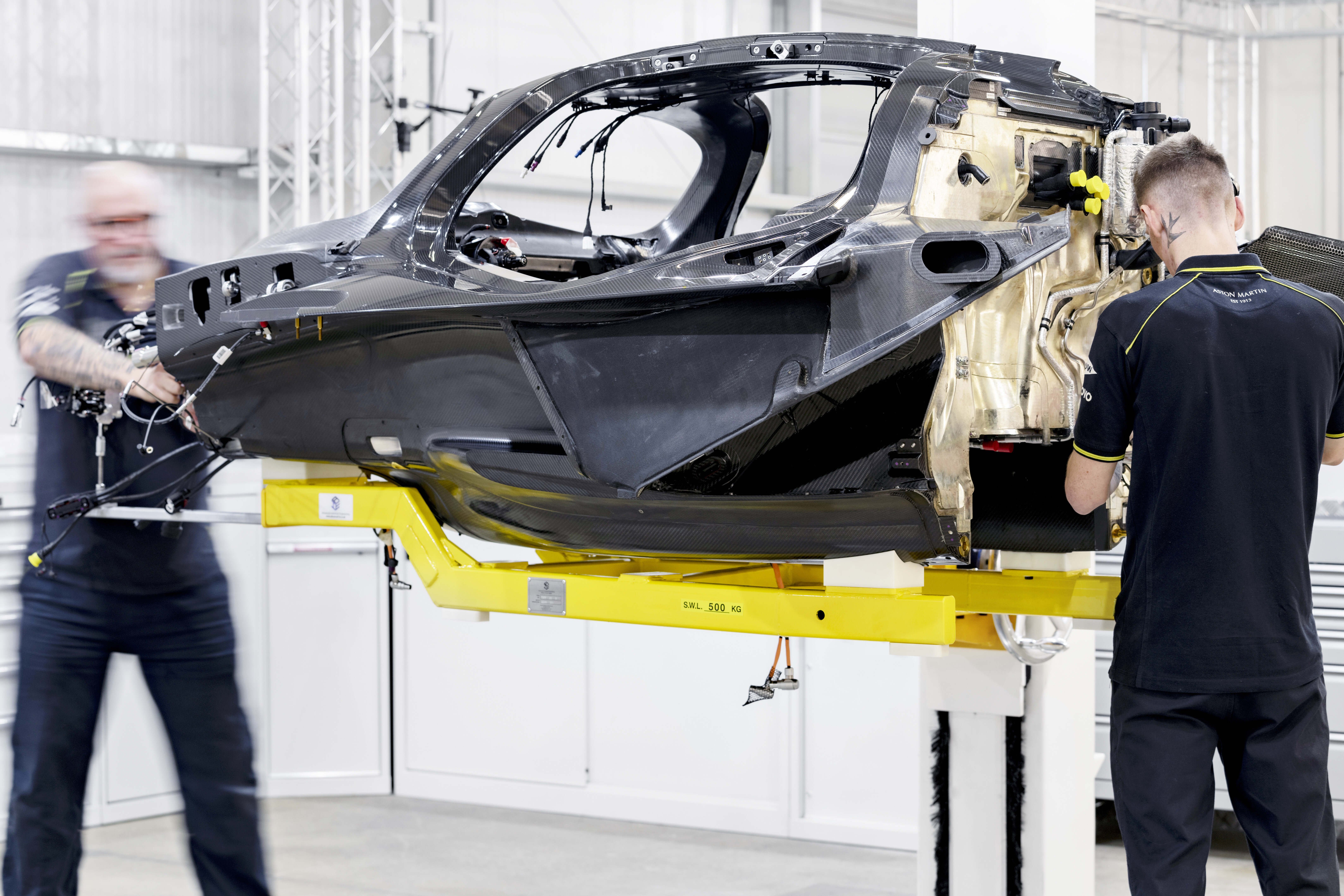
In November 2021, Aston Martin announced that the first customer Valkyrie was complete. The announcement was short, and the most telling detail in it was not a performance figure. Each of the 150 coupes would be hand-built by a team of technicians in a specially commissioned production area at Gaydon, managed end to end by a dedicated project delivery team, at more than 2,000 man-hours per car. Before delivery, every car was track-tested at Silverstone. That is not how cars are usually made. It is how race programmes are run.
The Valkyrie exists because Adrian Newey, then Red Bull Racing's chief technical officer, wanted to design the road car he had always sketched in the margins of Formula One. Aston Martin built it with Red Bull Advanced Technologies, and the aerodynamics carry Newey's signature: the body is shaped as much by the air moving under it as over it. This piece is about the road coupe — not the track-only AMR Pro, and not the later Spider.
The engine was a separate commission with its own brief. Newey took it to Cosworth: build the ultimate naturally aspirated road engine. Cosworth's answer was a 6.5-litre, 65-degree V12 producing a certified 1,000 bhp at 10,500 rpm, running on to 11,100 rpm, with peak torque of 740 Nm at 7,000 rpm — figures Aston Martin described as unprecedented for a naturally aspirated, emissions-compliant road car. It weighs 206 kg. Most of its internals are machined from solid, including titanium connecting rods and Formula One-spec pistons, and the engine is a stressed member of the chassis: unbolt it and the front and rear of the car are no longer connected.
Cosworth proved the design a quarter at a time. Because each of the engine's four catalysts serves just three cylinders, the company built a 1.6-litre three-cylinder test engine that replicated exactly one quarter of the V12. It made 250 horsepower and passed emissions — a working scale model of the whole idea before the whole engine existed.
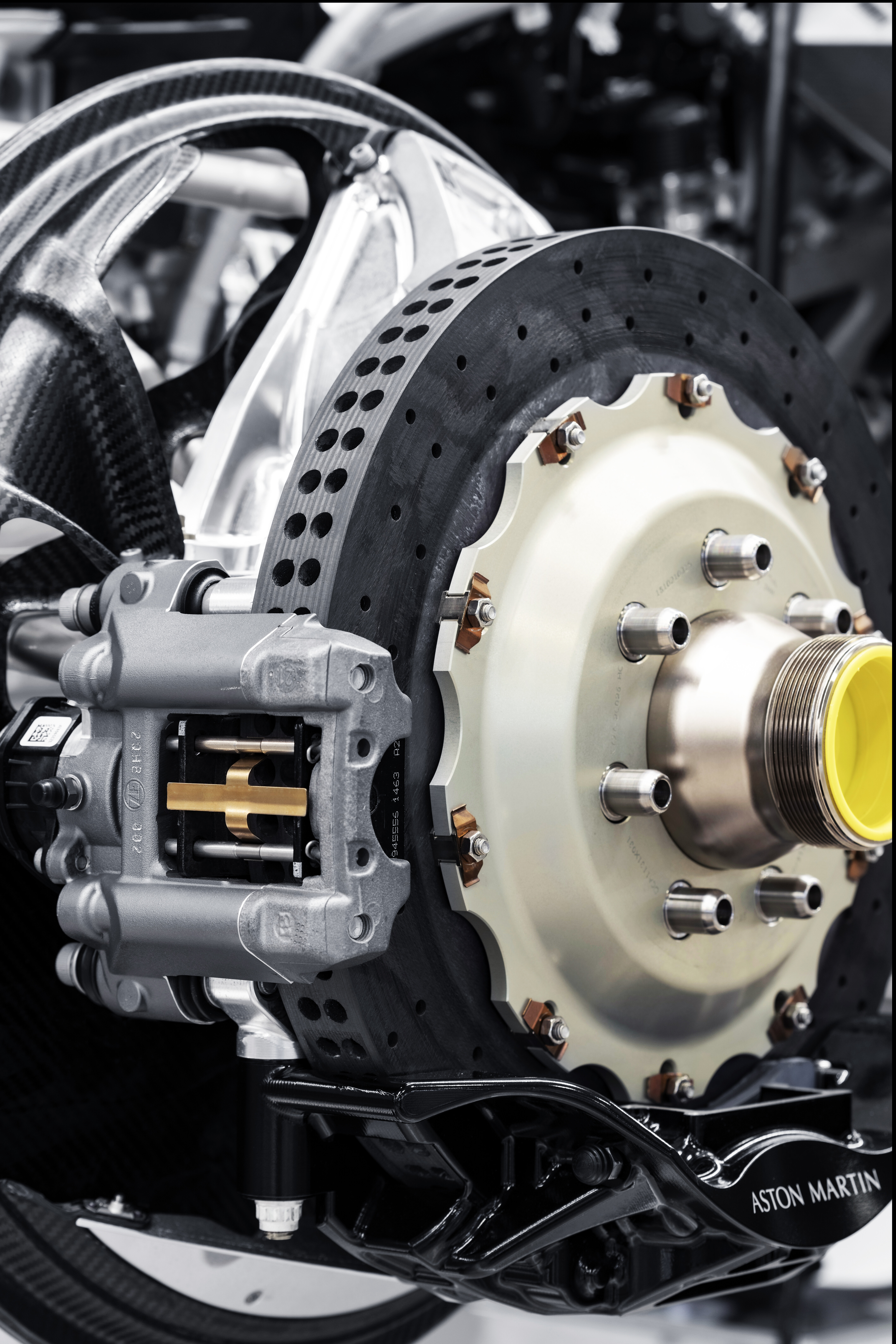
Around that engine sits a hybrid system in the Formula One style: an electric motor from Integral Powertrain and a lightweight battery system from Rimac, lifting total output to 1,160 bhp, with drive to the rear wheels through a Ricardo seven-speed sequential gearbox. Aston Martin's production release quotes the hybrid powertrain at 1,155 PS. The roster matters more than the rounding: Cosworth, Rimac, Ricardo, Multimatic and Michelin all built parts of this car. The Valkyrie is a collaboration that happens to wear one badge.
Previously's Take
Plenty of hypercars are expensive because of what they are made of. The Valkyrie's premium is labour and names: 2,000-plus hours of hand assembly per car, a Cosworth engine brief written by an F1 designer, and a supplier list that reads like a pit lane. The glamour was never vague. It had an org chart, a test mule with three cylinders, and a delivery team that signed off each car at Silverstone before an owner ever saw it.
The numbers
Sources · 5 sources
- Aston Martin — "First Aston Martin Valkyrie customer car complete," official production announcement, November 4, 2021
- Aston Martin — Valkyrie V12 engine announcement, December 2018 (Cosworth figures, quoted in trade coverage)
- TopSpeed, November 5, 2021 — first customer car report (2,000 hours, Gaydon team, 1,000 hp engine, 11,100 rpm)
- WhichCar, December 13, 2018 — Cosworth's three-cylinder Valkyrie test engine (Bruce Wood, Cosworth managing director)
- RM Sotheby's — 2023 Valkyrie coupe catalogue entry (Red Bull/Newey development, Ricardo gearbox, 150 coupes)
Photographs: Aston Martin · Aston Martin · Aston Martin