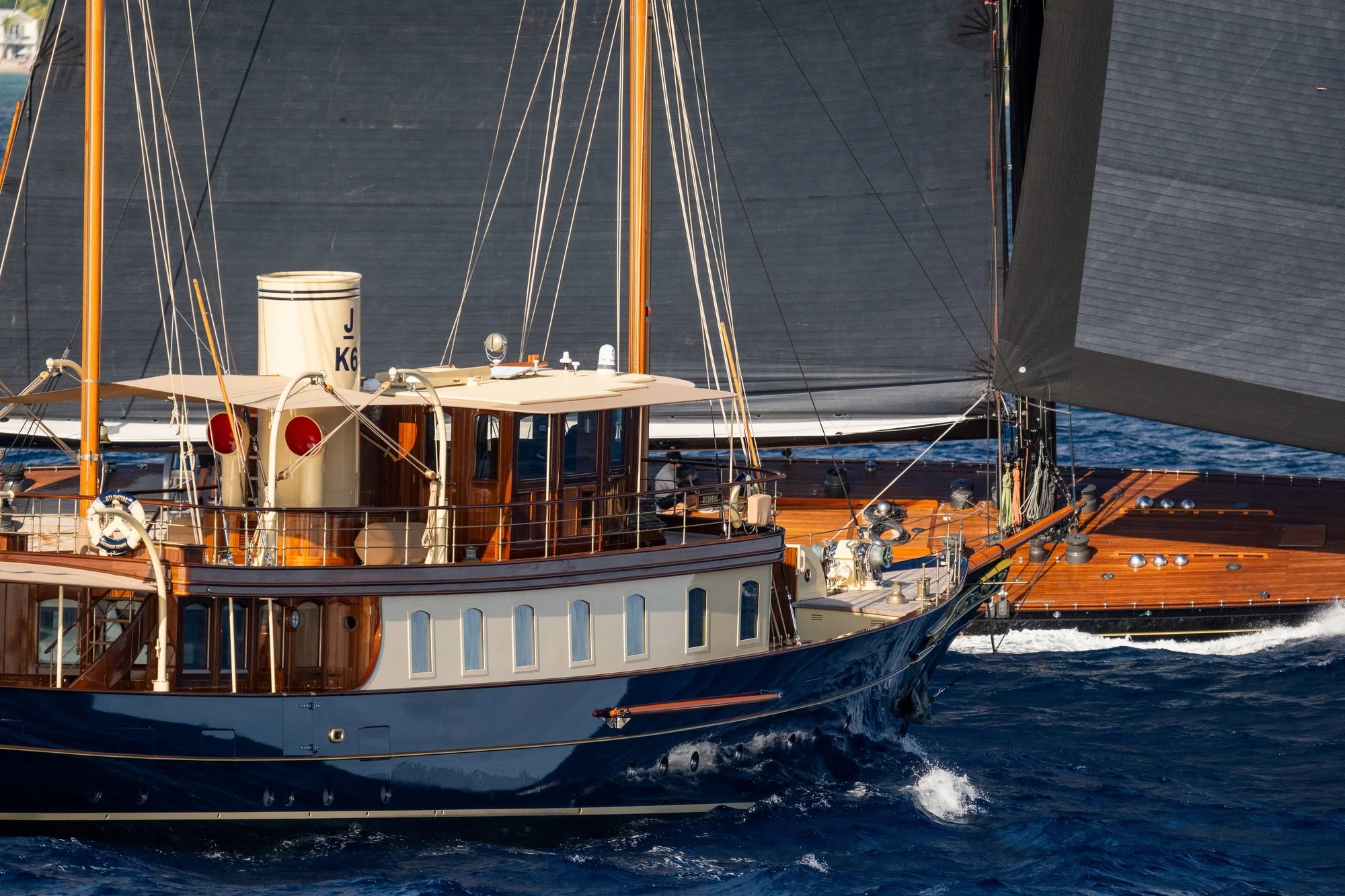

Atlantide was launched in 1930, built by Philip & Sons and first named Caleta. She is a 37-metre motorsailer with a war record — one of the Little Ships of Dunkirk — and by 2020 she had passed into the hands of Jim Clark, an owner who had already built three yachts at Royal Huisman, among them the J Class Hanuman. He bought Atlantide as a companion to that racing yacht, and his reason was simple. “What I like is the historic quality of this boat; nothing is plastic,” he said. “I’m a classic boat snob.”
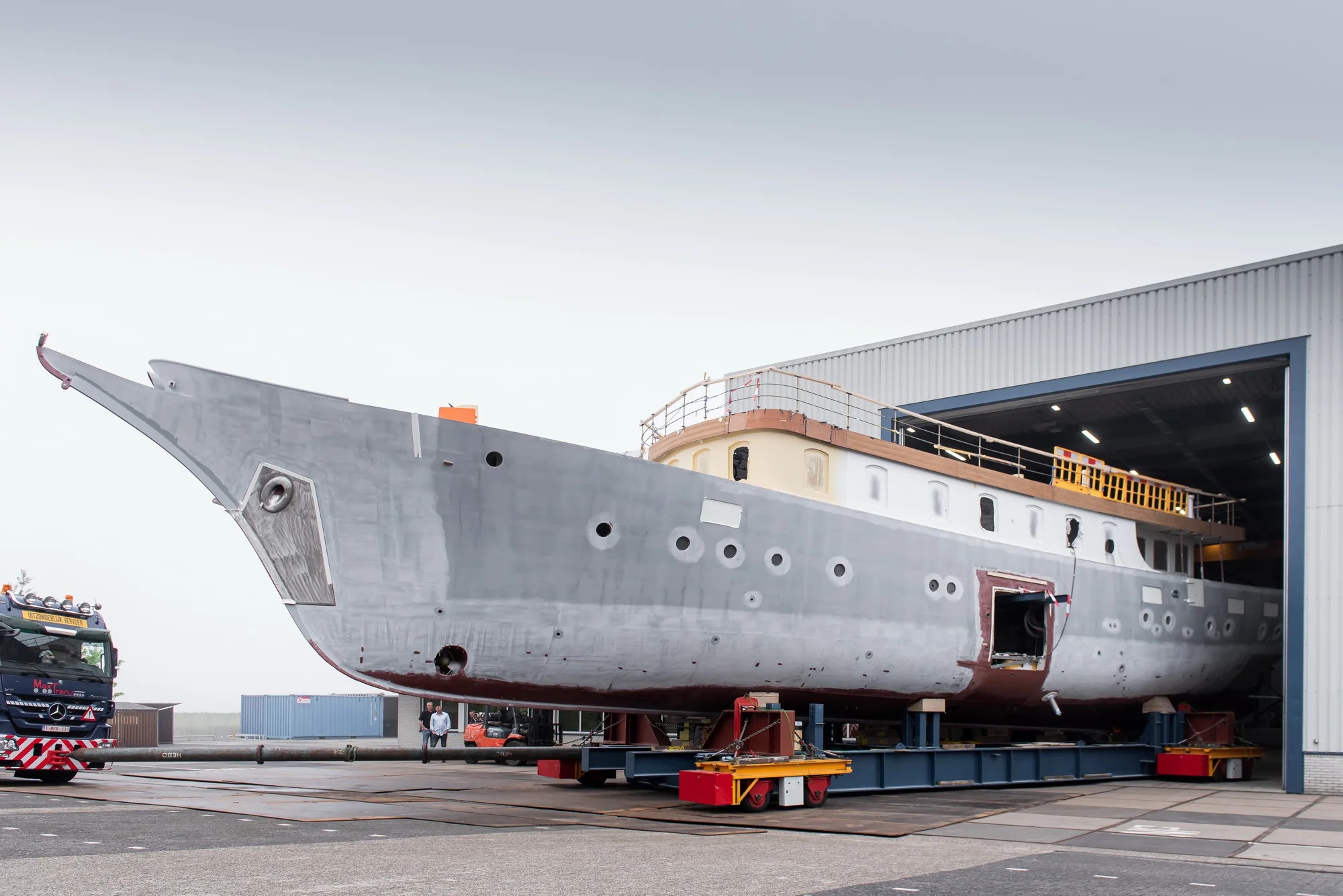
She arrived at Huisfit, Royal Huisman's refit yard, as deck cargo from the United States in January 2021. The plan was repairs and interior modifications. The plan did not survive contact with the hull. Working over a suspicious crack, the team found it was not steel flaking away but filler — in places about two inches thick, laid over eroded metal. What had been booked as a refit became, honestly and expensively in effort if not in any disclosed figure, a rebuild. No price for the work has ever been published, and none is guessed at here.
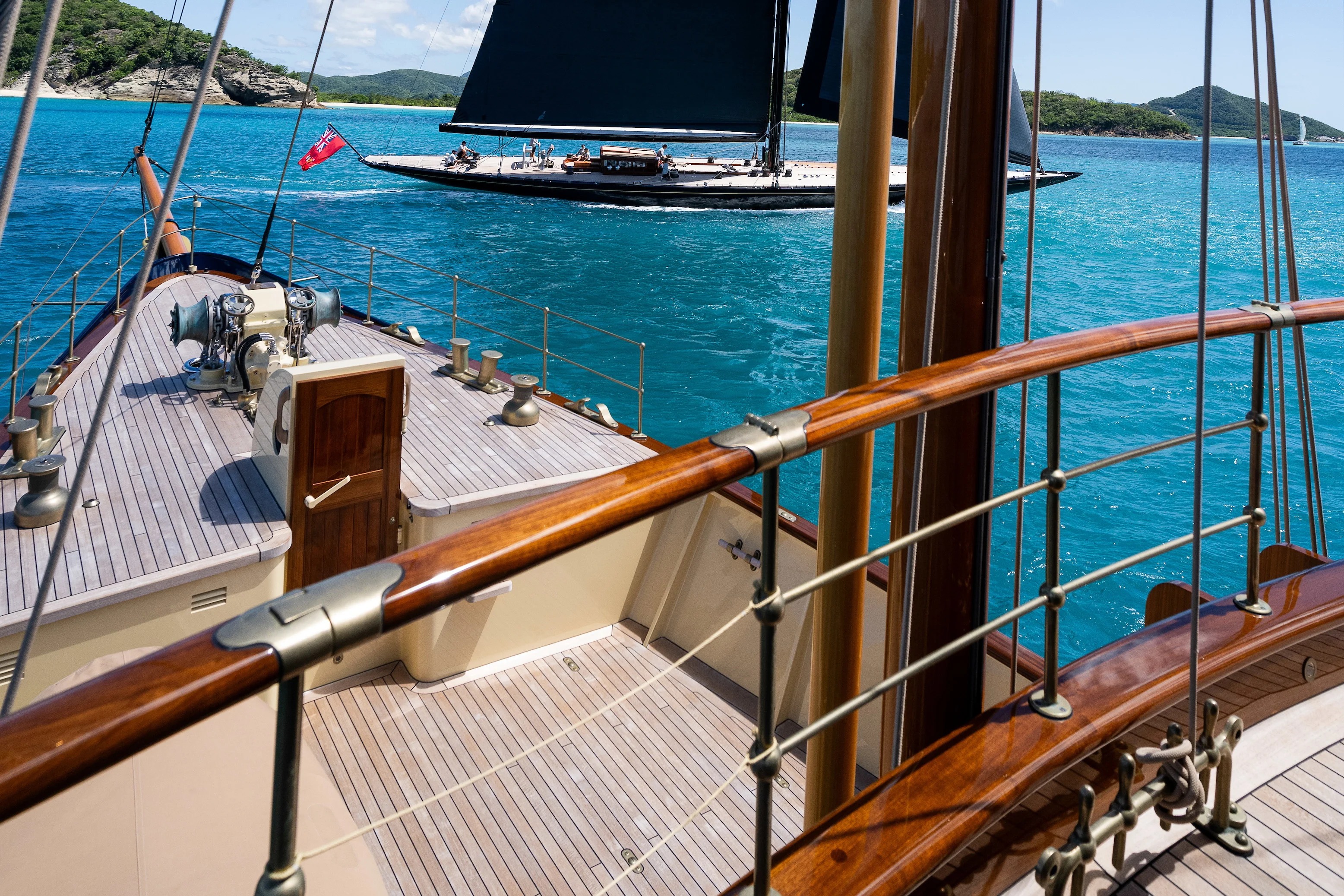
The scale of it, as Huisfit records it: 40 percent of the hull, deck and frames replaced. The interior fully reimagined. Every onboard system overhauled or renewed — with one deliberate exception. The original Gardner diesels stayed.
Keeping those engines was not sentiment left unexamined. The pair of eight-cylinder Gardners, 255 horsepower each and weighing over three and a half tonnes apiece, had to come out before they could be kept: the yard cut a single opening in the port side of the hull, slid them out on a temporary crane arrangement and sent them home for thorough reconditioning, then put them back with new sensors and alarms and replaced reversing gearboxes. Preservation, done this way, is not leaving things alone. It is taking them apart as carefully as anything new gets built.
Around that preserved heart, the boat was remade with a discipline that ran in both directions. Deck hardware came off, was restored and catalogued. The deckhouse was lifted away for restoration of its own. Much of the original teak deck was saved; the interior that went back in was built around French walnut, finished by a process the yard's collaborators counted in fourteen steps. A new rig and sails were made to the original design, good for seven knots under sail. The aim throughout was a boat that reads as 1930 from the dock and works like a modern yacht from the helm.
She sailed away in November 2023, nearly three years after she had arrived for something much smaller. Yachting magazine's account of the finished rebuild matches the yard's own figures — the same 40 percent, the same November 2023 completion, the same Gardner exception — which matters, because rebuild stories grow in the telling. This one does not need to. The documented version is already the remarkable one: a 94-year-old hull, substantially remade in steel, wood and systems, still turning on the engines she was given at the start.
Previously's Take
Most refits are cosmetics with better lighting. Atlantide is the other kind: the kind where saving a boat means replacing nearly half of what holds it together while refusing to replace the one thing that makes it itself. Anyone can buy a new yacht. Keeping a 1930 motorsailer alive takes an owner who wants the history, a yard willing to do the unglamorous steel work, and the judgement to know which parts are the boat and which are just parts.
The numbers
Sources · 4 sources
- Huisfit by Royal Huisman — “Rebirth of a legend,” official rebuild account (huisfit.com)
- Yachting Magazine — “Atlantide's Remarkable Refit” (independent corroboration of scope, engines and November 2023 completion)
- Yachts International, Summer 2025 — Atlantide rebuild feature (interior and programme detail)
- Royal Huisman (Vimeo) — “Atlantide - Rebirth of a legend,” official film, oEmbed-verified
Photographs: Huisfit by Royal Huisman · Huisfit by Royal Huisman · Huisfit by Royal Huisman