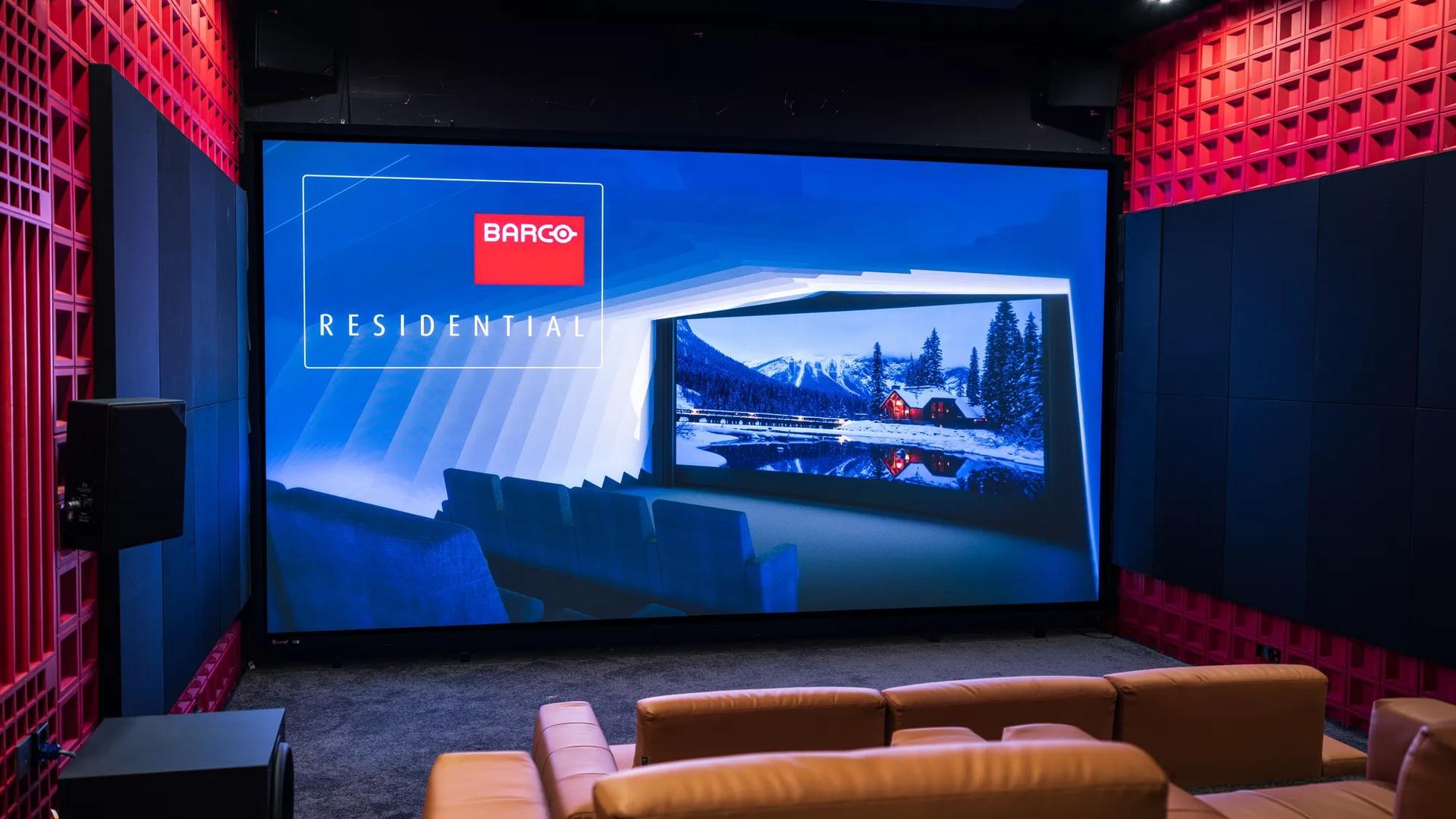

A home projector is normally a quiet box that hangs from a ceiling and asks for nothing but a power outlet. The Barco Nerthus weighs 170 kilograms, stretches about a metre and a half long, draws 3.9 kilowatts and pushes out 12,500 BTU of heat an hour. It is not an appliance. It is infrastructure, and a room built around one is engineered the way a small commercial cinema is engineered — because, underneath, that is what it is.
Barco's day job is professional cinema: its Series 4 platform is the company's current generation of theatre projectors. The Nerthus, the flagship of the Barco Residential Cinema at Home line, is built on that platform for high-end home theaters. Inside are three 1.38-inch DLP Cinema chips producing native 4K at 4096 × 2160, lit by an RGB laser rated at 32,000 lumens with a 40,000-hour light-source lifetime. The colour gamut covers 100 percent of Rec.2020, the widest standard in use, and five very-high-contrast lens options cover different throw distances. ProjectorCentral, giving it a Best of Show award at its CEDIA Expo 2023 launch, described rooms of up to forty seats and screens twenty feet wide as its natural territory — and it also took CEDIA's Best New Hardware prize and AVSForum's Best of CEDIA that week.
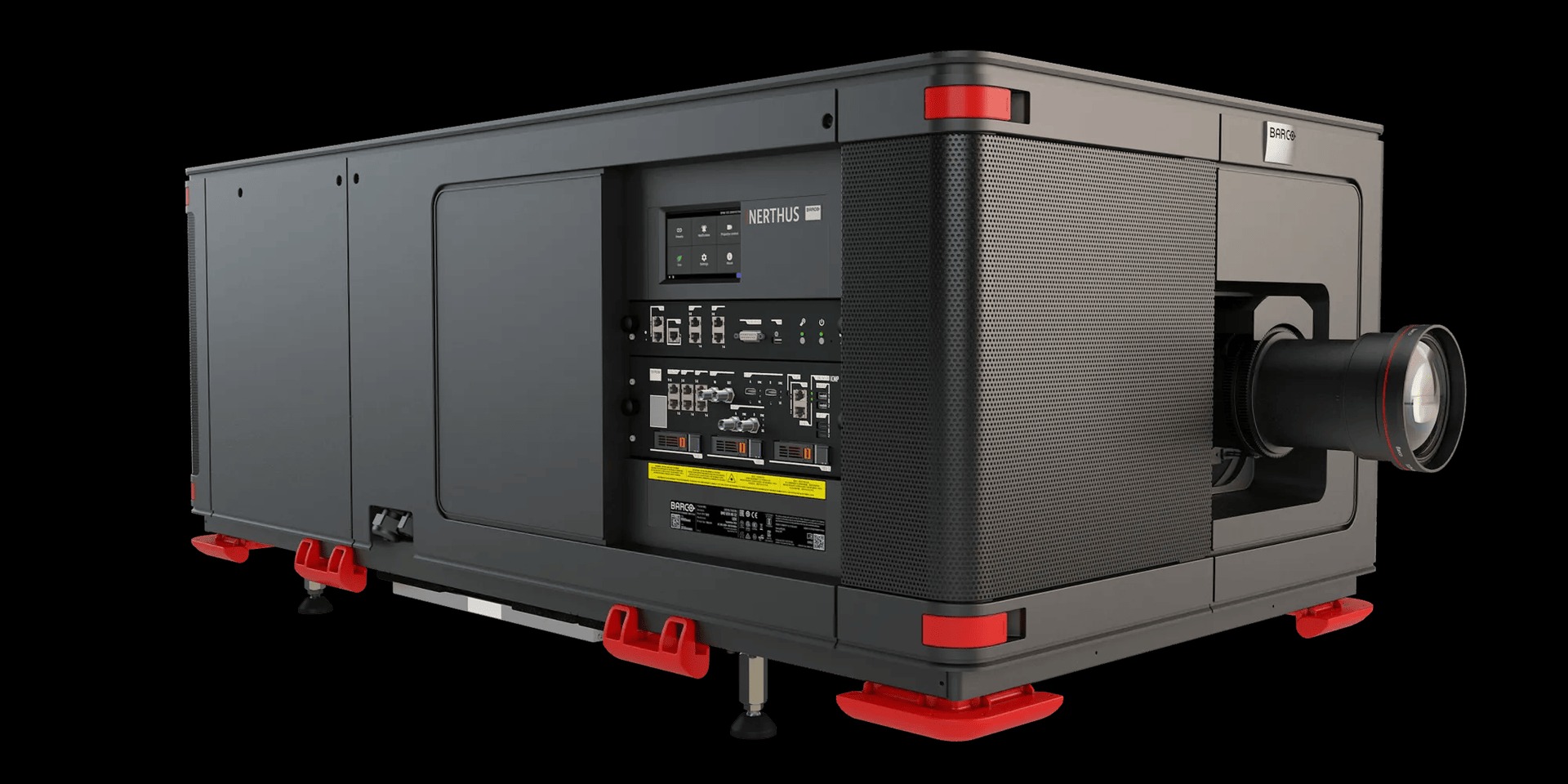
The decisive component is the one home projectors never have. The Nerthus carries Barco's Alchemy ICMP-X — an Integrated Cinema Media Processor, the combined processor and media server of a commercial Barco Alchemy projector. With it, the machine is DCI compliant: it can play encrypted DCI cinema content in its theatrical format, JPEG 2000 files at up to 625 megabits per second, on the same path a multiplex uses. Alongside that sit the consumer doors — two HDMI 2.0a inputs with HDCP 2.2 for 4K HDR sources, SDI, and sixteen channels of AES/EBU audio. One room, two content worlds, no conversion box pretending to bridge them.
The specification sheet then reads like a facilities brief. At 51 decibels the projector is too loud to sit beside the seats, so it lives in a projection room or hush enclosure, firing through a port glass like its theatre ancestors. Its 615 CFM exhaust airflow has to go somewhere, which means ducting. Single- or three-phase 200–240 volt power at 25 amps means an electrician, not an extension lead. This is the honest price of cinema hardware at home: the projector is one line item in a build that includes power, cooling, ventilation and a booth.

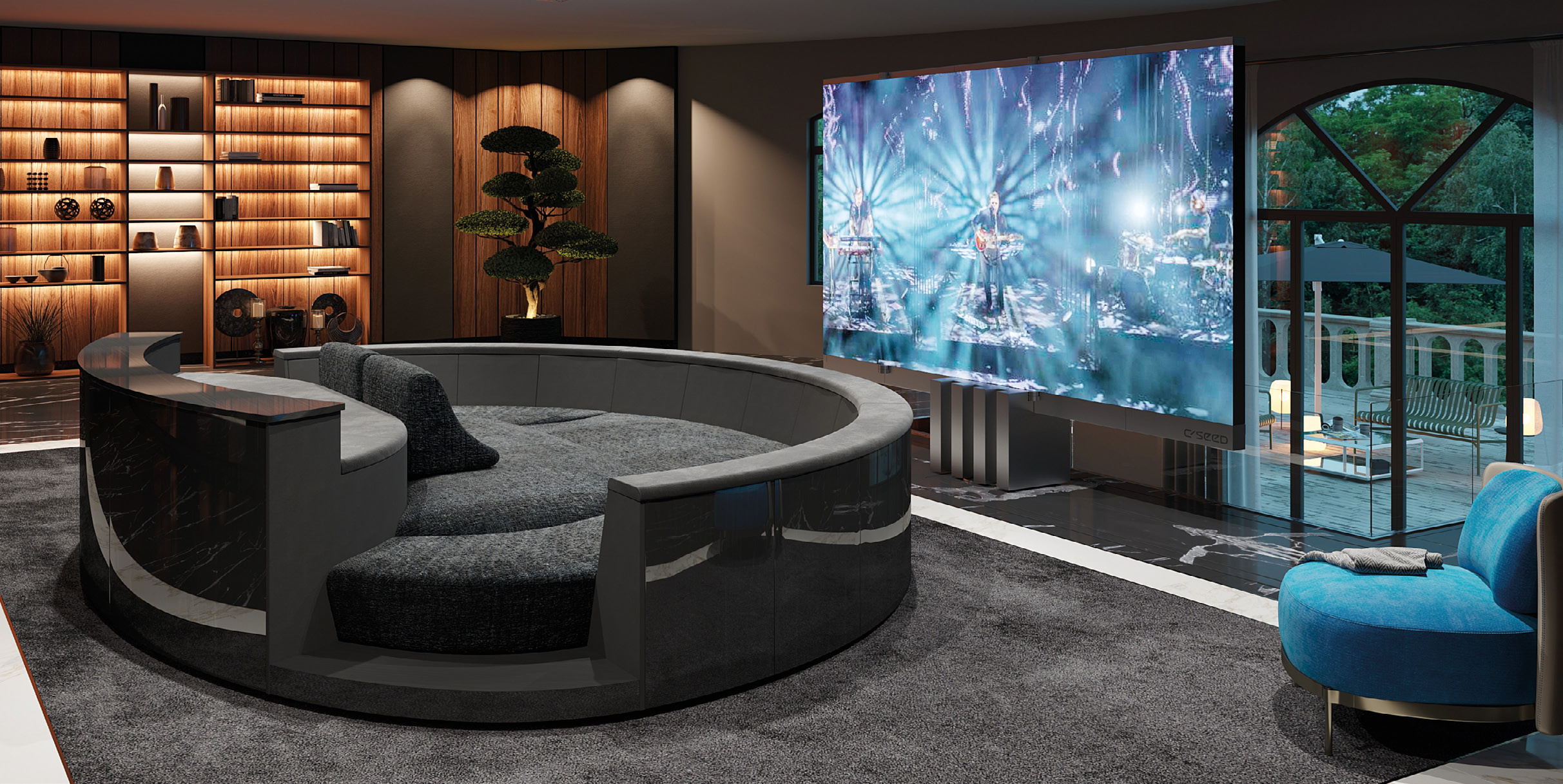
Barco's own published installation shows the finished form. In Wuhan, China — the first Nerthus project in that market, documented by Barco as a customer story — the projector drives a 240-inch acoustically transparent screen with a 32-channel audio system behind it, in a dedicated room in a lakeside villa. A senior Barco engineer travelled from the UK to calibrate it under the company's White Glove service. The owner had tested numerous projectors first; the Nerthus was the one that filled the screen properly.
Previously's Take
Every luxury home theater eventually chooses between a big television experience and an actual cinema that happens to be private. The Nerthus is the second choice made literal: the same platform, the same content path and the same facilities demands as the multiplex, scaled to one household. The room is not decorated around this projector. It is built to serve it.
The numbers
Sources · 4 sources
- Barco — Nerthus official product page and general specifications
- Barco — Nerthus mFusion/ICMP-XS and Alchemy ICMP-X specification sheets (platform and processor documentation)
- Barco — customer story: Barco Nerthus private cinema, Wuhan
- ProjectorCentral — CEDIA Expo 2023 Best of Show Awards (Nerthus)
Photographs: Barco · Barco · Barco