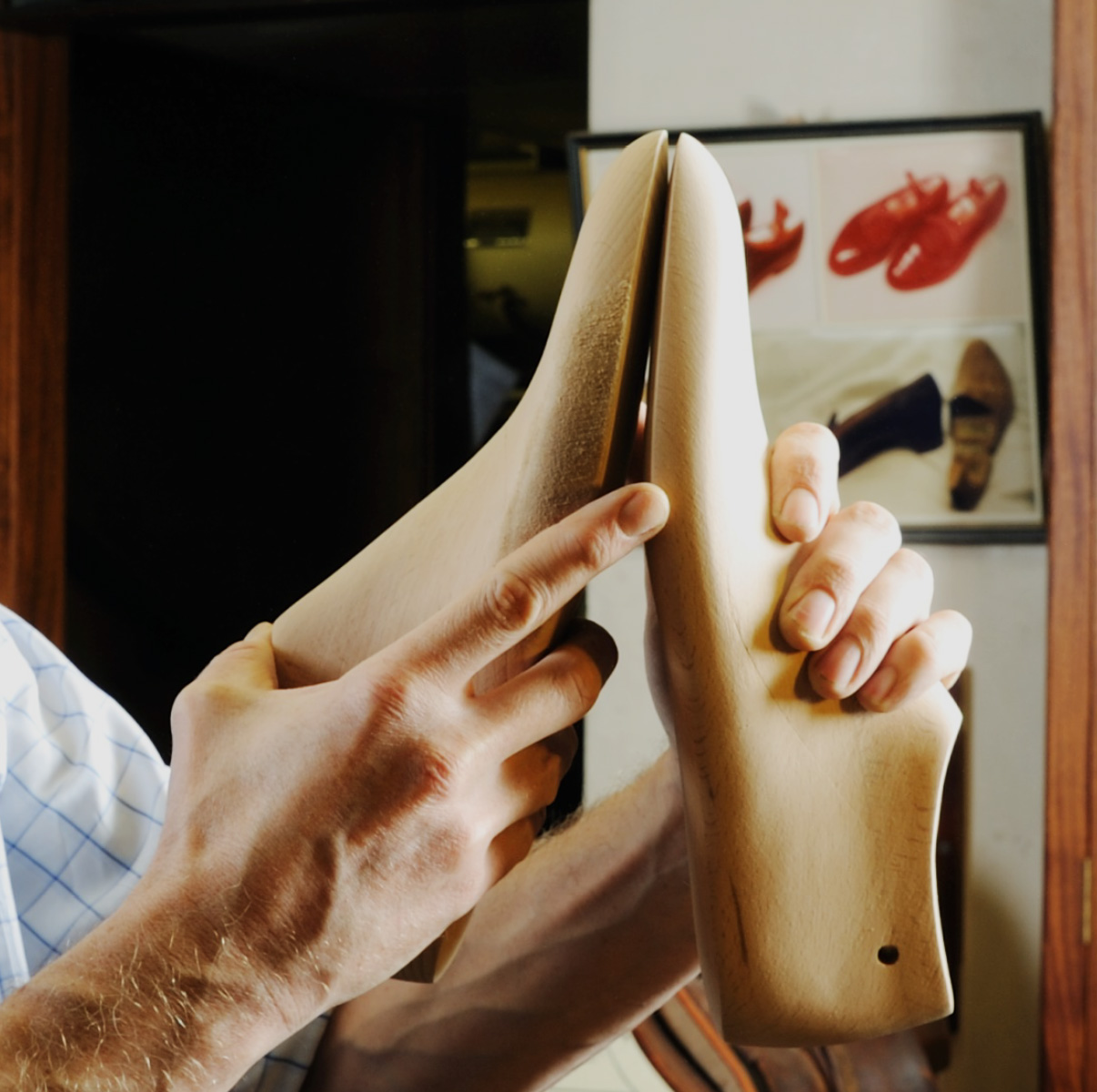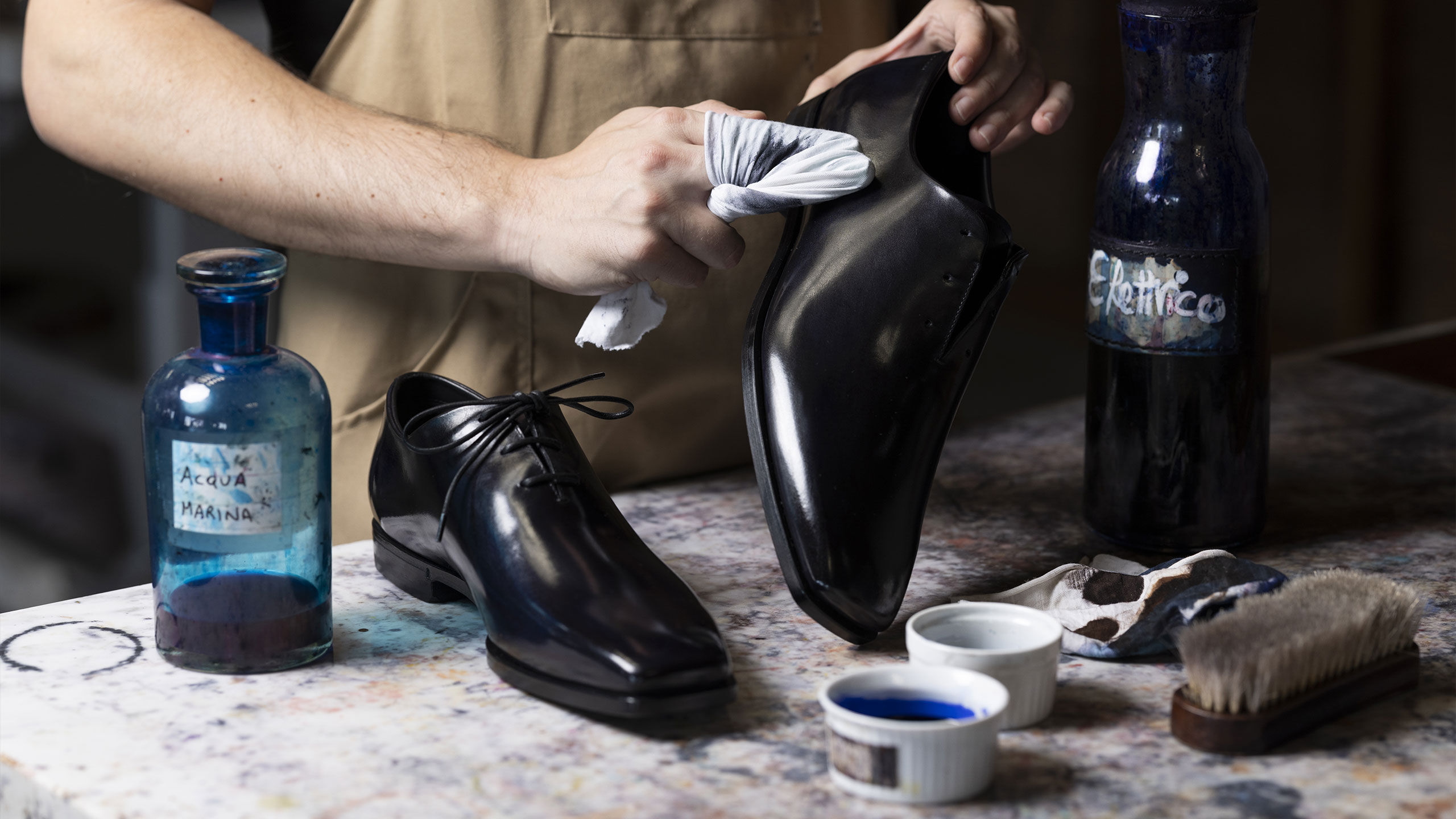

Most shoes are dyed before you ever see them, sealed, and sold as a finished colour. Berluti works the other way round. The house starts with Venezia leather — a full-grain, uncoated calf leather developed under Olga Berluti and tanned so the surface stays open to pigment. Nothing sits on top of it. Colour goes in by hand, layer over layer, which is why two pairs in the same named shade never come out quite identical.
The work belongs to the colourists. Berluti's own account of the art describes the sequence plainly: the edges and seams are darkened first, so the shoe keeps its architecture as the colour builds; water and pigmented waxes go on in passes; and a final glaze gives the surface its depth — the quality that makes a Berluti toe look lit from inside rather than painted on top. Men's Folio's 2025 account of the craft puts a small army behind it: nearly 60 colourists and 15 master colourists, with one Paris Studio specialist reckoning it takes five to seven years to really master the work.
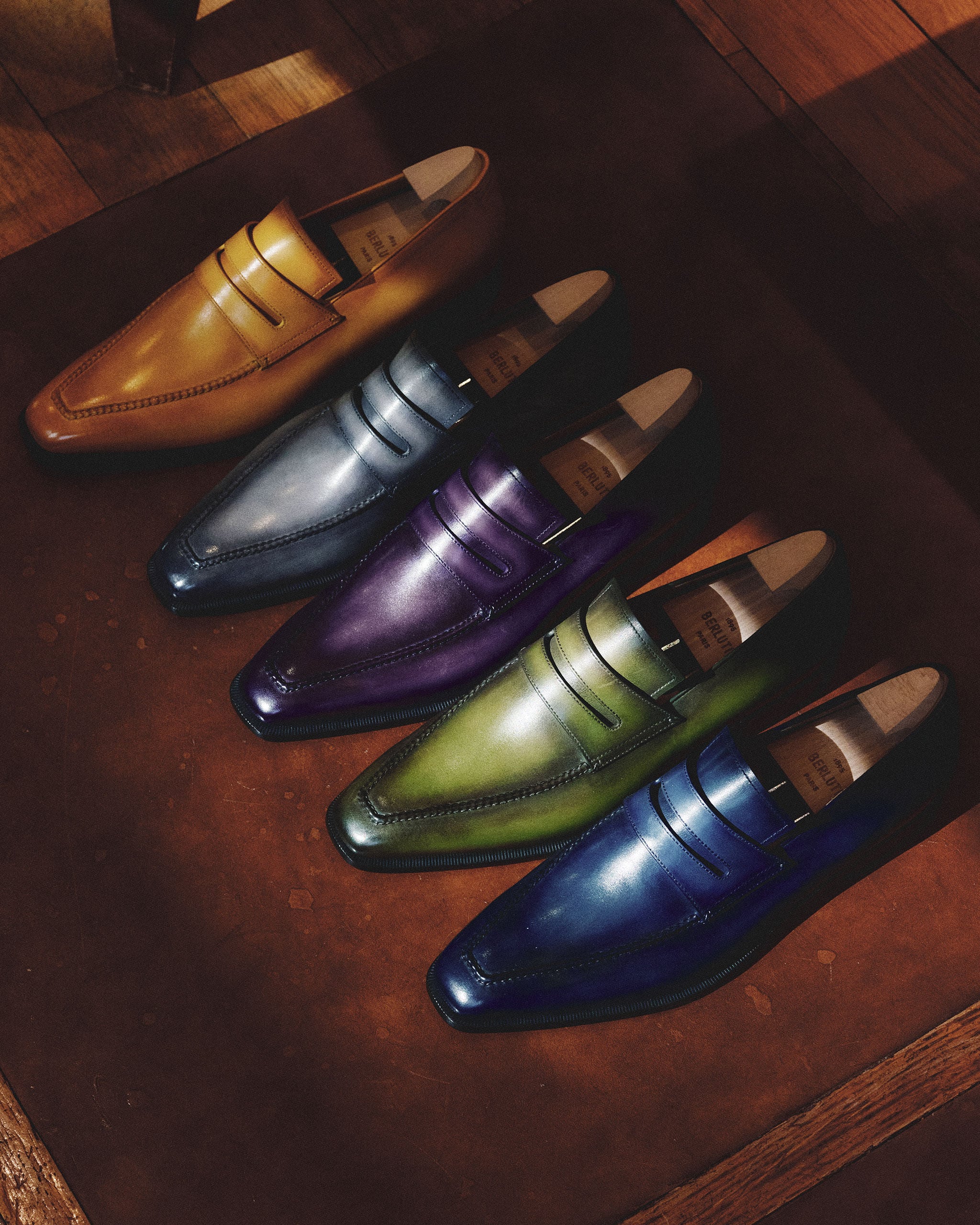
Then comes the part that separates patina from paint. The shoe has to be lived in. Men's Folio records the house's guidance that a new pair of Venezia shoes is ready for its first patina after about 15 wears, before shoe-care products enter the picture. The creases your foot makes, the places the leather flexes and lightens — the colourist works with that map, not against it. Wear is not damage to be disguised. It is the drawing the next layer follows.
And there is always a next layer. Berluti treats re-patination as a recurring service: a pair can go back to the colourist to be deepened, shifted or revived as the leather changes over the years. A man who bought his shoes in one shade is not locked into it for the life of the pair. The colour has a maintenance schedule, the way a watch has a service interval, and the relationship with the maker continues long after the till receipt fades.
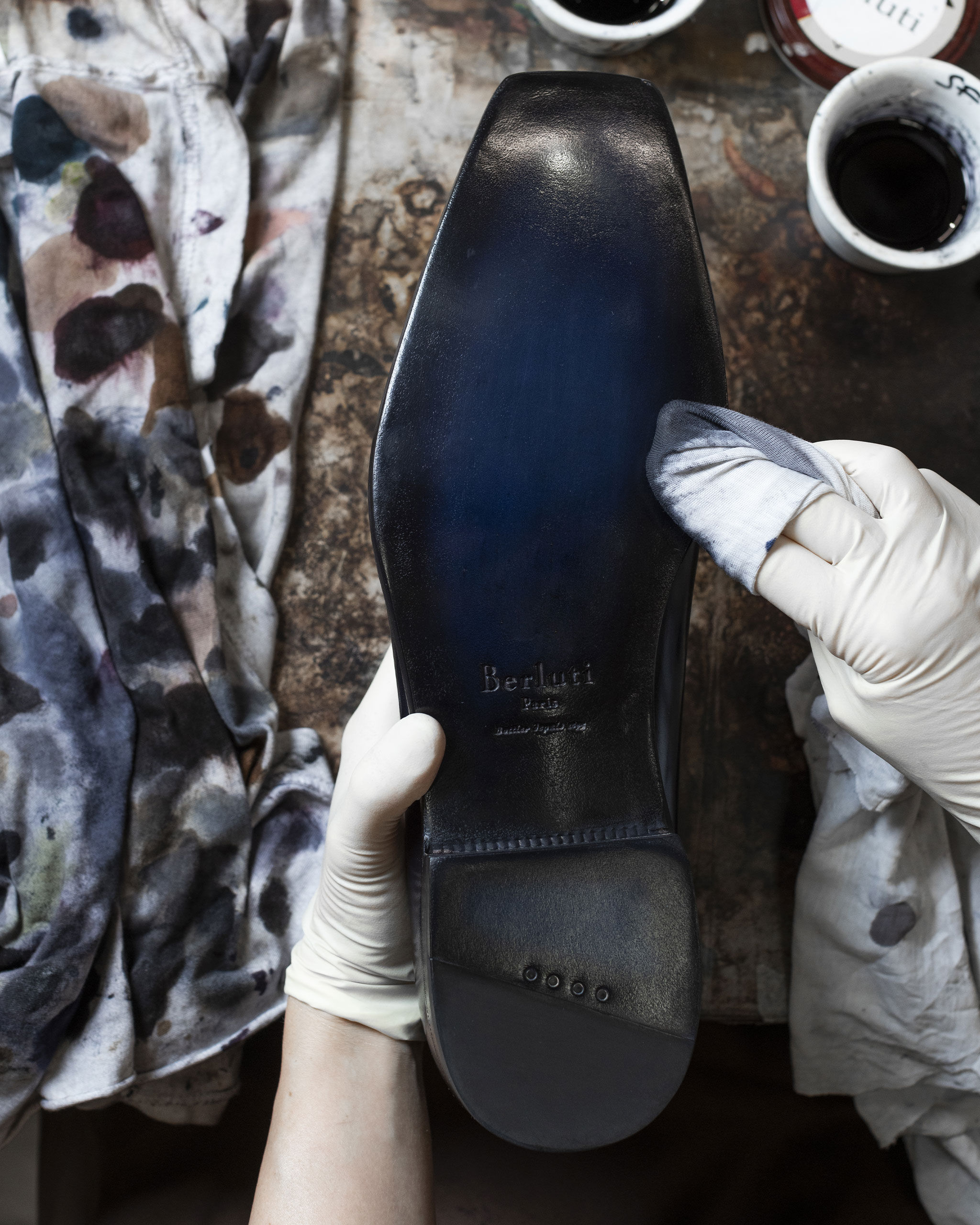
That is the real transaction. The price of entry at Berluti — the house publishes no figure for the patina work itself, and this piece invents none — buys into a loop: leather chosen because it can change, artisans trained for years to change it, and an owner expected to bring the shoes back so they can change again. The Alessandro wholecut, the house's founding silhouette from 1895, still anchors the range; everything the colourists have layered onto it since is the argument that a shoe should record a life rather than resist one.
Previously's Take
Every other luxury house sells you a colour and hopes you never notice it fade. Berluti sells you the fading — managed, deepened and glazed by people who spent years learning how. Ownership here is not a purchase. It is an appointment you keep.
The numbers
Sources · 4 sources
- Berluti — L'Art de la Patine, the house's official craft and care account (berluti.com)
- Men's Folio, June 16, 2025 — "Berluti's Patina Is Proof of a Life Well Lived"
- LVMH — "The Secrets of Berluti's Bootmakers" (colourists among the bespoke workshop's named trades)
- DAMAN Magazine — "Here's How Berluti Does Its Signature Patina" (colourist sequence at the patina bar)
Photographs: Berluti · Berluti · Berluti