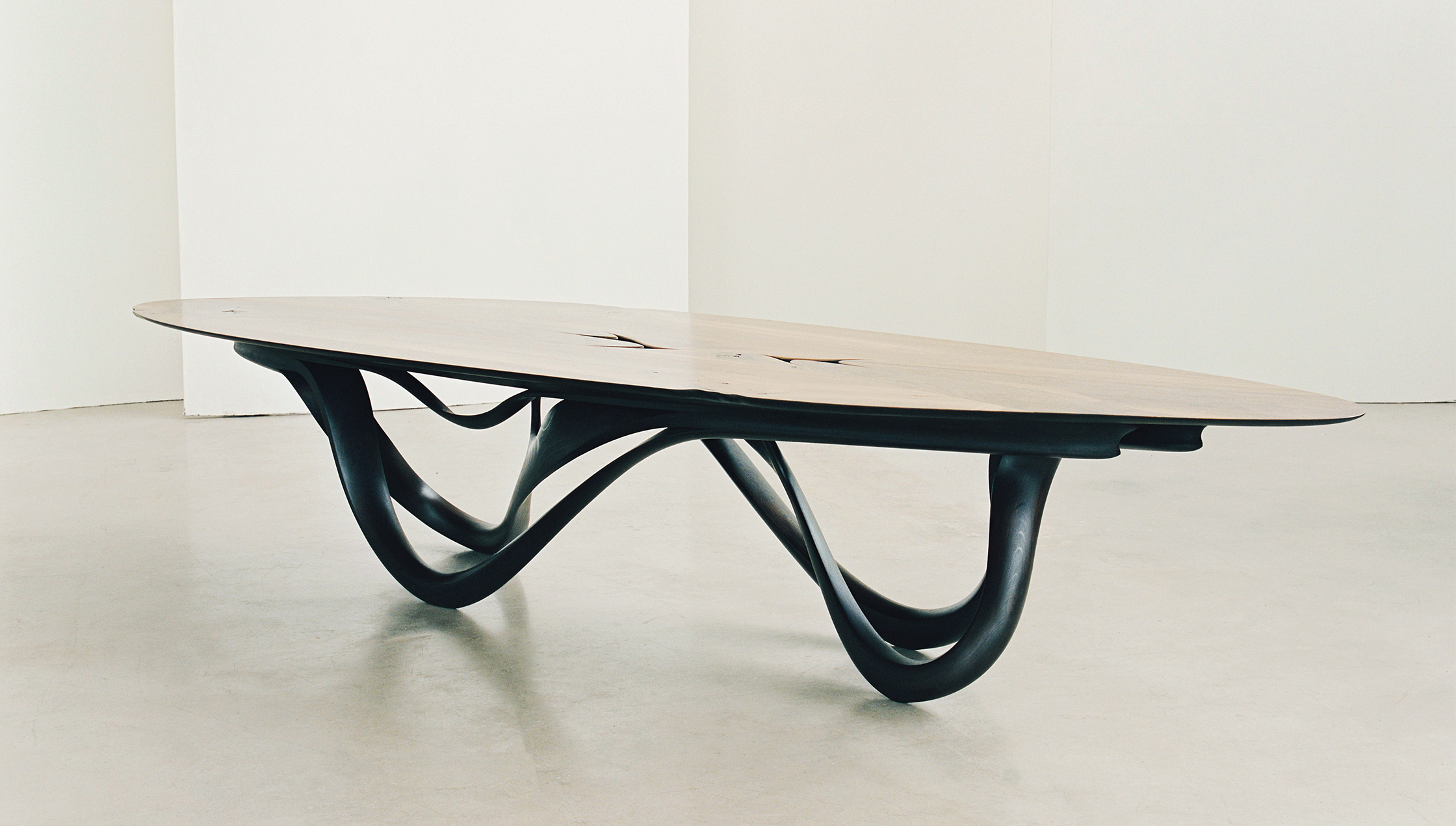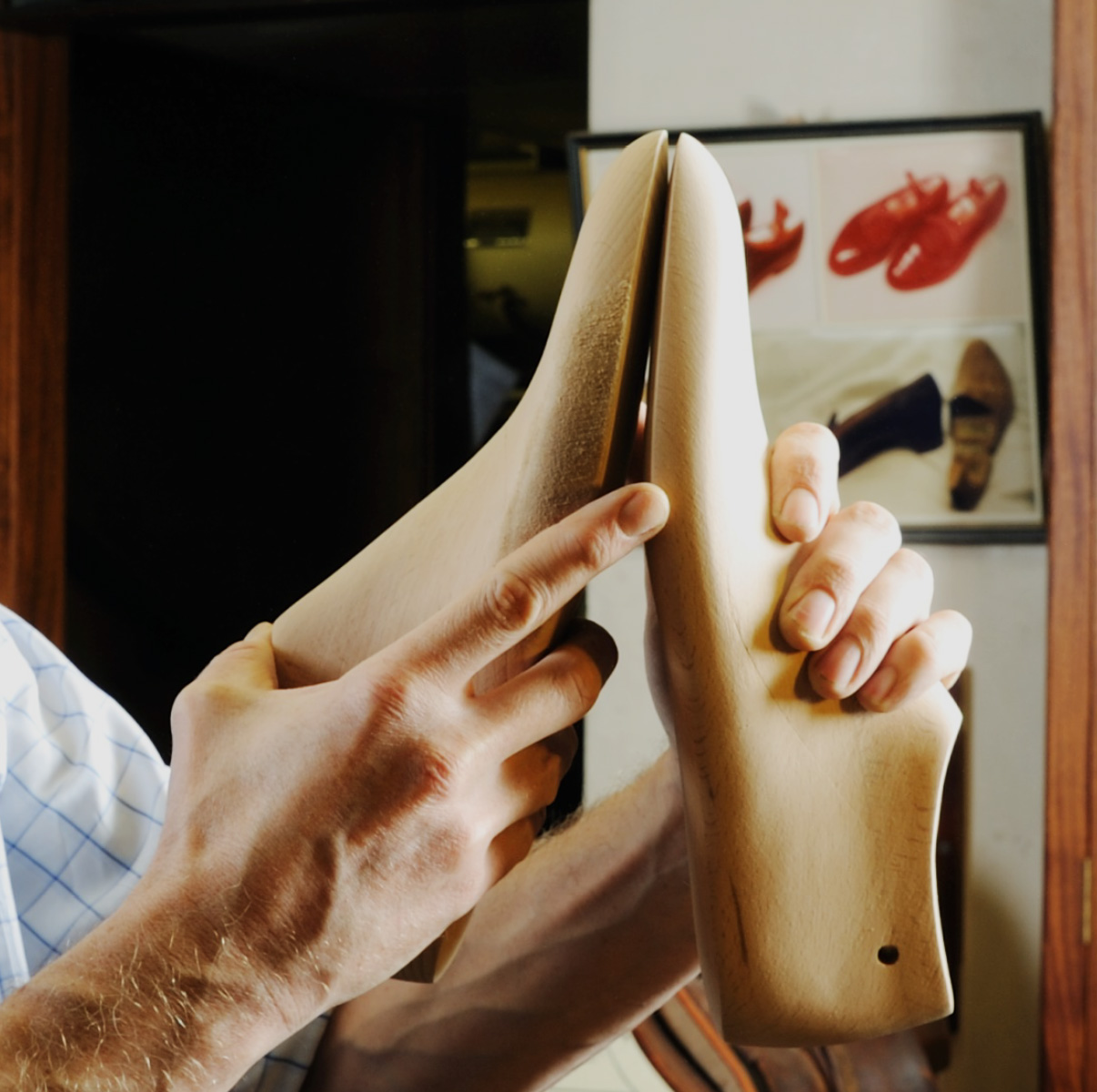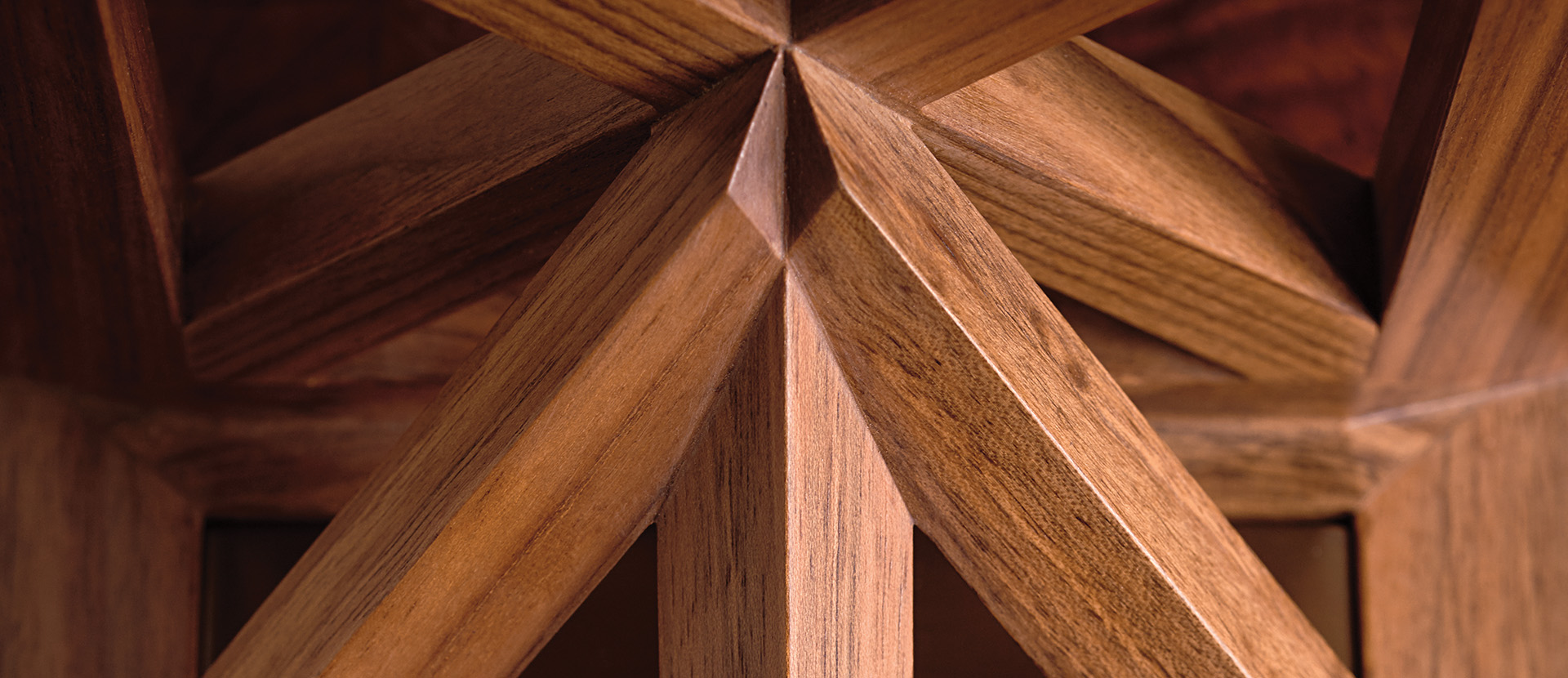

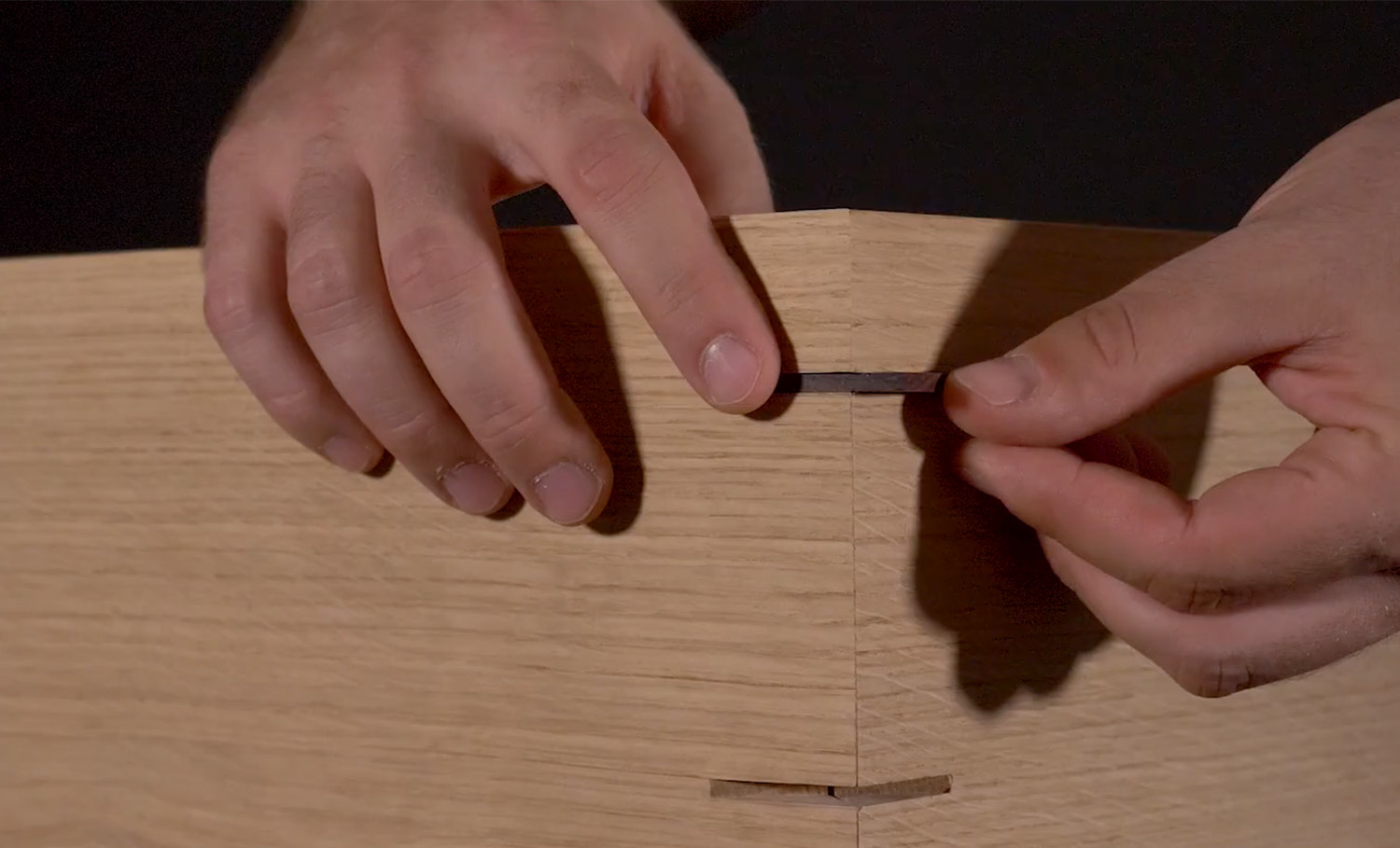
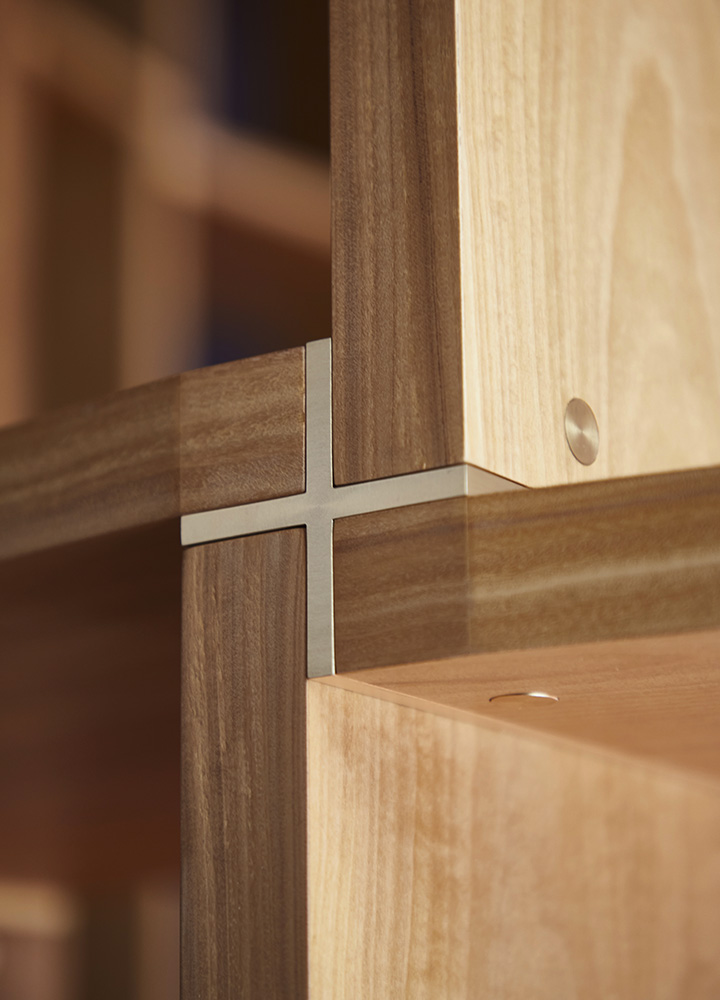
Start with the problem every Bottega Ghianda piece has to solve. A designer arrives with a creative vision — a form that may never have existed in wood. Somebody has to turn it into an object that carries weight and survives decades of use, in wood alone. The workshop calls this engineering, and its answer, refined over generations, is the joint: connections as complex as they are discreet, assembling wooden forms without nails or foreign materials, finished to inlays of millimetre precision.
The bottega was founded in 1889 by Iginio Ghianda in Bovisio-Masciago, Brianza, beginning with inlaid parquet flooring before moving into furniture. In 1936 Gio Ponti asked Iginio to realise a writing desk, and the workshop became a place architects brought their hardest prototypes. Iginio's grandson made it legendary. Pierluigi Ghianda, born in 1926 and known as the poet of wood, took over with his brother Giuseppe in 1945 and ran it for seventy years.
Under Pierluigi, the designers whose ideas passed across the Ghianda benches read like the syllabus of Italian design: Ponti, then Gae Aulenti, Cini Boeri, Achille and Pier Giacomo Castiglioni, Ettore Sottsass, Richard Sapper, Matteo Thun. The workshop produced bespoke fittings for projects including Aulenti's Musée d'Orsay in Paris. The designers got the retrospectives. Ghianda got the phone calls, because a drawing is only a promise until a cabinetmaker keeps it.
Design authorship is famous and portable; making knowledge is neither. It lives in hands and shared memory, and it dies with the workshop if nobody plans for its survival. By 2015 Pierluigi was in his late eighties, his children had chosen other lives, and one of Italy's essential workshops was a succession problem.
The answer came from inside the trade. Romeo Sozzi — himself a master of Italian woodworking, founder of the furniture house Promemoria, and a Ghianda admirer who had first met Pierluigi in 1985 — acquired the bottega in 2015, shortly before Pierluigi's death. The craftsmen and the workshop's knowledge moved to Valmadrera, minutes from Promemoria's base, with architect Michele De Lucchi as artistic director. Sozzi did not absorb the name into his own brand; he kept it standing as Bottega Ghianda, with its own Milan shop in Brera.
The work since argues the rescue was real. Every piece remains strictly a unique piece, built on the same proposition: the creative vision belongs to the designer, the physical truth of it belongs to the maker. In 2024 the Farfallina chair, designed by Álvaro Siza and produced by Bottega Ghianda, received the Compasso d'Oro, Italian design's highest honour — a current award for a workshop founded in 1889. Studiolabo's 2012 documentary The man who signs the wood records Pierluigi himself, with Aulenti, Boeri and Castiglioni describing what it meant to have him at the other end of a drawing.
Previously's Take
Design history is written as a list of names, and the names are almost never the people who made the objects stand up. Bottega Ghianda is the correction: a workshop whose reputation rests on work designed to disappear — joints you cannot see, holding together ideas you cannot forget. Sozzi buying it in 2015 was not nostalgia. It was the trade admitting that some knowledge only exists in one room, and paying to keep the room open.
The numbers
Sources · 5 sources
- Bottega Ghianda — official site, "Fine-woodworking" and "In the sign of wood"
- Homo Faber / Michelangelo Foundation — artisan profile (1889 founding, 2015 takeover)
- Wallpaper* — Bottega Ghianda revival feature (1936 Ponti desk, 2015 deal)
- Wellmade — workshop profile (2024 Compasso d'Oro)
- Fuorisalone TV / Studiolabo — The man who signs the wood (2012), credits
Photographs: Bottega Ghianda · Bottega Ghianda · Bottega Ghianda