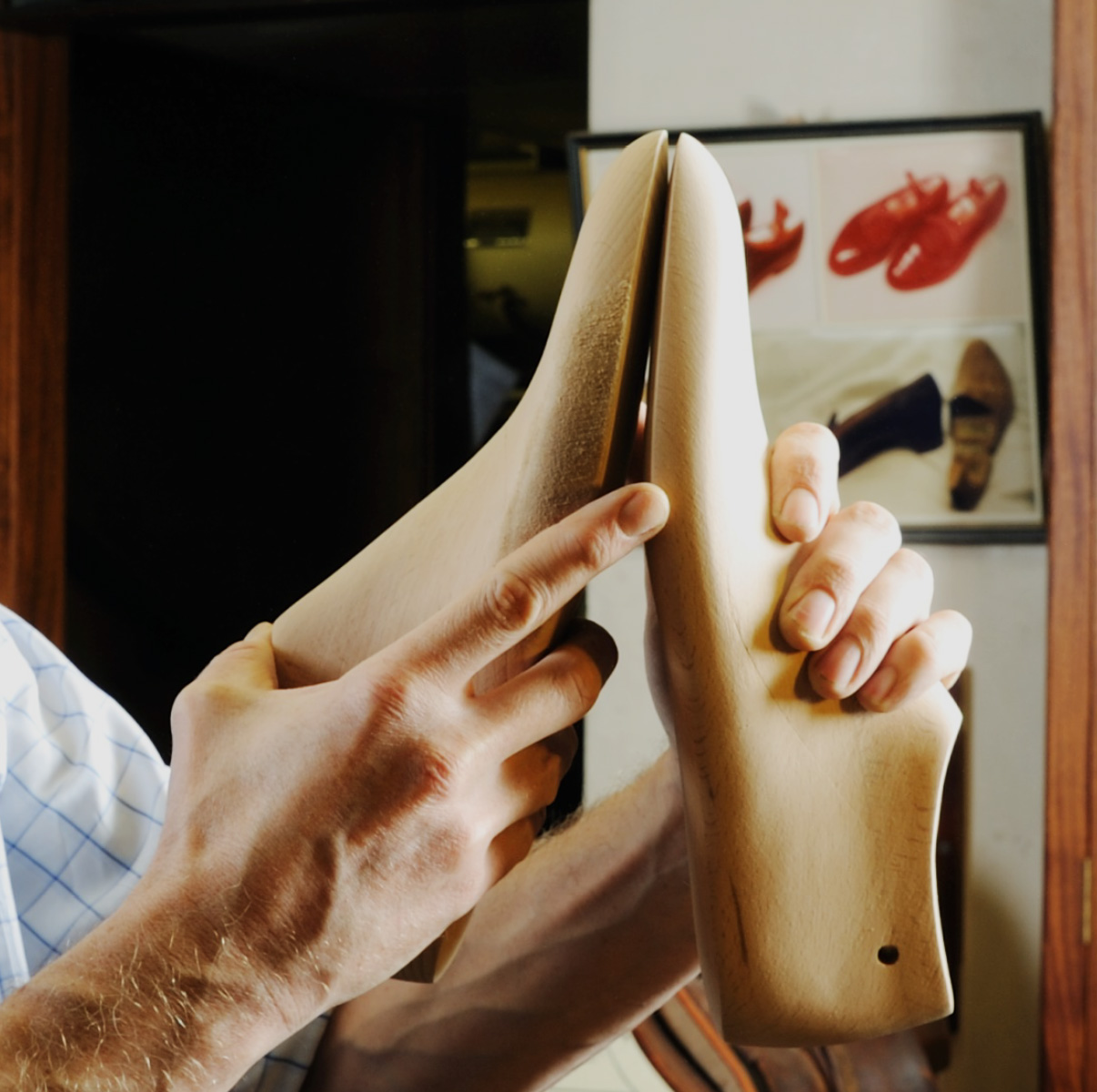

The weave started as a workaround. When Michele Taddei and Renzo Zengiaro founded Bottega Veneta in Vicenza in 1966, the local sewing machines were built for cloth, not for bag leather. The hides the house wanted to use were soft — glove-soft — and a soft panel on its own slumps. So the artisans cut the leather into slender strips and wove them. Interlaced diagonally, the strips hold each other up. Weakness, reorganised, became structure.
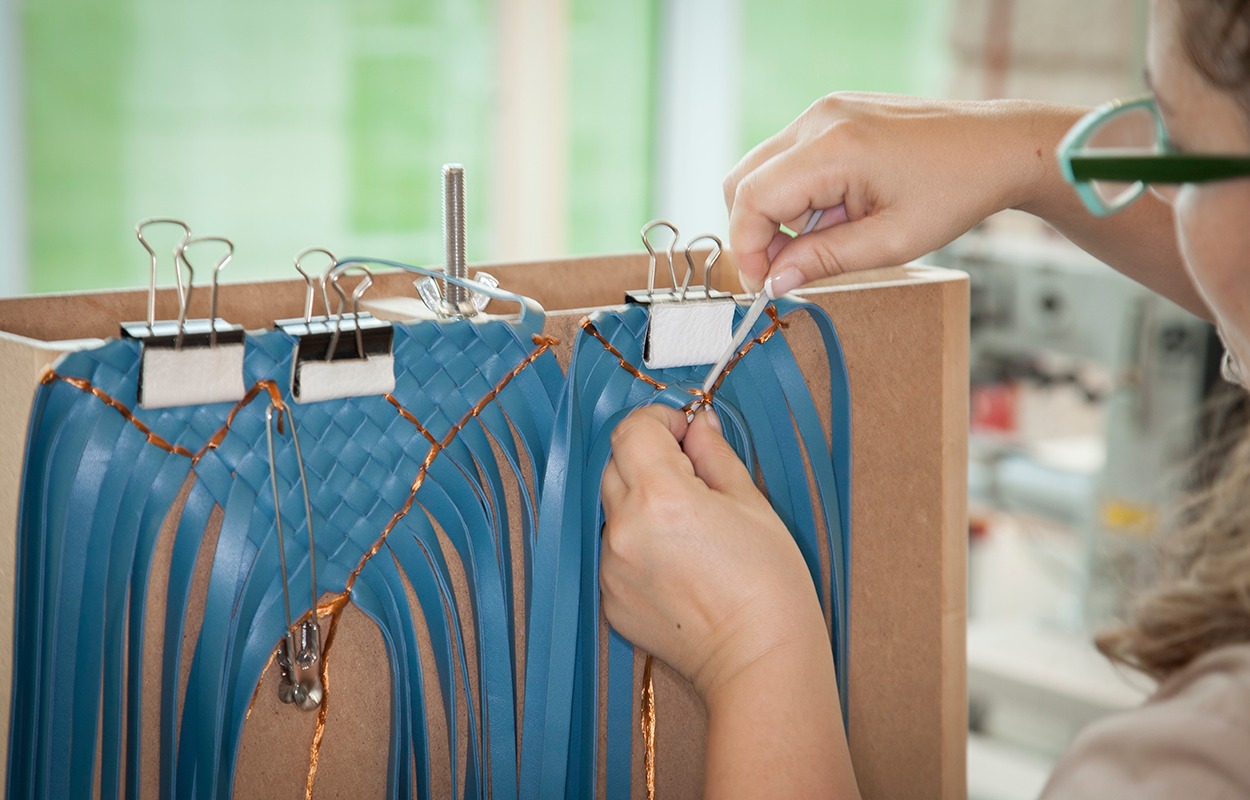
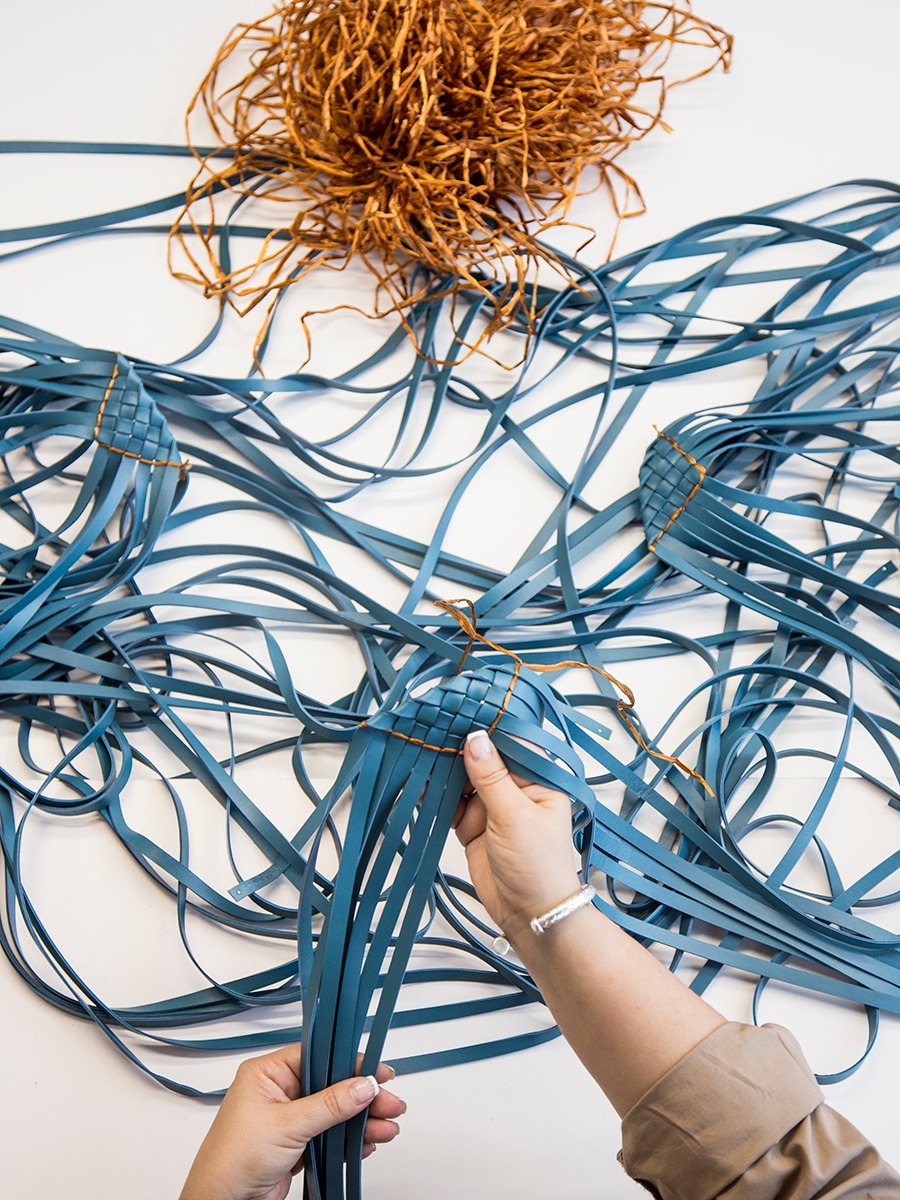
Those strips have a name: fettucce. An artisan hand-weaves them diagonally into a leather base panel or around a wooden mould, keeping every strip at the same angle and the tension even by feel across the whole surface. Introduced in 1975, the technique turned fifty in 2025, and the house marked it with a campaign called Craft Is Our Language — a fair title, since for Bottega the weave is the language. The founding credo was "when your own initials are enough." The pattern does the signing.
The film Craft in Motion, directed by Massimiliano Bomba and narrated by Ruggero Negretto, one of the house's most senior artisans, walks the Montebello Vicentino atelier — an eighteenth-century villa, Villa Schroeder-Da Porto, restored and reopened in 2013 — and follows three bags, the Cabat, Kalimero and Sardine, being cut, sewn and finished by hand. Its best line is a unit of measurement: real luxury requires time, and when Bottega makes a bag, it counts days, not hours.
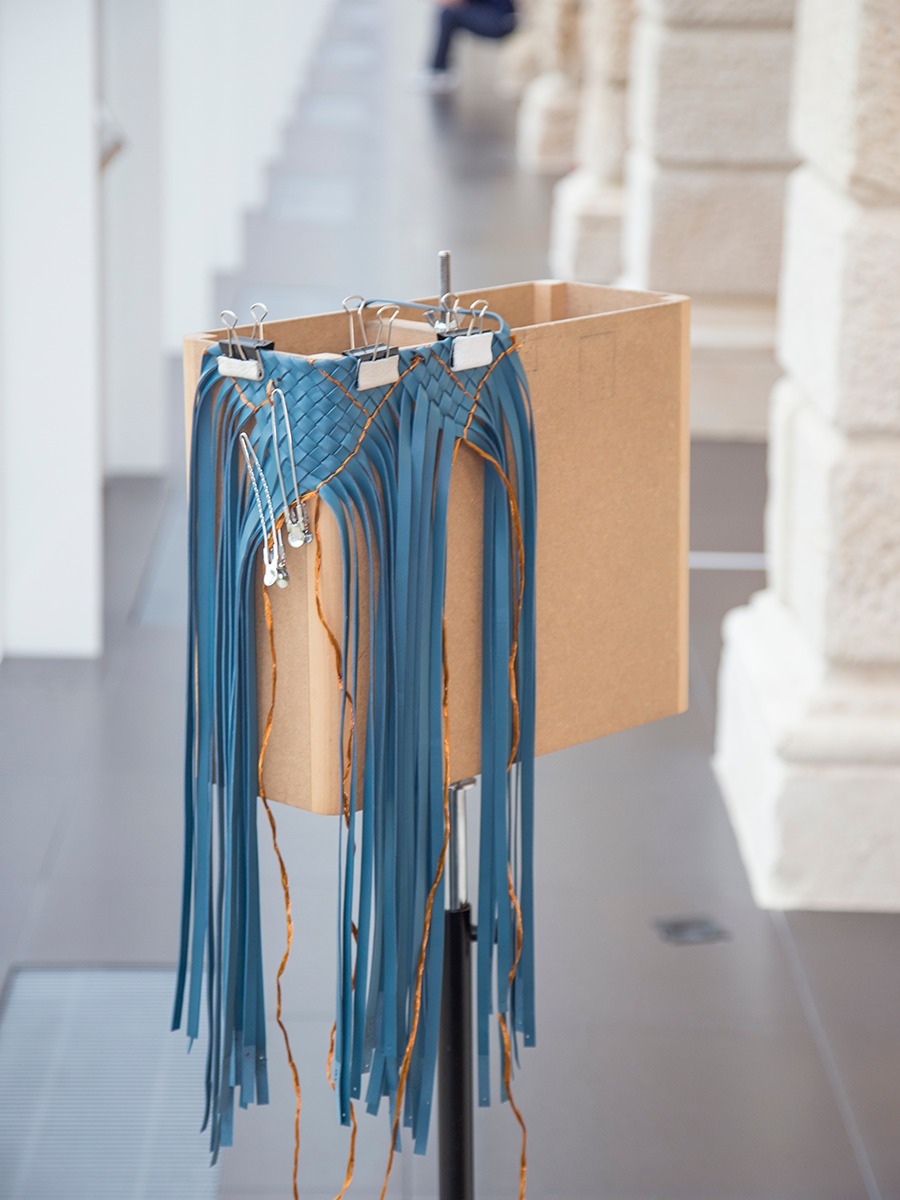
The Cabat is where that stops being a slogan. Introduced in 2001 by Tomas Maier as his first handbag for the house, the big unlined tote takes two artisans two full days — standing up, because the weaving is done standing and it takes strength as well as touch. The fettucce are first formed into eleven triangles, then assembled and woven on a stand built specifically for the Cabat, with raffia threaded in at stages as a guide to check the weave is true. Around eighty seam points are then stitched by hand to attach the base and handles. Because the strips are double-faced, the finished bag is the same inside as out — Maier's stated goal for it.
Previously's Take
Every luxury house claims craft; Bottega Veneta built its entire identity out of one technique and then refused to speed it up for fifty years. Intrecciato survives because it is genuinely a better way to make soft leather strong — the decoration and the engineering are the same gesture. When one person's hands are the product, time isn't a cost line. It's the material.
The numbers
Sources · 5 sources
- Bottega Veneta — Craft in Motion official film page (atelier, director credit, "count days, not hours")
- Surface Magazine, March 15, 2017 — "How It's Made: Bottega Veneta" (atelier visit; Cabat process in full; photography by Valerio Vincenzo)
- W Magazine, 2025 — "How the Bottega Veneta Cabat Bag Became an Icon of Discreet Luxury" (two artisans, two days; Montebello villa)
- Wallpaper*, 2023 — "A rare glimpse inside Bottega Veneta's artisanal workshop" (Craft in Motion; Cabat, Kalimero, Sardine)
- Bottega Veneta — Craft Is Our Language campaign release, 2025 (intrecciato introduced 1975; fettucce method)
Photographs: Surface Magazine · Surface Magazine · Surface Magazine