
The most interesting drive in a Bugatti W16 Mistral's life is the one its owner never takes.
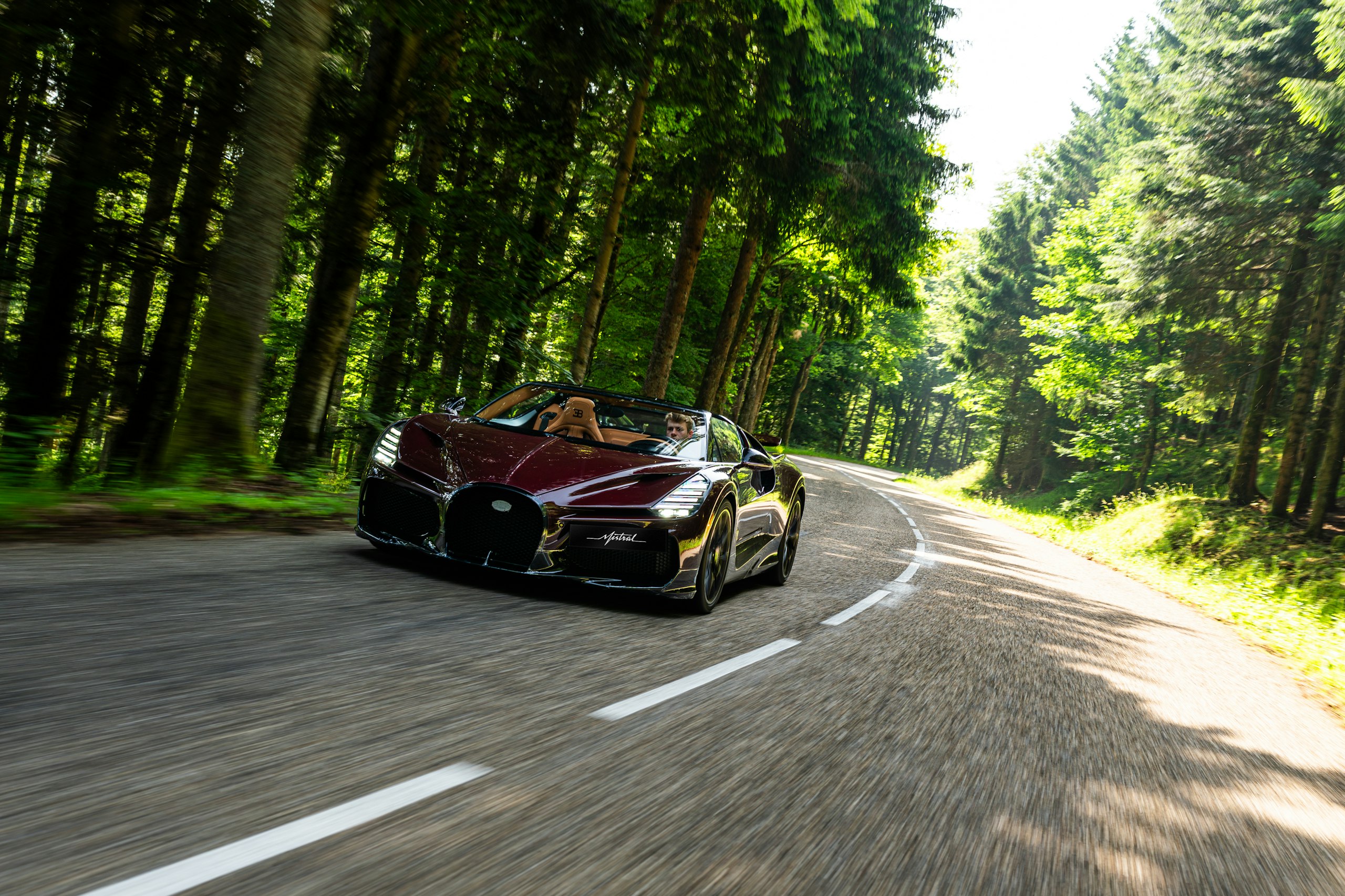
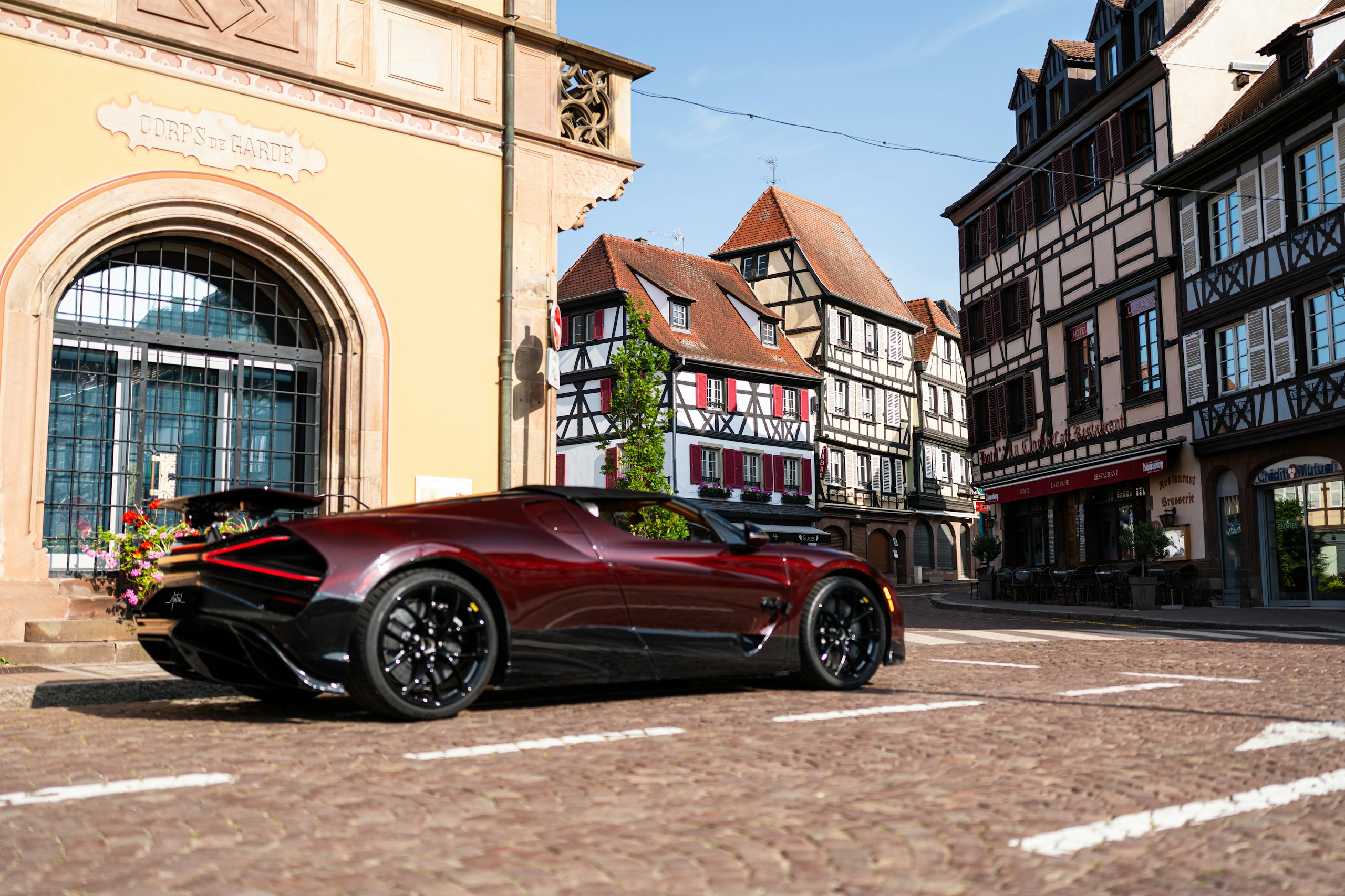
Before delivery, each of the 99 Mistrals went through what Bugatti calls a 100% comprehensive appraisal: a minimum of 400 kilometres of evaluation, most of it on a 350-kilometre route through Alsace built up over two decades of Veyron and Chiron testing. Villages for cobblestones, because old stone shakes loose the slightest chassis irregularity. Highways for stability and comfort, mountain passes where altitude leans on the powertrain, and narrow streets walled in ancient stone, used as natural echo chambers — the evaluators listen to the car off the buildings.
And then the airfield. The programme ends at Bugatti's facility at Colmar, where emergency braking, ESP and ABS are worked at speeds reaching 300 km/h, and where the Mistral's removable roof gets its own extra regime of fit, removal and high-speed-resistance checks — a layer of testing no recent closed Bugatti needed, on the car that could only reach its top speed with the roof off and the W16's 1,600 PS fully uncorked.
Here is the part that defines the whole exercise: almost none of it is done by instruments. Bugatti says ninety percent of the validation comes from the driver's own sight, sound and touch, the rest from telemetry and data loggers. Currently just three specialists hold the full qualification to do it, trained through supervised drives alongside senior evaluators before they are trusted alone. Their method is almost stubbornly analogue — observations spoken into a dictaphone during the drive, and if anything feels wrong, partial or complete disassembly to find out why. Any fault sends the car back out for a verification run of typically 50 kilometres or more, and the loop repeats until the car is flawless.
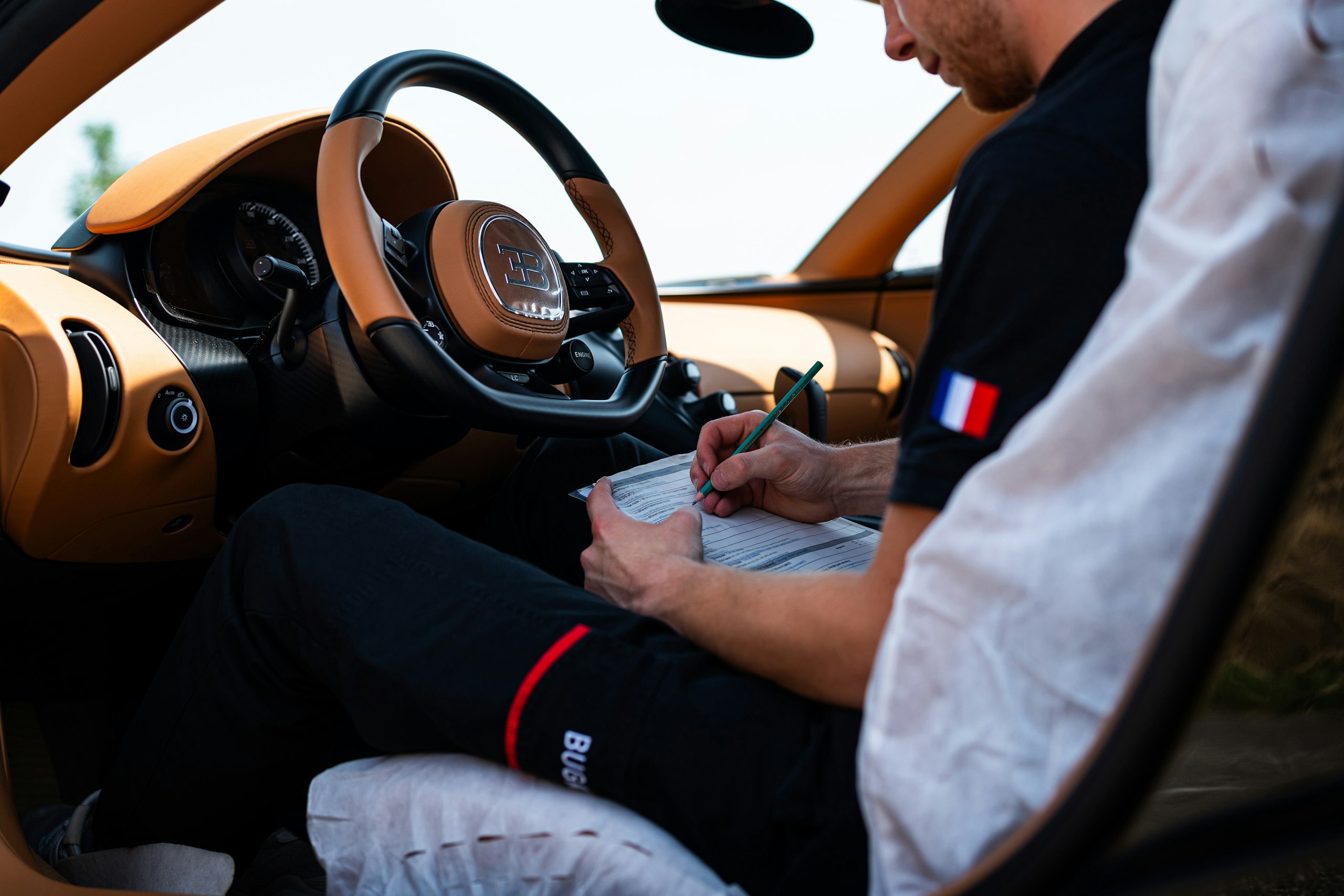
That is the luxury being sold here, and it is worth naming precisely. Bugatti priced the Mistral at €5 million net, and all 99 cars were spoken for before the model was even unveiled at Monterey in 2022. At that altitude, buyers are not short of engineering. What the 400 kilometres buy is rarer: a named human being, one of three, staking a trained lifetime of feel on the claim that this specific car is right.
The story now has its ending. In July 2026, Bugatti announced that the final W16 Mistral — a two-tone car in Pearl and Sparkle — had rolled out of the Molsheim Atelier, closing production and with it the W16's twenty-year road career, from the Veyron through the Chiron to this open-top farewell. Every one of those last cars still went through the same inspection. The engine was ending. The standard did not get to.
Previously's Take
Speed records made the W16 famous, but this is the better story about what the money meant. A €5 million car whose maker still trusts ears over sensors, and routines a finished masterpiece back to pieces if one man's hands say something is off — that is not quality control as a department. It is quality control as a creed, and the Mistral is its last full sermon.
The numbers
Sources · 5 sources
- Bugatti Newsroom, July 1, 2025 — "The rigorous quality assessment behind every W16 Mistral" (400 km protocol, route, Colmar, 90/10 method, three evaluators)
- Bugatti Newsroom, July 16, 2026 — "The Last of Its Kind: Bugatti marks the end of production of the W16 Mistral" (final car, 99 built)
- Bugatti Newsroom, September 2022 — W16 Mistral European debut release (€5 million net price, all 99 spoken for)
- CarBuzz, July 1, 2025 — independent coverage of the Mistral quality assessment
- Jalopnik, July 2025 — independent coverage of the 400 km pre-delivery programme
Photographs: Bugatti Newsroom · Bugatti Newsroom · Bugatti Newsroom