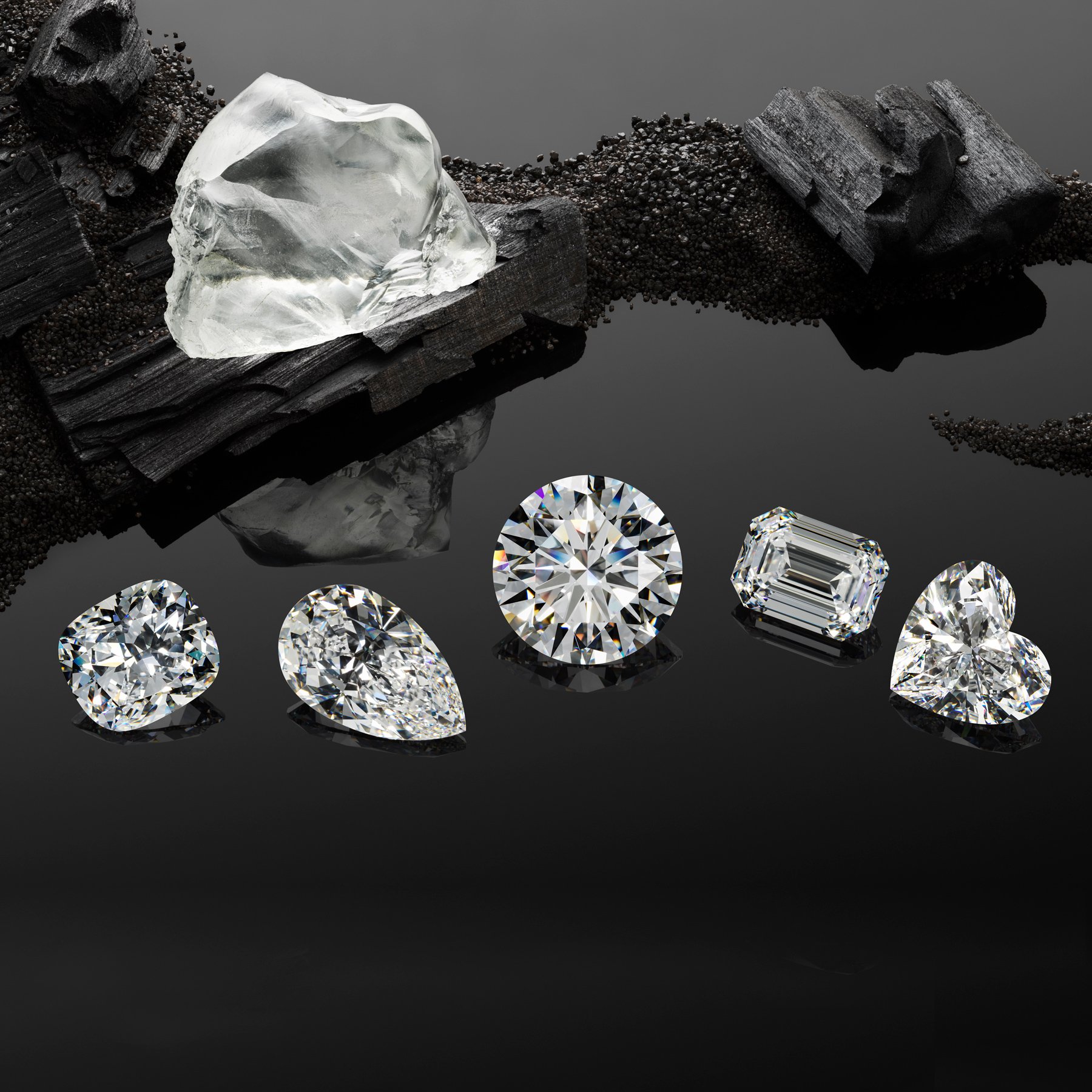

The rough had a name before it had a future. The Queen of Kalahari was recovered at the Karowe mine in Botswana in 2015: 342 carats, D colour, flawless clarity, Type IIa — a combination of size and purity that almost never arrives in one crystal. Caroline Scheufele, Chopard's co-president and artistic director, travelled to Botswana to see the stone herself, and Chopard bought it for a price the house has never disclosed. Her intention set the whole project: this was not to be treated as a mere trophy, but prepared for a destiny worthy of its stature.
The destiny she chose was division. Instead of one monumental jewel, the Queen was cut into 23 diamonds. Five weigh more than 20 carats, and between them they cover the five classic cuts: a 50-carat brilliant, a 26-carat heart, a 25-carat pear, a 21-carat emerald and a 20-carat cushion. Scheufele built the collection as a garden and gave each of the five a flower — the brilliant a sunflower, the heart a pansy, the pear a banana blossom, the emerald a water lily, the cushion a poppy. The name followed the planting: the Garden of Kalahari, unveiled in Paris in January 2017 after almost a full year of work and thousands of hours in Chopard's ateliers. Chopard filmed the journey as it went; Alexis Veller's documentary follows the stone from the Karowe mine to the Geneva workshops.
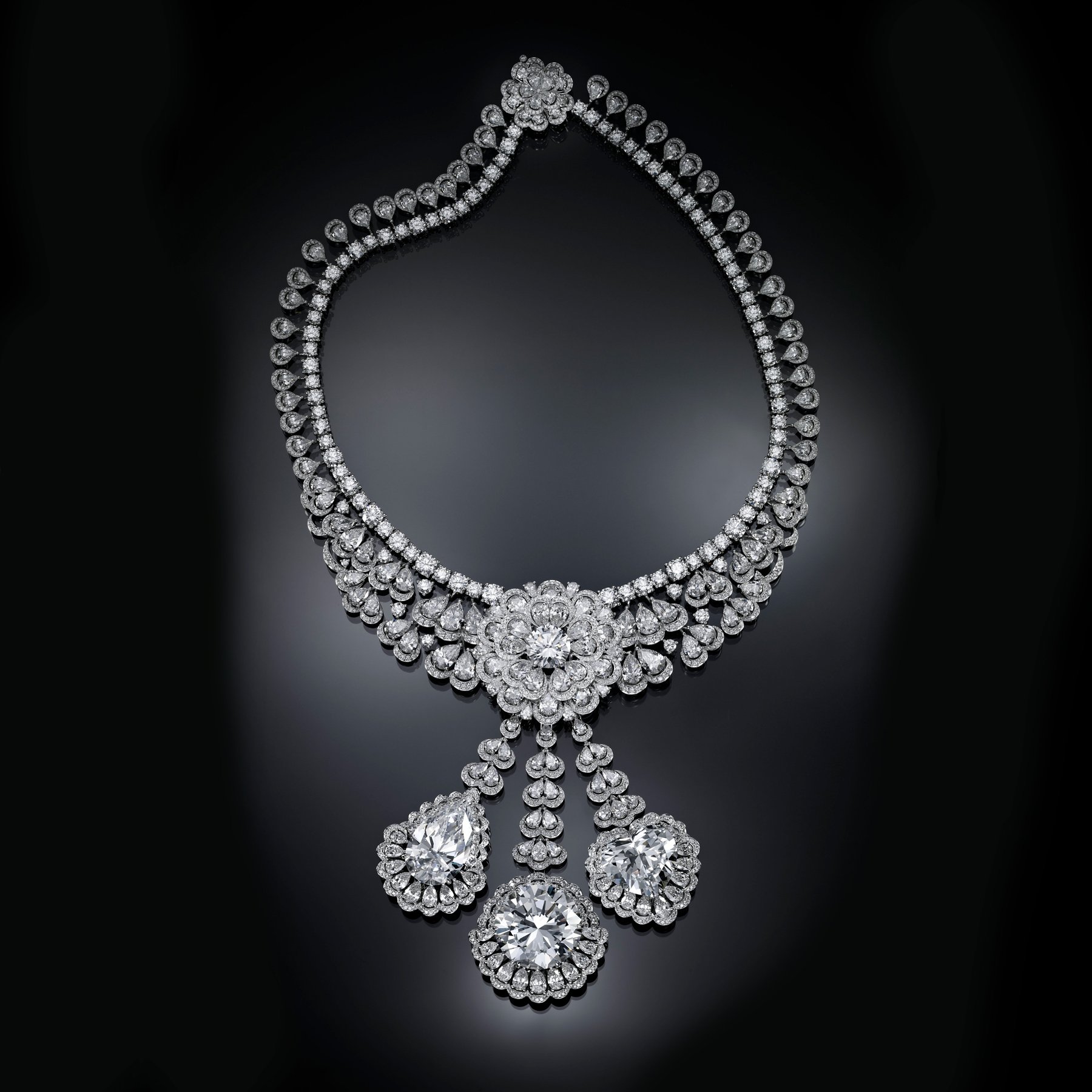
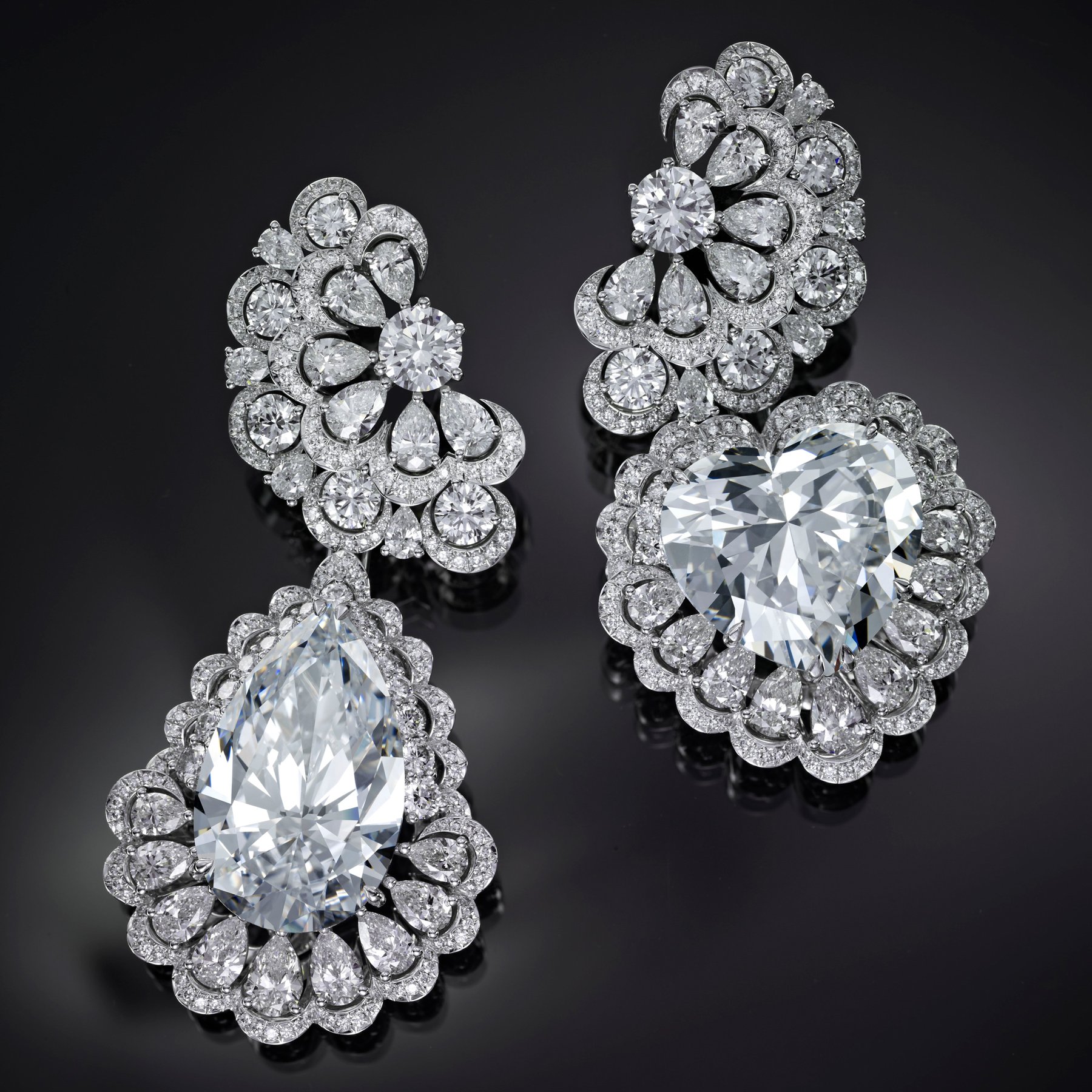
The 23 stones became six creations: a necklace, a pair of earrings, a cuff bracelet carrying two emerald-cut diamonds, two rings — one built around the 20-carat cushion — and a secret watch. The necklace is the centre of the system, and the system is the point. Two of its pendants, the heart and the pear, are not fixed. They unclip from the necklace and attach to the earrings, so the set reconfigures: stones move between pieces instead of sitting in a safe in one permanent arrangement. The mechanism got its most public test within weeks of the unveiling, when Charlize Theron wore the earrings to the 2017 Academy Awards — the 26-carat heart on one ear, the 25-carat pear on the other, a deliberately mismatched pair that only exists because the necklace agreed to give its pendants up.
A single great jewel is finished the day it is made; its job is to be looked at. A wardrobe of interchangeable pieces keeps making decisions — what travels, what stays, what tonight's version of the set looks like. Chopard's lacework settings, built like diamond guipure, hold the garden together visually, so a stone reads as part of the family whichever piece it is currently visiting.
Previously's Take
Most trophy stones get one setting and one photograph. The Garden's idea is better: a great rough is not a monument, it is material — and material earns its keep by being worn, rearranged and worn again. Twenty-three stones, six pieces, and the two biggest travellers in the set never stay where they were put.
The numbers
Sources · 4 sources
- Chopard — official Queen of Kalahari / Garden of Kalahari account (chopard.com)
- WorldTempus, January 2017 — Garden of Kalahari unveiling report
- JCK, June 2017 — the Garden of Kalahari earrings and the 23-stone yield
- The Jewellery Editor — Queen of Kalahari and Garden of Kalahari coverage (undisclosed acquisition price; pendant configurations)
Photographs: Chopard photography by Armin Zogbaum · Chopard photography · Chopard photography