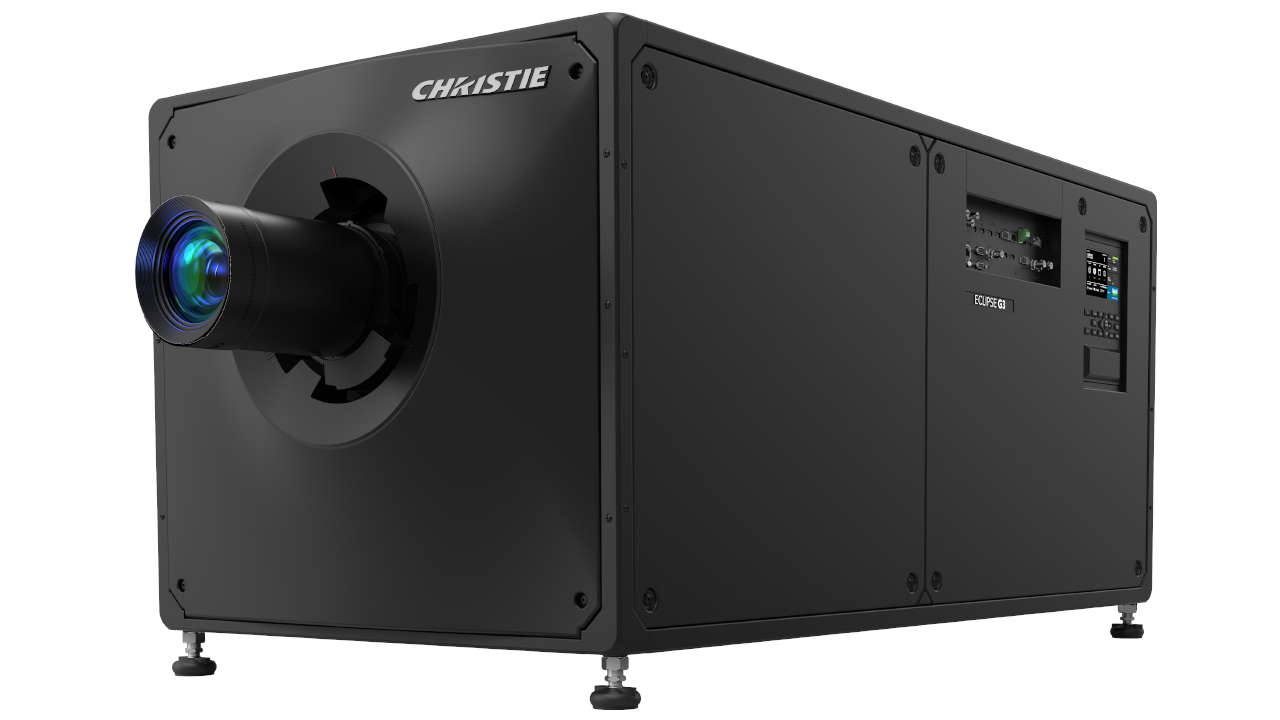

Start with the grey. On a conventional projector, the light source lights the whole imaging chip at once, so even a scene meant to be pitch black arrives with a faint grey wash over it. The industry calls that wash "video black," and home cinema has been apologising for it for decades. The Eclipse line exists to end the apology. Christie's 6DLP design modulates the image in two stages, so light only lands where the picture asks for it. One pixel can be twenty million times brighter than the pixel beside it, and the dark one stays dark.
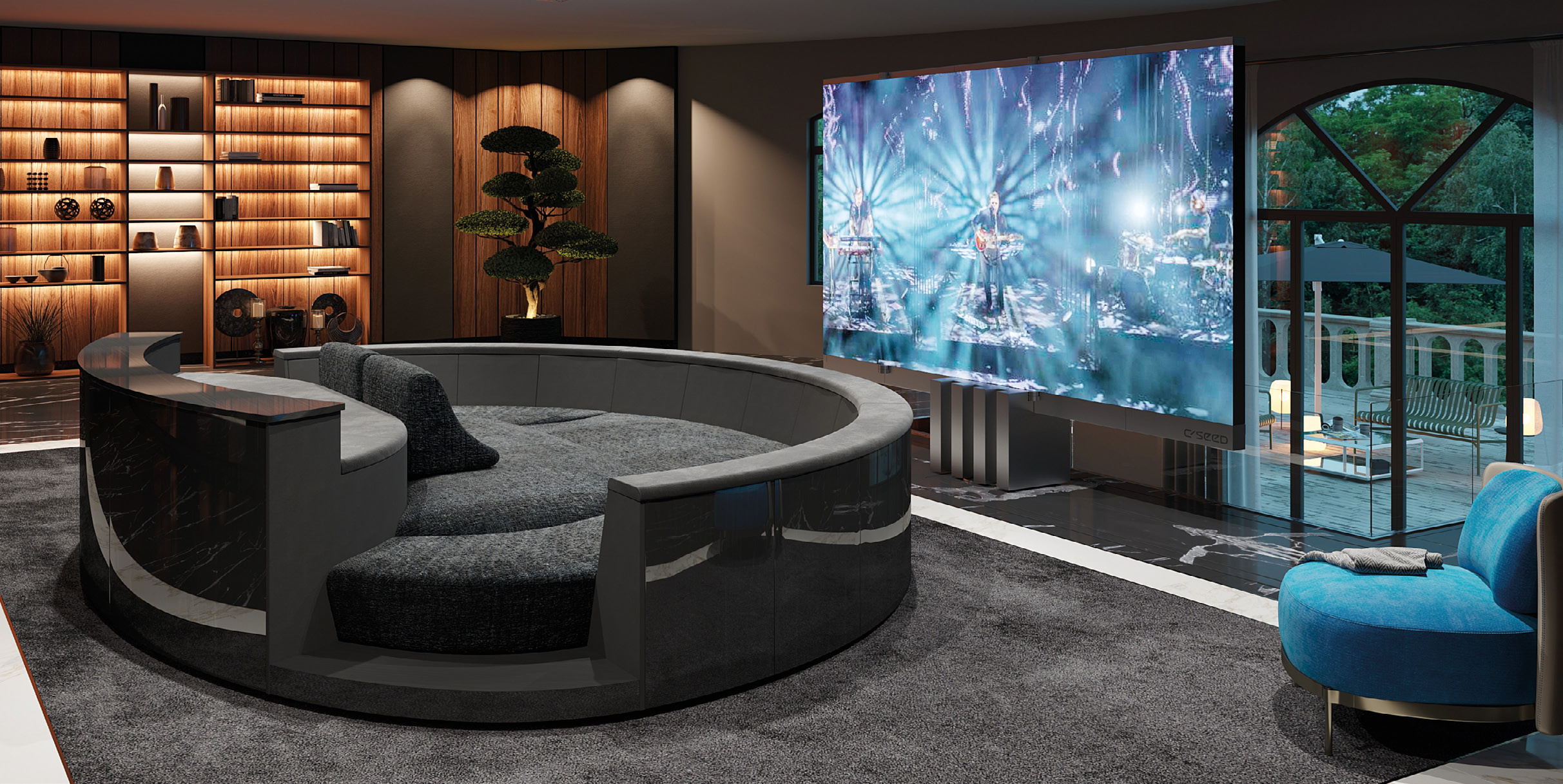
That ratio is Christie's headline figure: up to 20,000,000:1 sequential contrast, roughly a hundred times the Rec. 2100 reference, with colour covering about 98% of the Rec. 2020 palette. Brightness is not the sacrifice it usually is at this end of the market. The G3 makes 30,000 ANSI lumens at native 4K, supports 120Hz in 2D and active 3D at 60Hz per eye, and is rated to hold full brightness for 50,000 hours. Trade press that sat through the CEDIA Expo 2025 debut — the projector anchoring a $1.3 million demonstration theatre in Sound Room 7, on a Seymour-Screen Excellence screen — reported the same moment from the dark: a full-black frame that made the screen effectively vanish.
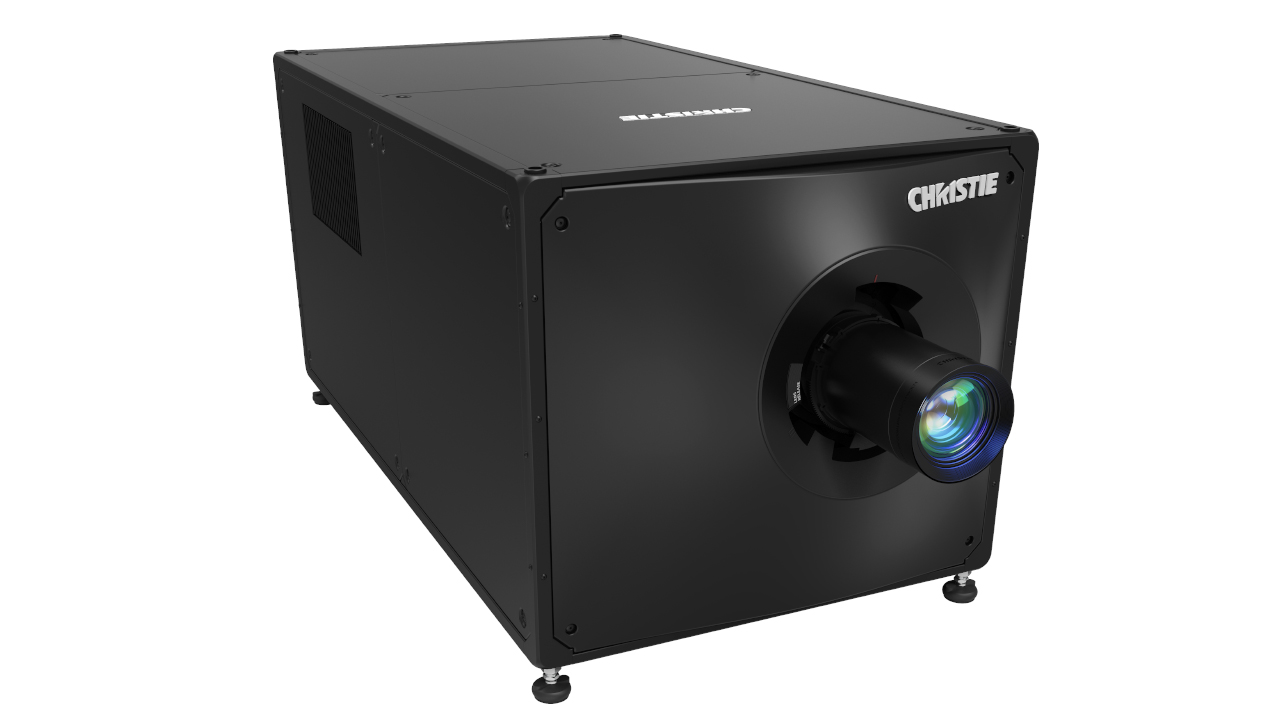
The third generation is less about the image than about the plumbing behind it. The first Eclipse ran its lasers in a tall remote rack and piped the light to the projector head over fibre. The second generation was a three-part system: external laser rack, external chiller, head. For the G3, Christie moved the RGB pure laser source inside the projector head itself. What remains outside is the chiller, and that separation is the point — the chiller carries most of the heat and noise into another room, leaving the projector itself typically under 45 decibels where the audience sits. Fewer boxes, no fibre run, simpler installation, in a machine that still weighs close to 400 pounds.
None of it works in a casual room, and Christie says so plainly. Its own engineering Q&A stresses that the full effect needs a properly dark space — dark walls, floors and seating, no stray light — because reflected light washes contrast off the screen no matter what the projector can do. The 30,000 lumens buy the designer freedom here: a lower-gain screen, which deepens perceived contrast, still gets all the light it needs. For film content in a home theatre, Christie's qualified integrators pair the projector with a tone-mapping processor from madVR or Lumagen, and the G3 is sold only through select distributors with the experience to calibrate the whole system, projector and room together.
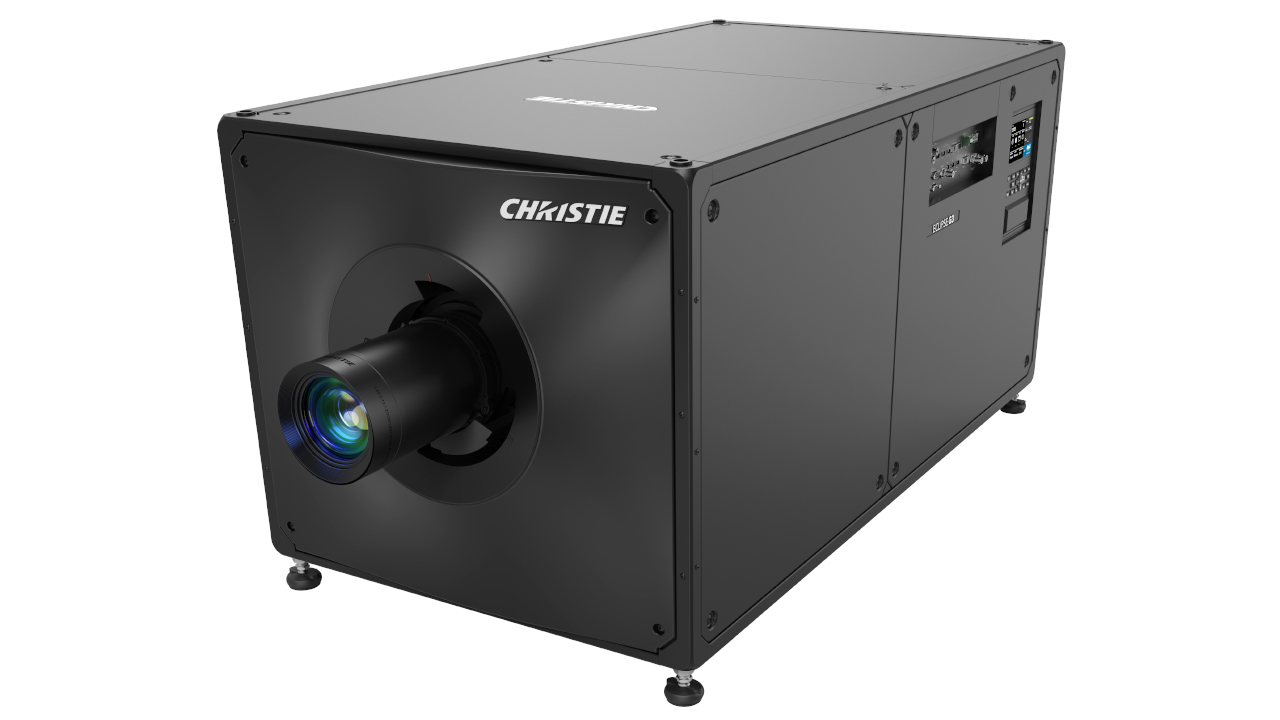
The projector's MSRP is $400,000. For that, the honest summary is not the specification sheet but the division of labour underneath it: six DLP chips spending their effort on darkness as much as light, a laser engine that moved in-house for the third generation, and a chiller exiled down the hall so the silence in a quiet scene is the room's, not the machine's.
Previously's Take
Every flagship projector quotes a contrast number. The Eclipse G3 is the rare one whose number describes something you can point at — a pixel at full brightness with true black touching it on all sides. At this level the product is not brightness. It is darkness, engineered, and darkness turns out to be the expensive part.
The numbers
Sources · 6 sources
- Christie Digital — official Eclipse G3 product page and specifications
- Christie Digital — "Meet Eclipse G3," Spotlight engineering Q&A with Larry Paul, October 17, 2025
- Christie Digital — Eclipse G3 launch release, August 26, 2025
- Essential Install — CEDIA Expo 2025 demonstration preview (MSRP $400,000)
- AV Nirvana — Eclipse G3 debut report, CEDIA Expo 2025
- eCoustics — Best of CEDIA Expo 2025 (Best Home Theater Projector, Cost No Object)
Photographs: Christie Digital press photography via Wavetrain Cinemas · Christie Digital press photography via Wavetrain Cinemas · Christie Digital press photography via Wavetrain Cinemas