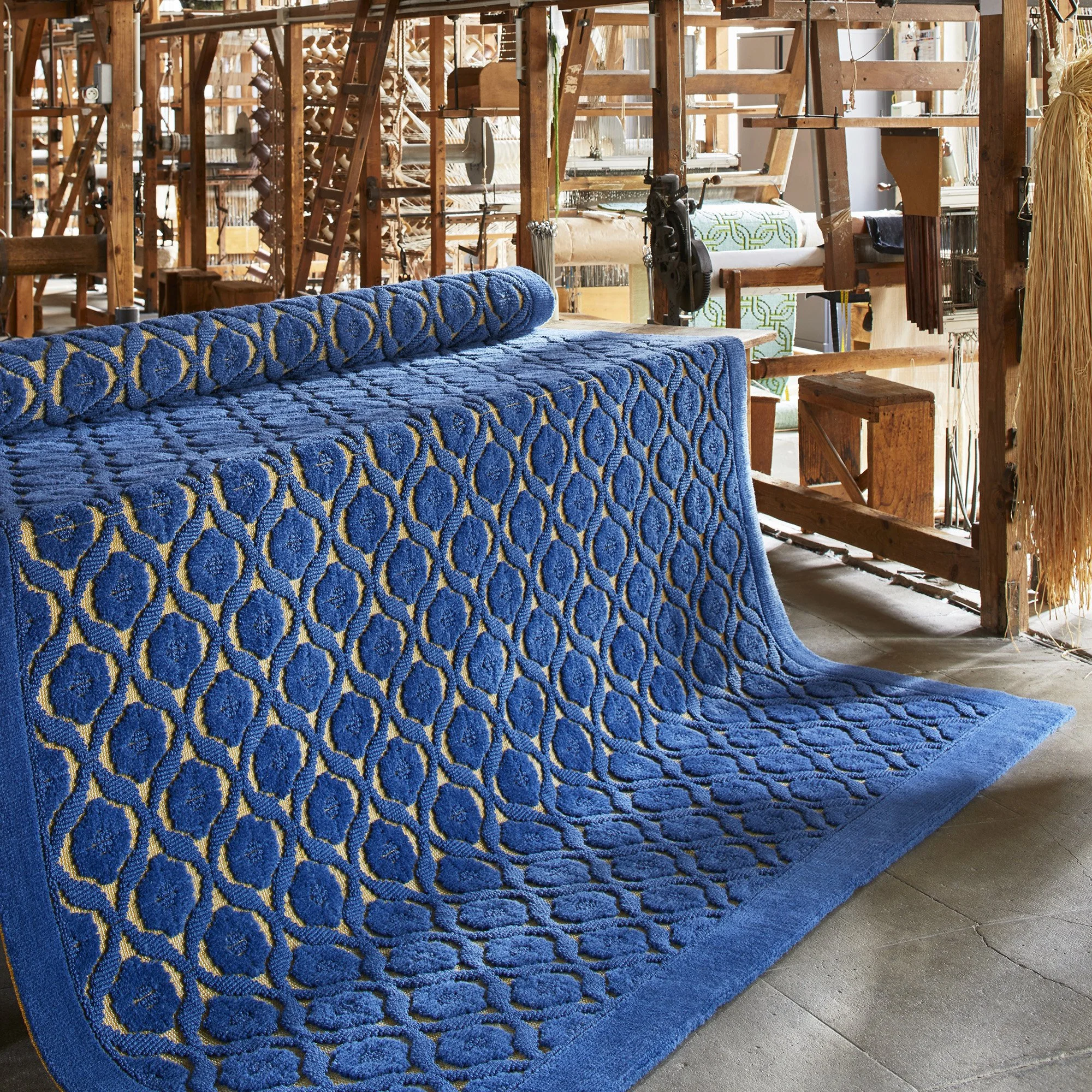

Start with the width, because the width explains everything else. The looms at La Manufacture Cogolin, in the village of Cogolin a short drive from Saint-Tropez, weave seventy centimetres at a time. Not seven metres. Seventy centimetres — roughly the span of a weaver's arms. A rug wide enough for a Paris salon is built the way a book is built from pages: strip by strip, each length woven separately, then joined to the next with a hand-sewn seam until the floor is covered.
The machinery sets the terms. The workshop was founded in 1924 making silk thread and hand-knotted rugs; in 1928 the textile engineer Jean Lauer bought it and installed handlooms fitted with Jacquard mechanisms — needle, cylinder and punched-card systems dating to the 19th century — that are still in use today. The punched cards carry the pattern. The mechanism reads them and lifts exactly the threads the design calls for, which is how Cogolin's patterns end up woven into the cloth itself rather than printed or embroidered on top of it.
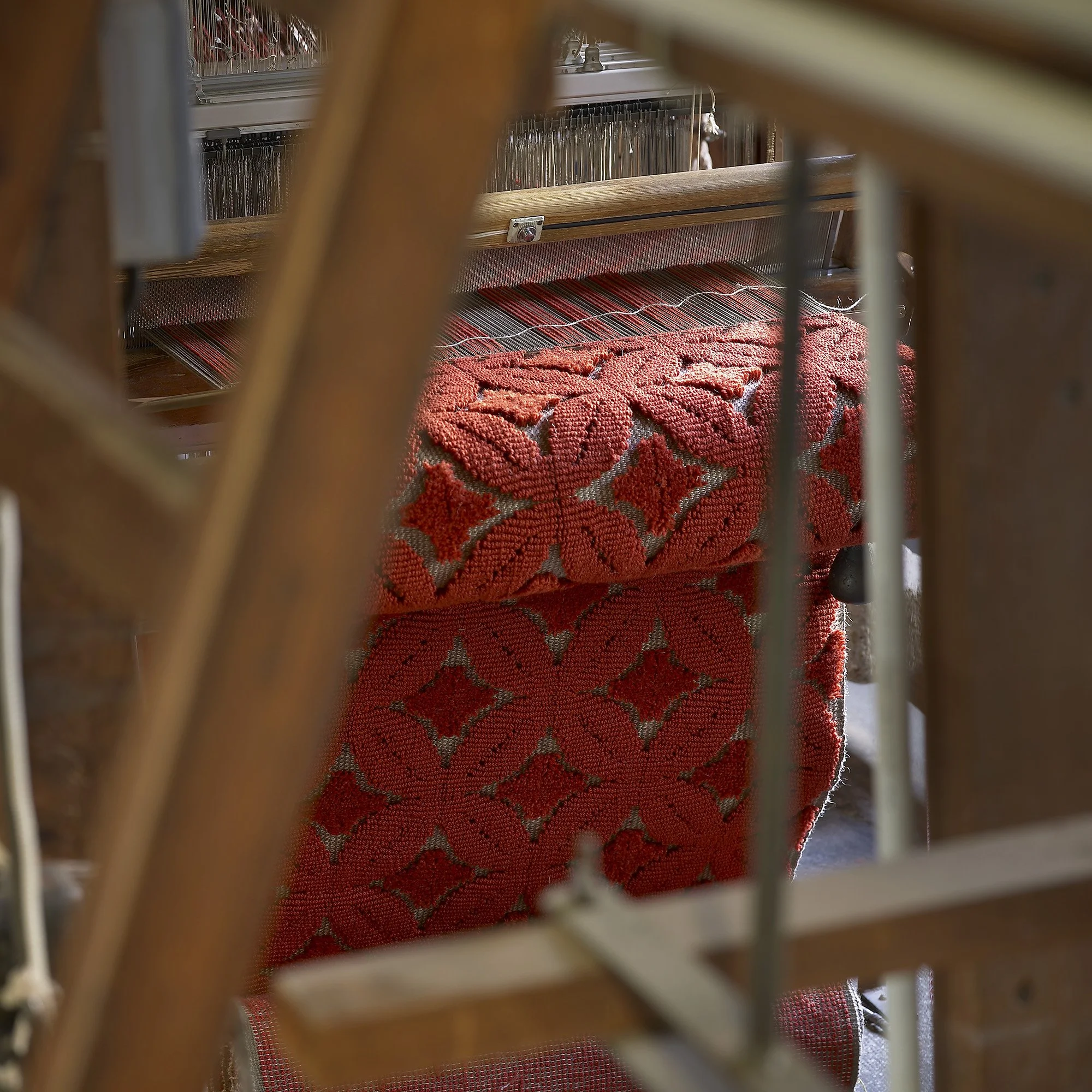
The house later adapted those looms with an invention of its own: a cantre, a frame set behind the loom holding 216 bobbins of yarn. Working from the bobbins, the weaver passes a rod between the selected threads, then a shuttle to lock it underneath, forming a loop. Left alone, the loop stays a loop. Cut by hand, it becomes velvet. Cogolin's relief patterns — the raised floral and geometric motifs the house is known for — are drawn in that single choice, cut against looped, across the surface of the rug. The house calls these rugs Cantres, and it calls the seam between the strips their signature: there is no limit to how many strips can be joined, or how long they can run, so the same construction serves as a single rug or as carpet fitted wall to wall.
The current Paysages collection shows why the method matters. Of its seven models, two are hand-woven on the Jacquard looms in seventy-centimetre strips and sewn together by hand in France; three are flat-woven by hand in France; two are hand-knotted in wool in Nepal. Same collection, same Mediterranean colours, three entirely different objects. Rivage, the Paysages model sold as a Cantre, is the one built on the bobbins and punched cards, its wool pile worked in cut and looped bands. Judge a Cogolin design without knowing which family it belongs to and you are missing the object itself.
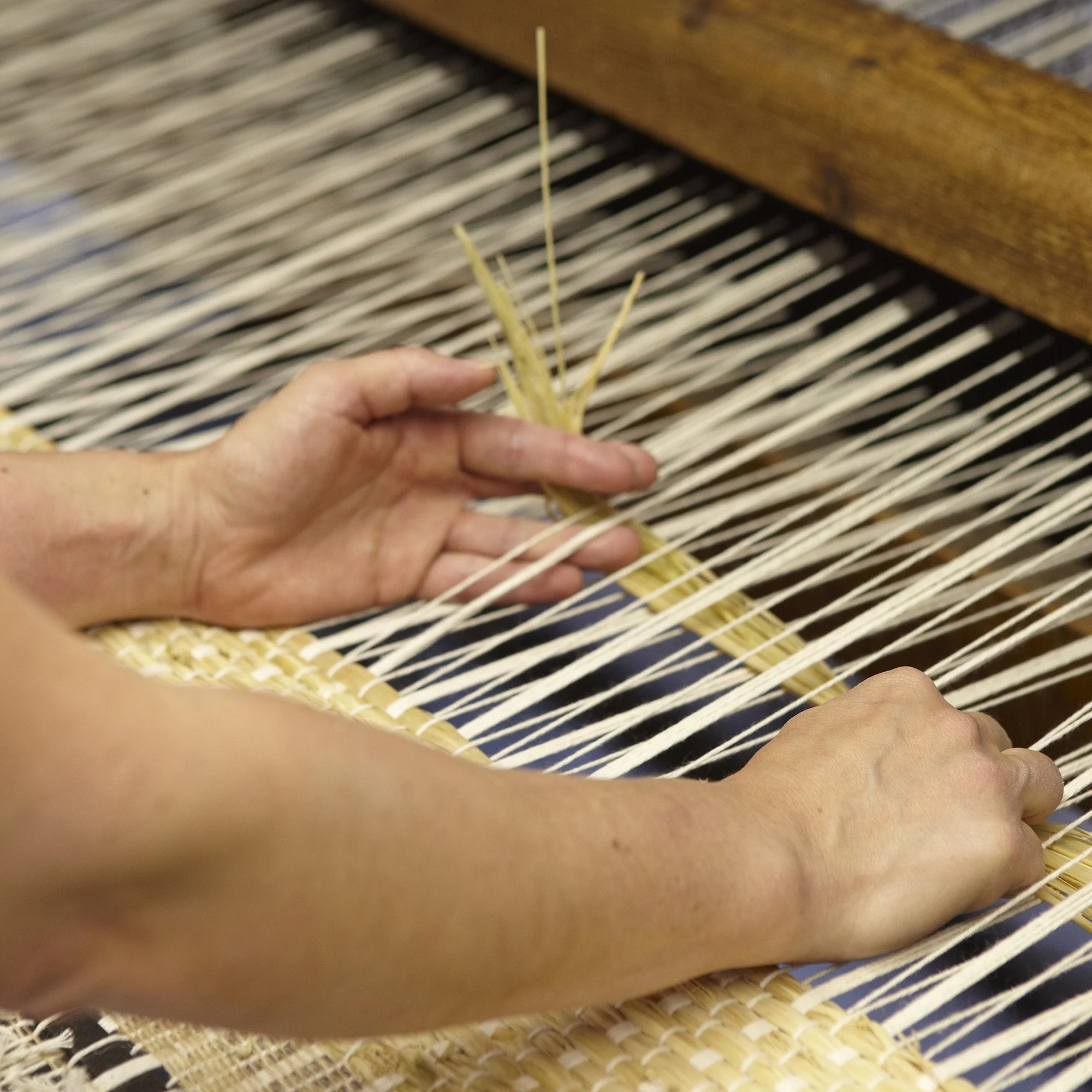
None of it is fast, and the house does not pretend otherwise. Trade accounts of the workshop describe up to five years before a weaver works the intricate looms fully independently, and around three metres of weaving in a day at full proficiency. The team is small — around twenty weavers, seamstresses and staff — and each rug leaves with a certificate of authenticity. The work has found its way into palaces, embassies, residences and yachts, and a century of archived drawings keeps feeding new collections, including reissues of the modernist designs made with Christian Bérard, Jean-Michel Frank and Jean Cocteau.
Previously's Take
Most luxury manufacturing hides its constraints. Cogolin's is sitting in plain sight, seventy centimetres wide, sewn into every large rug the house has ever made. The narrow loom was never the limitation to engineer away — it is the reason the patterns have relief, the reason a rug can grow to any size, and the reason a weaver's hand is in every metre of it. The seam is not where the rug was joined. The seam is where you can tell it was made by someone.
The numbers
Sources · 4 sources
- La Manufacture Cogolin — Paysages collection page; Cantre weaving page; Depuis 1924 history page (maker's official record)
- Homo Faber Guide (Michelangelo Foundation) — La Manufacture Cogolin, maker profile
- France.fr (Atout France) — Artisan French weaving at La Manufacture Cogolin, Côte d'Azur
- Selvedge Magazine — La Manufacture Cogolin centenary coverage (weaver training and workshop detail)
Photographs: La Manufacture Cogolin · La Manufacture Cogolin · La Manufacture Cogolin