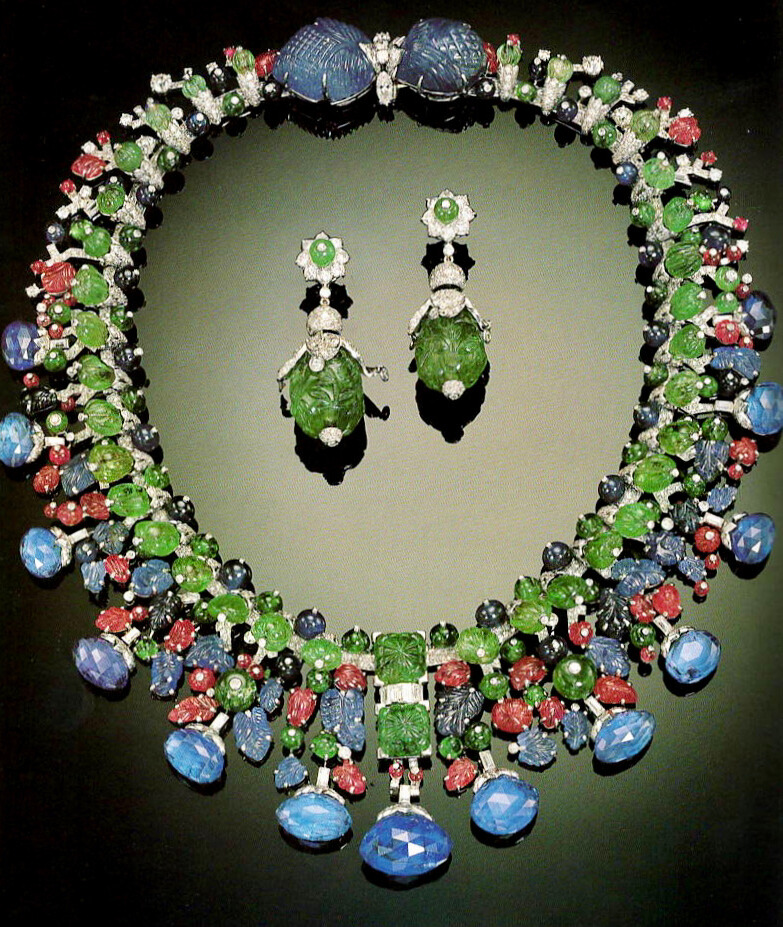

The stones were not new, and that is the whole point of this necklace. When Daisy Fellowes commissioned Cartier in 1936, she did not ask for fresh gems. She handed over jewels she already had — Cartier pieces bought in the 1920s — and asked for something else to be made from them. Cartier's own history says it plainly: the Hindu necklace was composed of ancient stones brought by its owner.
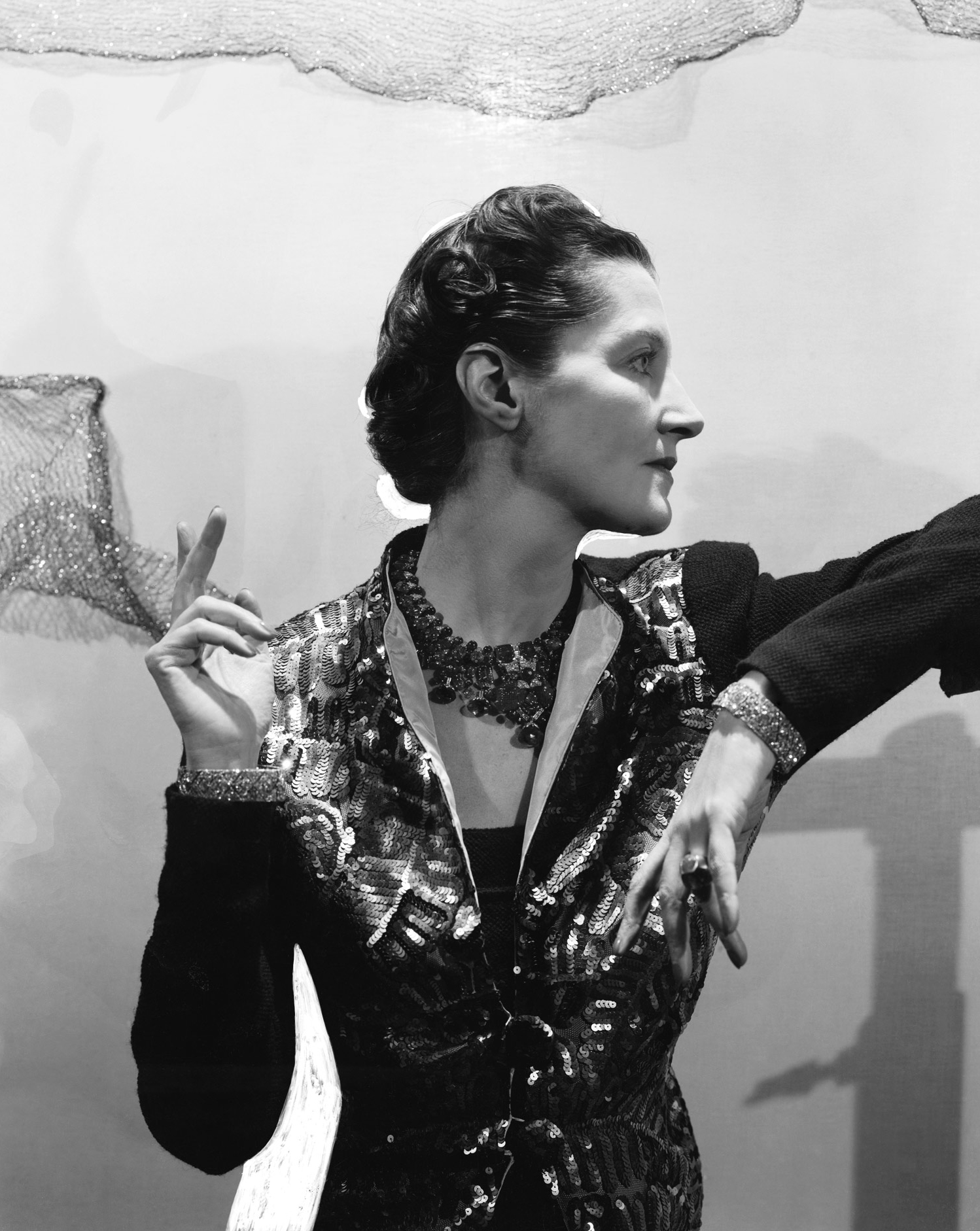
Fellowes was the Paris editor of American Harper's Bazaar and an heiress to the Singer sewing-machine fortune. Working to the model of a collar made for the Maharaja of Patna, the maison rebuilt her carved sapphires, emeralds, rubies and diamonds into a single flexible collar, recorded in the archives as the 'Hindou' necklace — the jewel later filed under Tutti Frutti, a name the style only acquired in the 1970s. The construction honoured Indian jewellery, not just the carving. It fastened at the back with a black silk cord rather than a clasp, in the traditional Indian manner. Its centrepiece worked twice: a section of two large carved sapphire buds, emerald beads, carved ruby leaves and navette diamonds lifted out and could be worn alone as a clip brooch. And it broke one Indian rule on purpose — sapphires, rarely used in Indian jewellery because they were considered unlucky, appear here in abundance; the current exhibition label totals them at 240.15 carats. Cecil Beaton photographed Fellowes wearing it in 1936, the year it was finished.
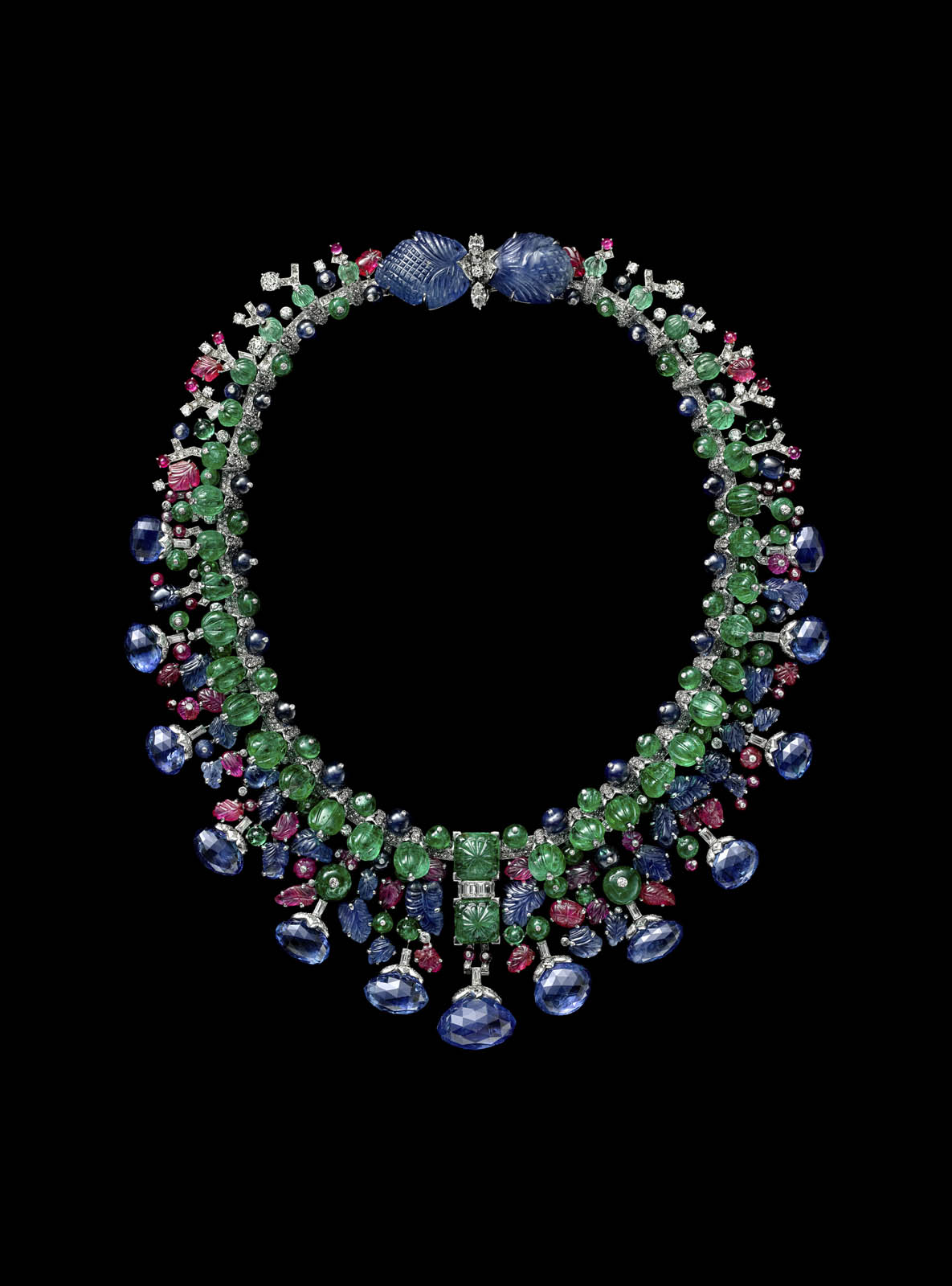
Then the necklace had a second life, rarer in high jewellery than a first one. After Fellowes' death it passed to her eldest daughter, Emmeline, Comtesse de Castéja, who took it back to Cartier in 1963 and had it altered. The cord went. The same stones were reset as a fixed collar, and the two large sapphires of the original centrepiece became the new clasp — where they sit today, at the top of the necklace.
Cartier bought the necklace back at the 1991 Geneva sale, and it has belonged to the maison ever since: a special order that came home. It now travels as a star loan of the Cartier Collection, most recently in the V&A's Cartier exhibition of 2025.
Previously's Take
High jewellery is usually sold as permanence — stones set once, forever. This necklace argues the opposite. Its quality survived being unmade twice — by Fellowes, trading old jewels for a new idea, and by her daughter, trading the famous original for a version she would actually wear. The stones carried the value; the settings were allowed to change their mind.
The numbers
Sources · 5 sources
- Cartier — Tutti Frutti, Markers of Style (1936 commission, owner-supplied stones, string fastening, 1963 modification)
- Sotheby's — "The Story of Cartier Tutti Frutti Jewels, As Told by a Descendant" (brooch centrepiece, cord, 1963 alteration, 1991 sale)
- V&A / NGV — Cartier exhibition label, 'Hindou' necklace (1936, altered 1963)
- Understanding Jewellery — "Cartier's role in the expression of the Indian influence"
- JCK — "Daisy Fellowes Dons a Cartier Choker" (assembled from her necklace and two bracelets)
Photographs: Understanding Jewellery · Cartier Collection · Cecil Beaton