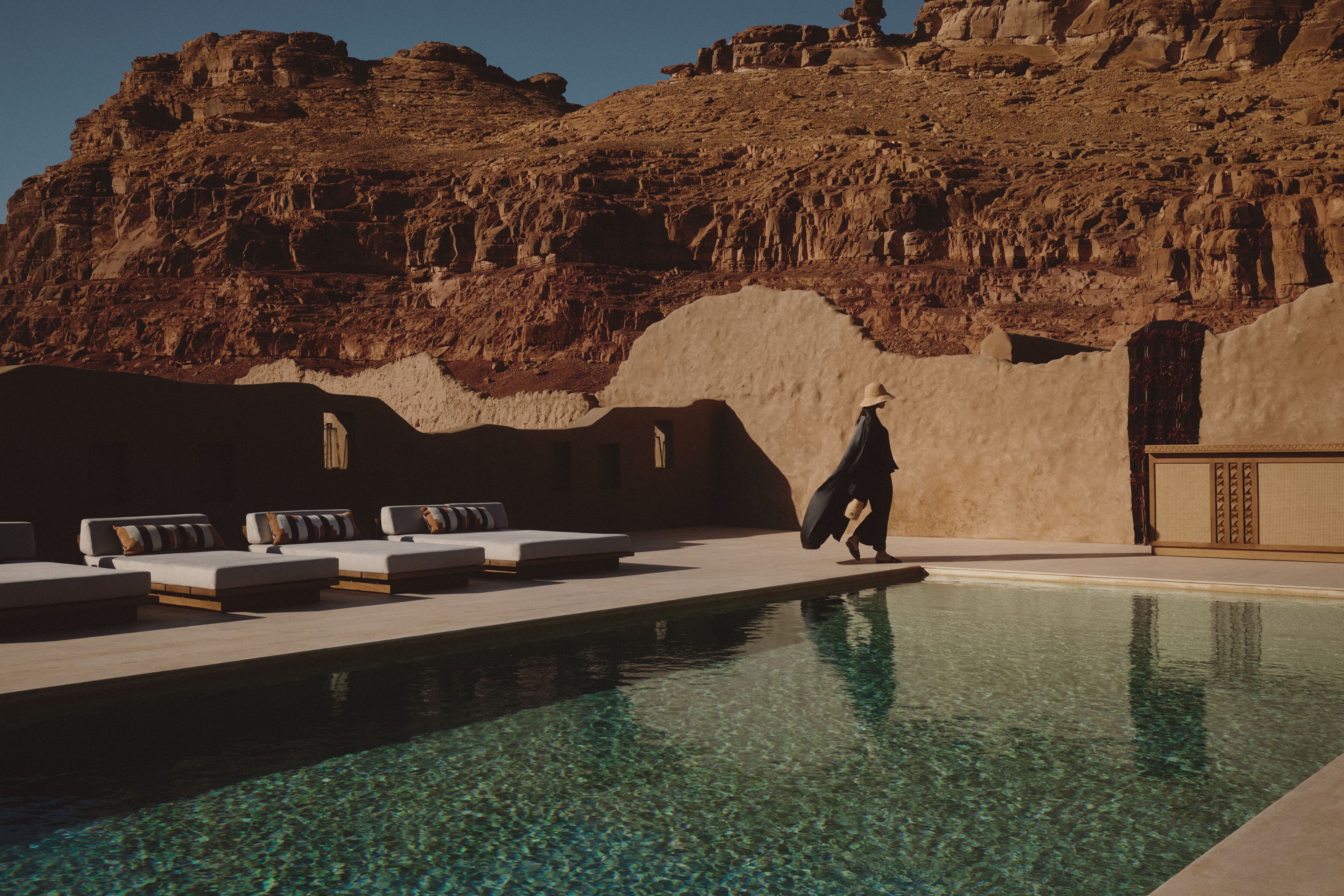

AlUla's Old Town, in north-west Saudi Arabia, is a labyrinth of mudbrick houses that was lived in from the 12th century until the 1980s, when the last residents moved out. Mudbrick is a maintained material: roofed and replastered, it lasts for centuries; abandoned, it melts back into the ground within years. By the time Saudi Arabia opened to tourism, the town's hundreds of surviving houses were an inheritance with an expiry date.
Dar Tantora The House Hotel is what was done about thirty of them. The property takes its name from the tantora, the traditional sundial at the Old Town's heart that once told farmers when the seasons — and the water — turned. Egyptian architect Shahira Fahmy, selected by the Royal Commission for AlUla, led the restoration, and her approach was to work with the settlement rather than over it. The houses kept their original layouts, which is why no two of the hotel's 30 rooms are alike: duplex arrangements follow the old domestic pattern, living and working space below, bedrooms above — the same way the houses were always used, because people slept high and kept cool on terraces.
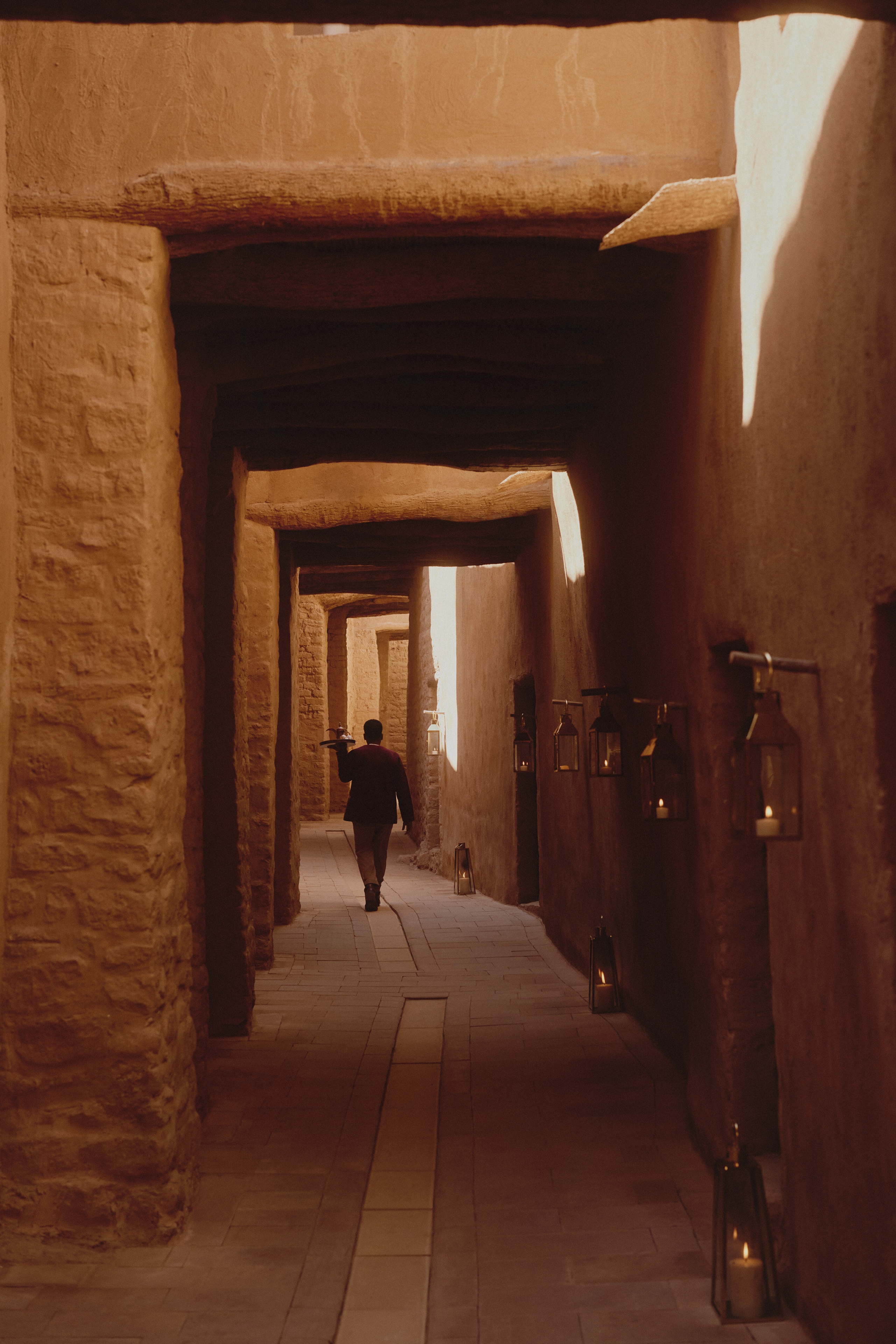
The fabric was repaired in kind. New mud bricks were moulded on site from local materials, matched to what was already standing. Original mudbrick walls, stonework, windows and the town's painted wall murals — traditionally made as wedding gifts for newly married couples — were restored rather than replaced, the murals with natural pigments. Local artisans did the work, using skills the property's own heritage account describes as passed down through generations, and the furnishings came from Madrasat Addeera, AlUla's artisanal skills school. The hotel is operated by Kerten Hospitality and describes itself as an earth-built boutique eco-community — the world's first, in its telling — and it remains the only hotel inside the Old Town itself.
Around the rooms, the operation runs like a modern hotel wearing old clothes: round-the-clock butler service, and Joontos, the property's restaurant, led by Michelin-starred chef Jaume Puigdengolas.
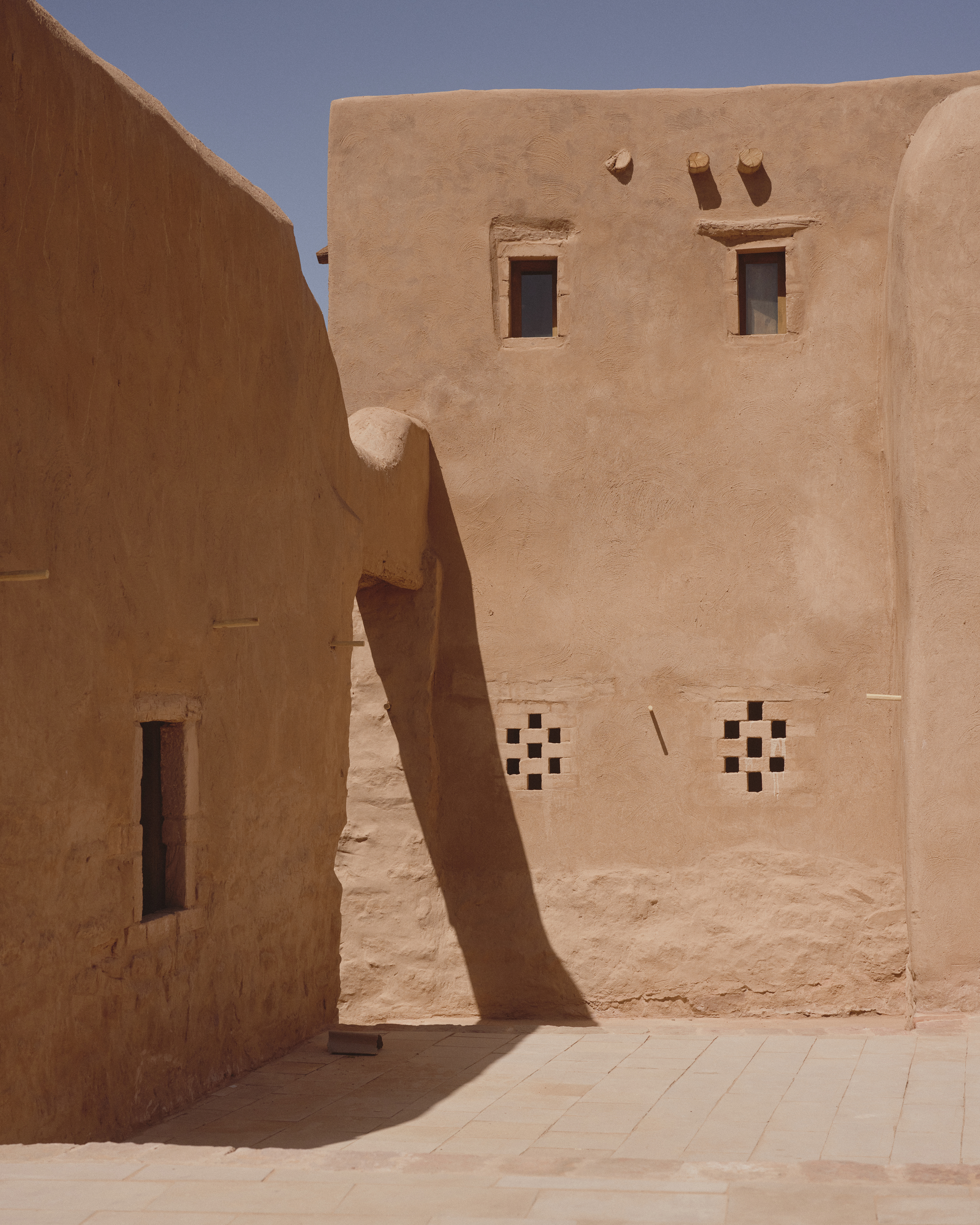
The comfort engineering is the old technology, taken seriously. Summer residences across the oasis were built with mud and straw for natural cooling; thick earthen walls hold the day's heat out and the night's cool in. Restored traditional irrigation and ventilation systems do work that machinery does elsewhere. Fahmy has described the guest rooms as deliberately near-candlelit, with minimal electricity — a claim the hotel makes about itself, offered here as the property's own account of its design, not as a measured audit. What is verifiable is simpler and more impressive: the alleys were not widened, the walls were not straightened, and the plaster is thick and uneven because the original walls are.
Previously's Take
Most heritage hotels quote the past in their décor and contradict it in their construction. Dar Tantora did the harder thing: it let a 12th-century building method set the terms, and accepted the irregular rooms, the narrow lanes and the handmade bricks as the luxury. In a region building some of the newest resorts on earth, the most radical property in AlUla is the one that refused to be new.
The numbers
Sources · 4 sources
- Dar Tantora The House Hotel — official site and heritage account, dartantora.co (30 restored dars, local artisans, mud-and-straw summer residences, tantora sundial, property details)
- AFAR — in-depth review of Dar Tantora The House Hotel (30 rooms by Shahira Fahmy, Old Town inhabited 12th century–1980s, only hotel in the Old Town; corroboration)
- Cairo Scene — "Egyptian Architect Shahira Fahmy Brings Dar Tantora to Life in AlUla" (Royal Commission selection, bricks moulded on site, local artisans; corroboration)
- Wanted Online, April 2025 — "The old bones of AlUla's newest hotel" (30 rooms, Fahmy's restoration approach; corroboration)
Photographs: Dar Tantora The House Hotel · Dar Tantora The House Hotel · Dar Tantora The House Hotel