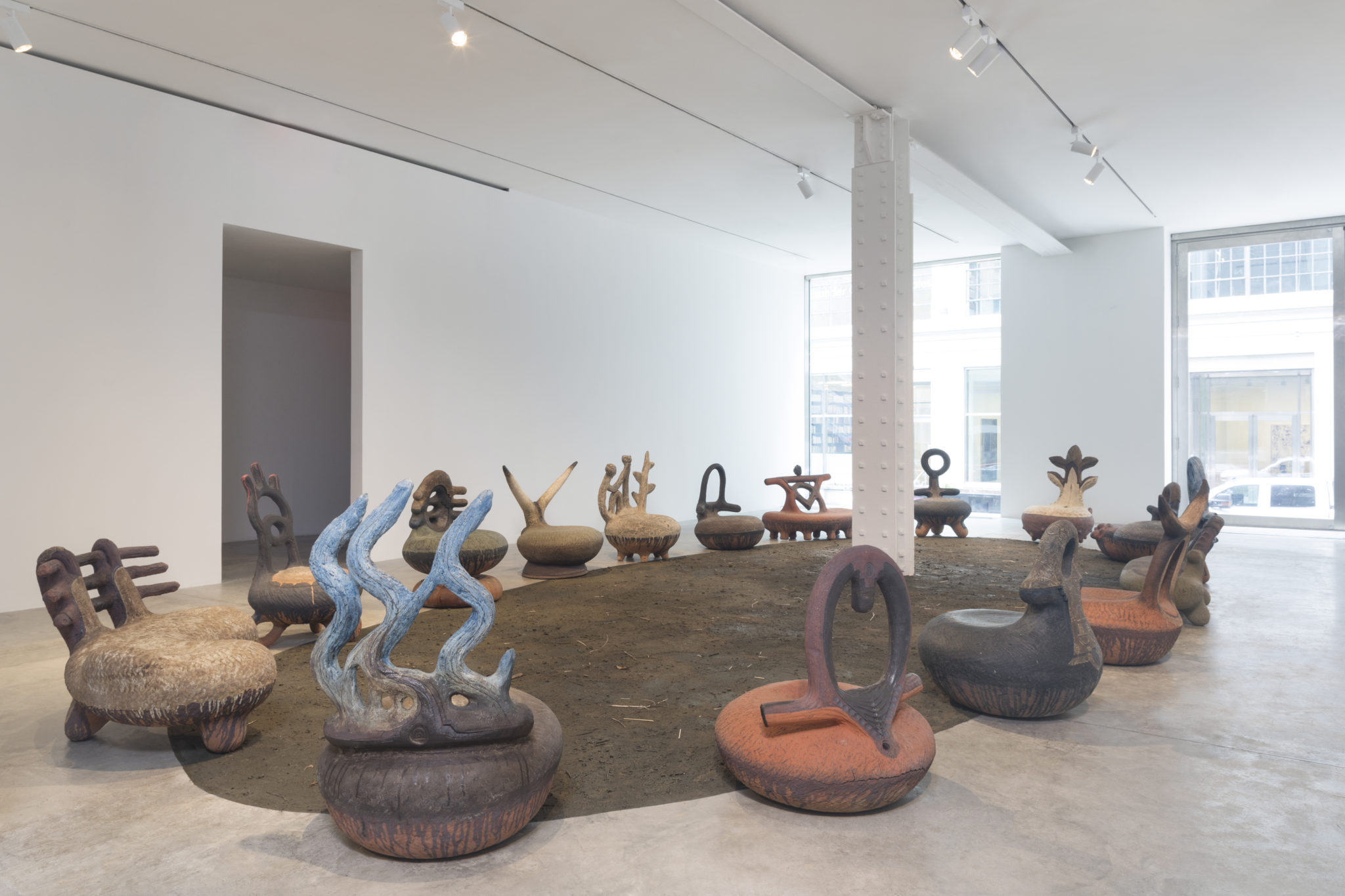

The order of an art-world launch is usually fixed: gallery first, world second, home if there is time. Andile Dyalvane reversed it. When his collection iThongo was finished — sculptural ceramic stools, chairs and benches, hand-coiled in terracotta — the entire collection travelled first to Ngobozana, his rural homestead in South Africa's Eastern Cape. His family and extended community saw it there, in November 2020, before Cape Town and long before it opened in New York on April 29, 2021.
That decision is the collection, in a way. iThongo means "ancestral dreamscape" in Xhosa — the medium, the galleries explain, through which messages from the ancestors are transmitted. Dyalvane's stated intention was "to highlight a gathering of dreams, seated in the soul, held by the spirits of our ancestors." Showing the work at home first was, in his words, "essential for restorative healing — for the sake of my ancestors and every person in my village." For two days, guests sat on the seats inside the family kraal.
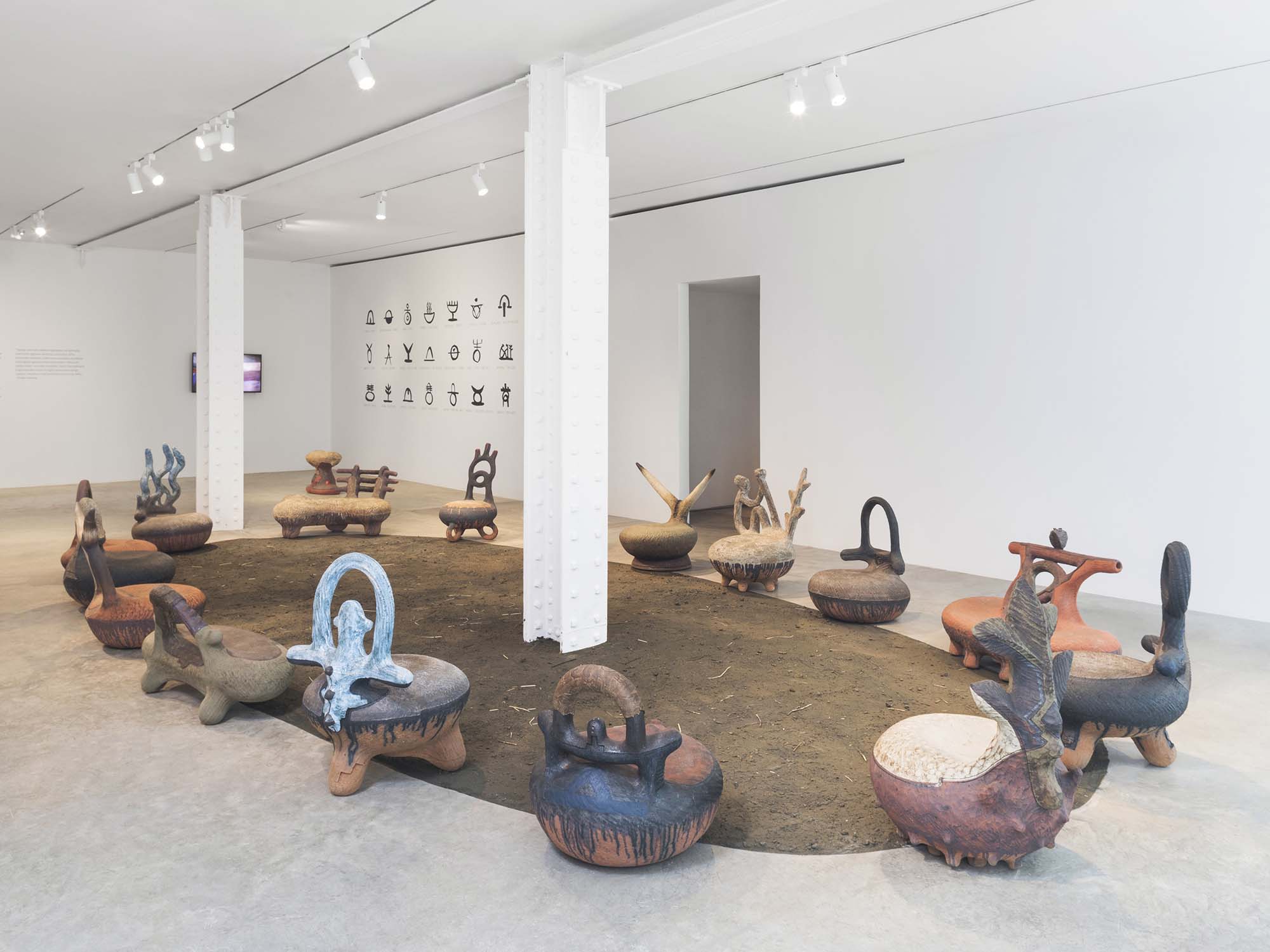
Each seat carries one idea. Their forms rise from a lexicon of close to 200 pictograms Dyalvane has drawn and codified over years, each glyph standing for a word in Xhosa life: entshonalanga, sunset; igubu, drum; umalusi, herdsman; izilo, totem animals. A seat's backrest takes the shape of a single glyph, rising to almost a metre, while its rounded base stays low, close to a ground revered as a portal for ancestral communion. In the gallery the seats stand in a circle, as at a ceremonial gathering, around a fire hearth.
The marks on the clay have their own lineage. Through Imiso Ceramics, the studio he co-founded in 2005, Dyalvane developed an incision language drawn from ukuqatshulwa, the Xhosa practice of scarification — treating the surface of the clay the way skin is treated, as a place where identity is written. In iThongo the glyphs are debossed into that surface with carved stamps and linocut tiles, so the language sits in each piece's skin as well as its silhouette.
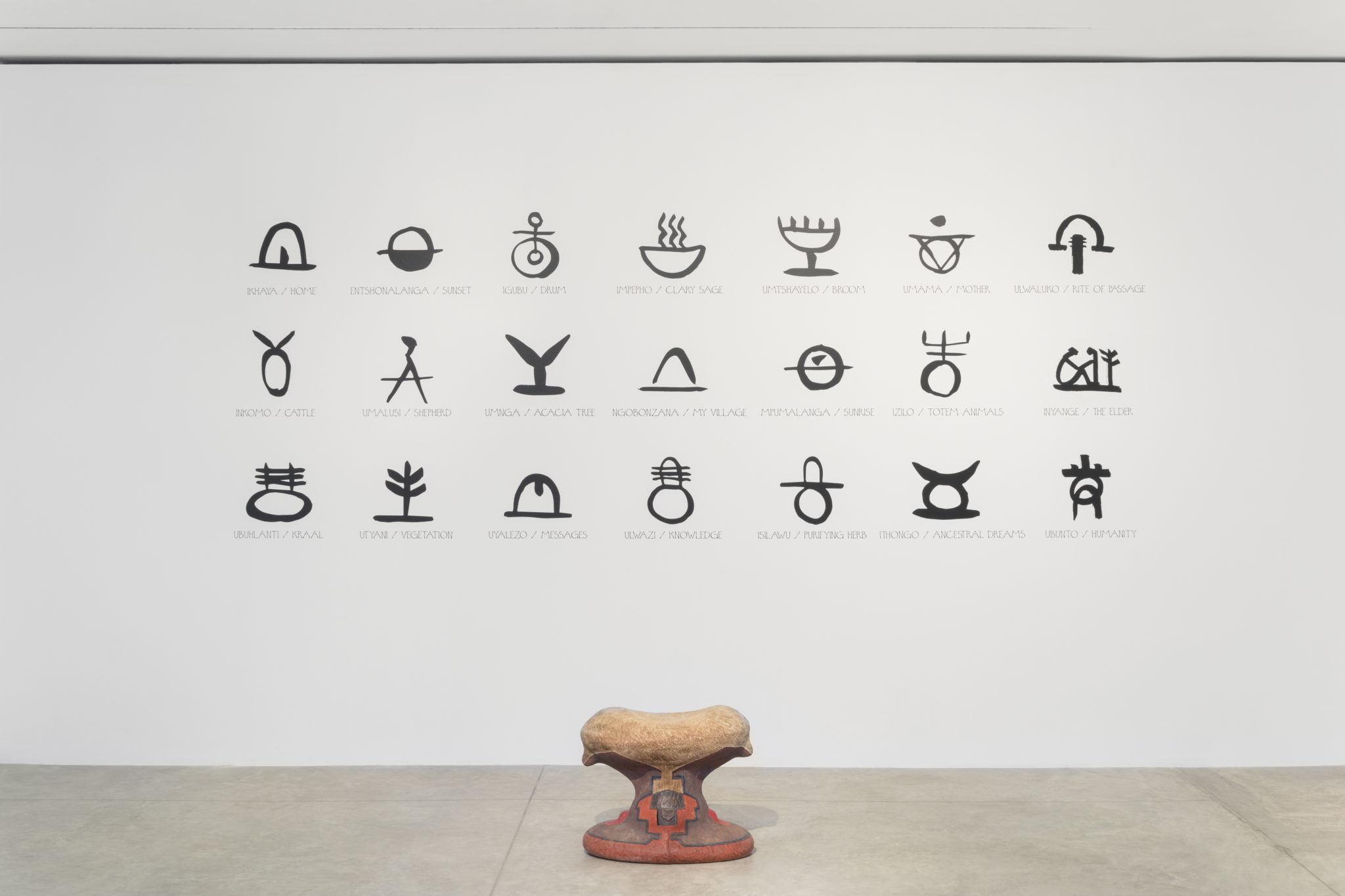
One seat never rejoined the tour. uMalusi — the Herdsman — was carried in procession across the valley to the old village site, removed under apartheid, and installed permanently overlooking the ancestral burial grounds. The rest went on to gallery life. That one stayed home, on duty.
Previously's Take
Luxury usually asks who can afford to own a thing. Dyalvane asks a prior question: who gets to see it first, and who it was made for. A collection can tour the world's galleries and still belong, in the order that counts, to a village of about 750 people. That is not a story laid over the work. It is the work.
The numbers
Sources · 3 sources
- Friedman Benda — Andile Dyalvane: iThongo, exhibition record (New York, 2021)
- Southern Guild — Watch: Andile Dyalvane's iThongo, presented in cooperation with BMW South Africa (February 25, 2021), and iThongo exhibition record, Cape Town
- Southern Guild — Andile Dyalvane, artist record (Imiso Ceramics; incision language)
Photographs: Friedman Benda · Friedman Benda · Friedman Benda