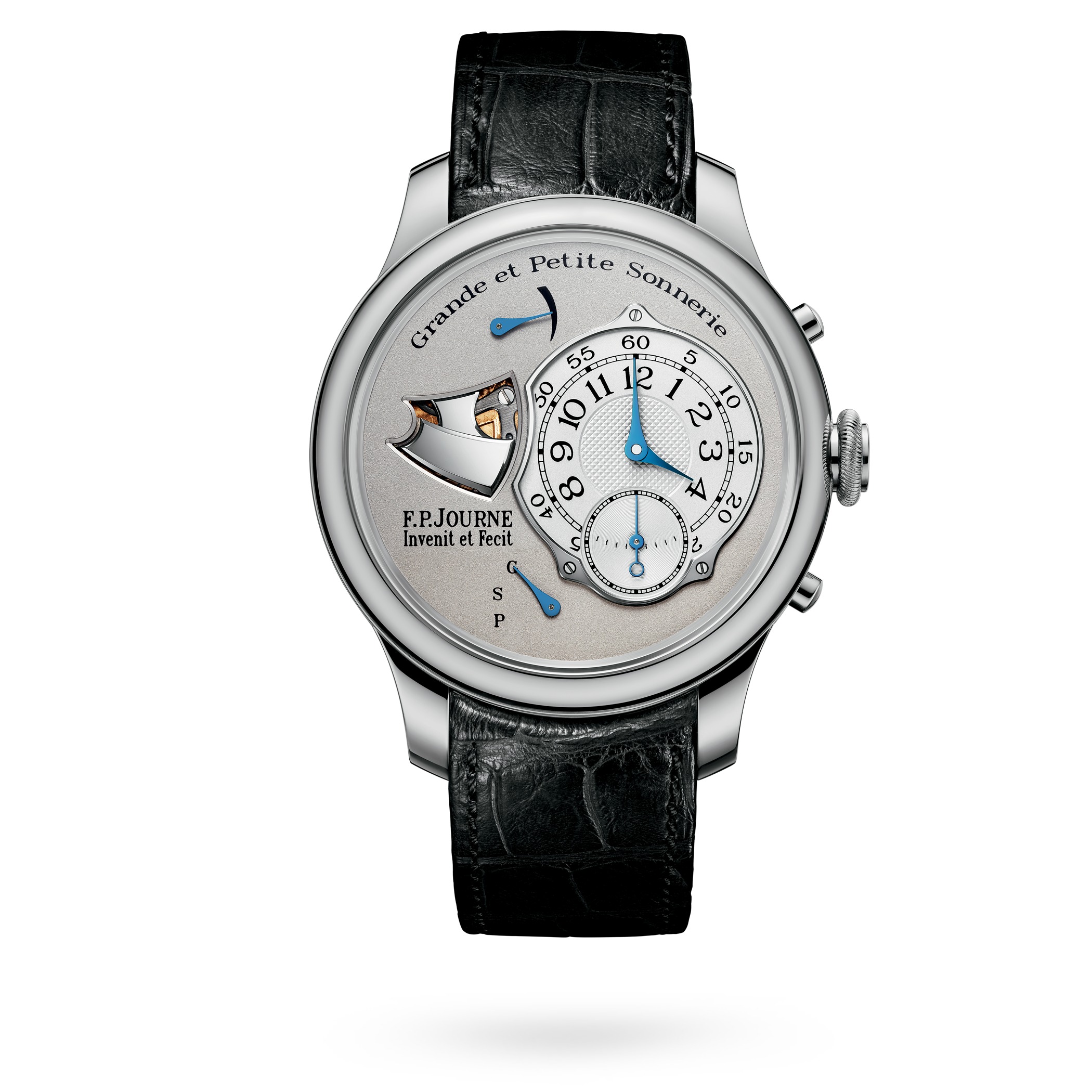

A striking watch is the easiest expensive object to break by accident. Pull the crown and set the time while the chimes are sounding and you can damage mechanisms that took months to build. Every grande sonnerie before this one carried that warning. François-Paul Journe decided the warning was a design failure.
His account starts with the brief he set himself: "make it safe to use by an eight-year-old child." He calls the eight-year-old the toughest assignment of his career. The watch took six years of research — Journe develops his movements himself — and produced ten patents, which is why the dial carries the house motto in two parts: the Invenit is the patents; the Fecit is the six years.
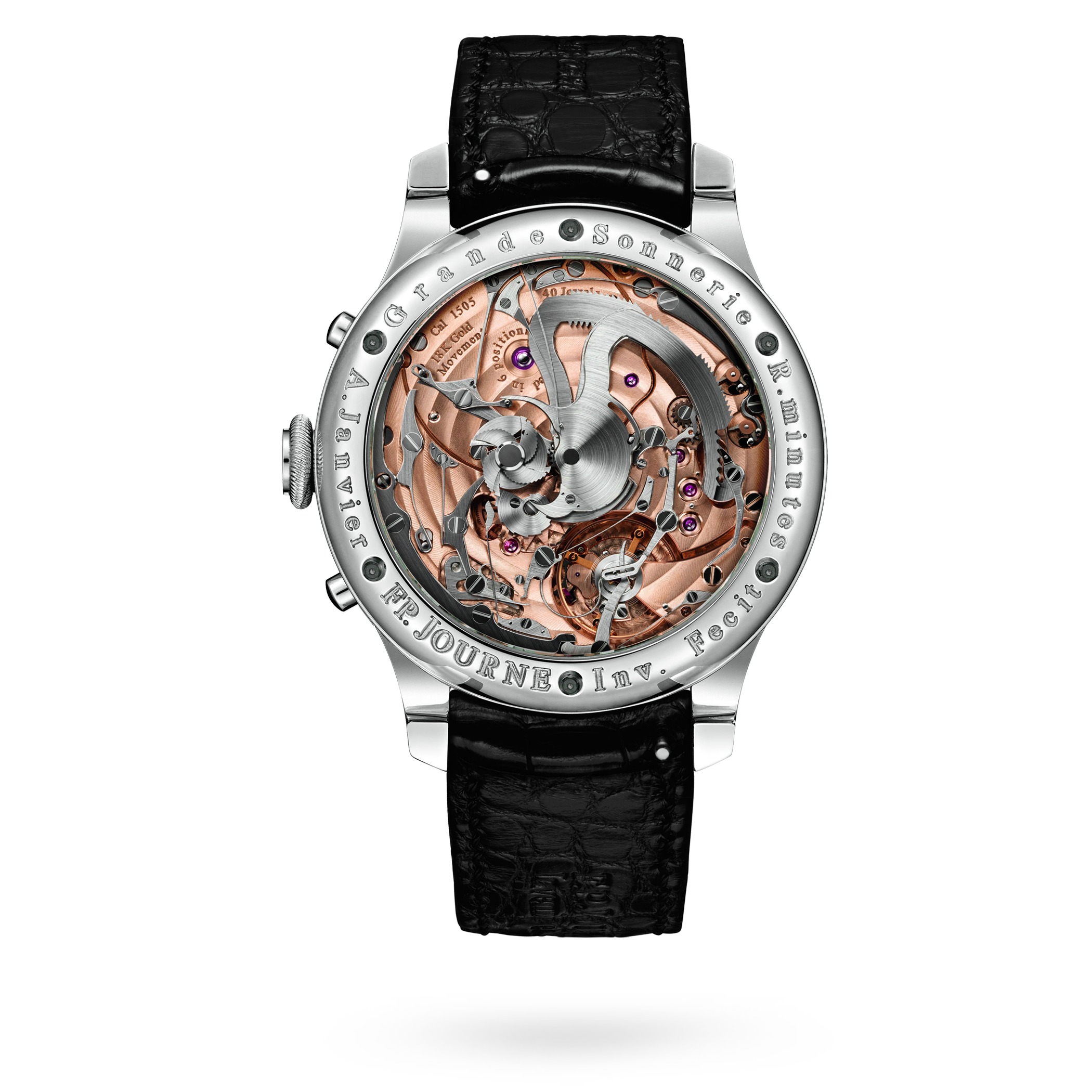
The patents are mostly bodyguards. Patented systems stop the watch striking when the winding crown is pulled out, and stop the crown being pulled out while a strike is under way — the two moves that destroy lesser striking watches are locked out, mechanically, before they can happen. The owner is free to be careless because the movement refuses to cooperate with carelessness.
Underneath the safety work sits the older, harder problem: energy. A grande sonnerie strikes the hours and quarters in passing, all day, from the same mainspring that runs the timekeeping. In this calibre — the 1505 — one mainspring delivers 24 hours of grand strike, and the chiming alone consumes almost 60 percent of its energy. Switch the chime to silence and the same spring runs the watch for five days. The movement is built deliberately low-tension, because it has to perform this trick 35,040 times a year without the sound thinning.
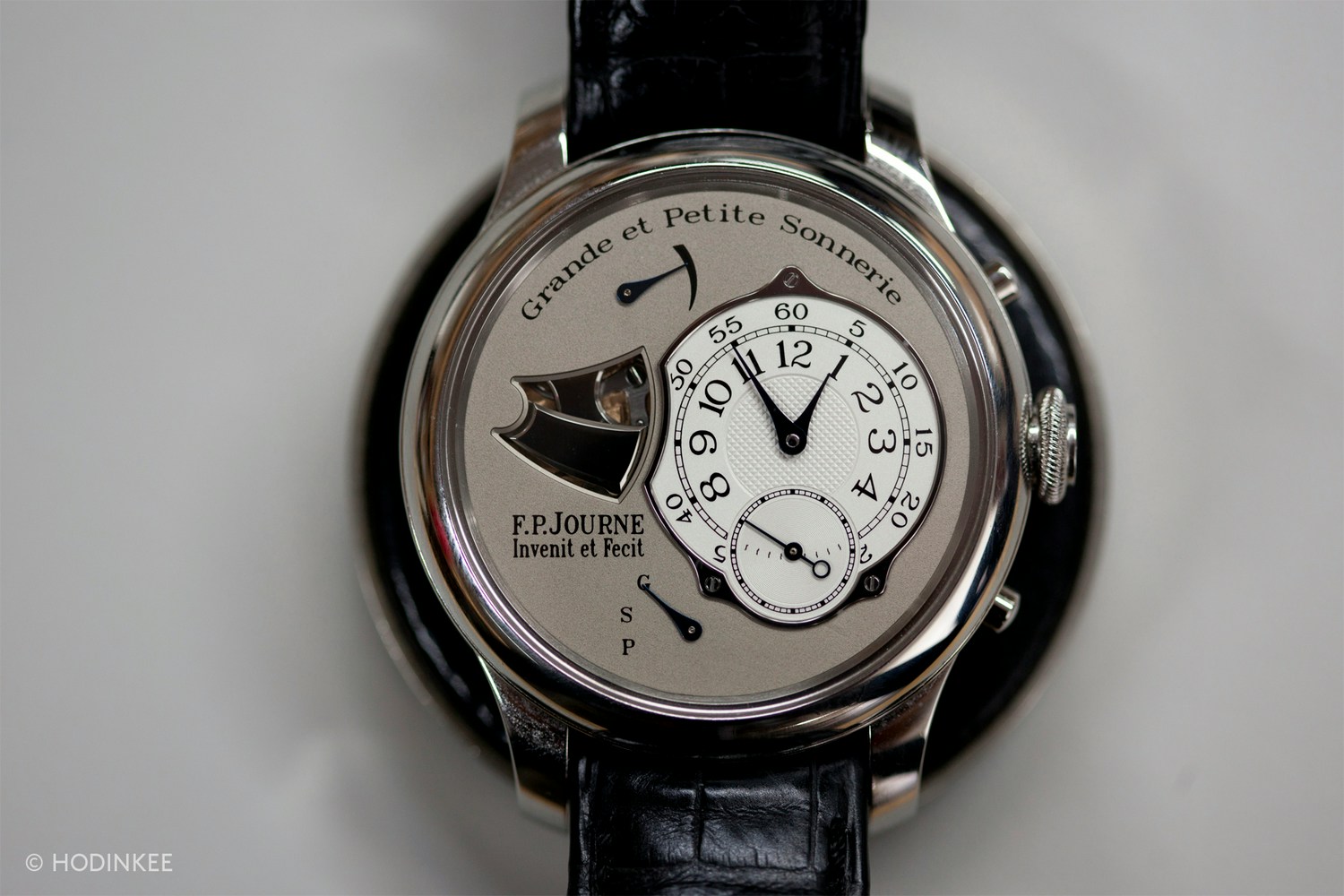
The case tells you where the priorities sat. The most complicated watch Journe has made wears a 42mm case in stainless steel — not gold, not platinum — because steel gives the chime its best resonance. Inside are 582 components; a single master watchmaker spends over three months assembling one watch, and production ran at roughly four pieces a year. The Sonnerie Souveraine won the Aiguille d'Or at the Grand Prix d'Horlogerie de Genève in 2006, the year it launched. Production ran to 2019, and each piece carries its owner's name, engraved on case and movement, in place of a serial number.
Previously's Take
Every other grande sonnerie treats the owner as the risk. Journe treated the owner as the brief. The ten patents are not there to make the watch more complicated — at 582 parts it hardly needed help — they are there to absorb human error so completely that a child could work the pushers and walk away. That is a stranger and better definition of a grand complication: not how much can go wrong beautifully, but how little can go wrong at all.
The numbers
Sources · 4 sources
- F.P.Journe — Sonnerie Souveraine model record and technical publication (fpjourne.com)
- Hodinkee — "Inside The Manufacture: The Making Of F.P. Journe's Most Complicated Watch," 2015
- Europa Star — Sonnerie Souveraine spotlight; Sotheby's — Sonnerie Souveraine complication essay
- Quill & Pad — "The Sonnerie Souveraine: A Legend In Its Own Time"
Photographs: F.P.Journe · F.P.Journe · Hodinkee