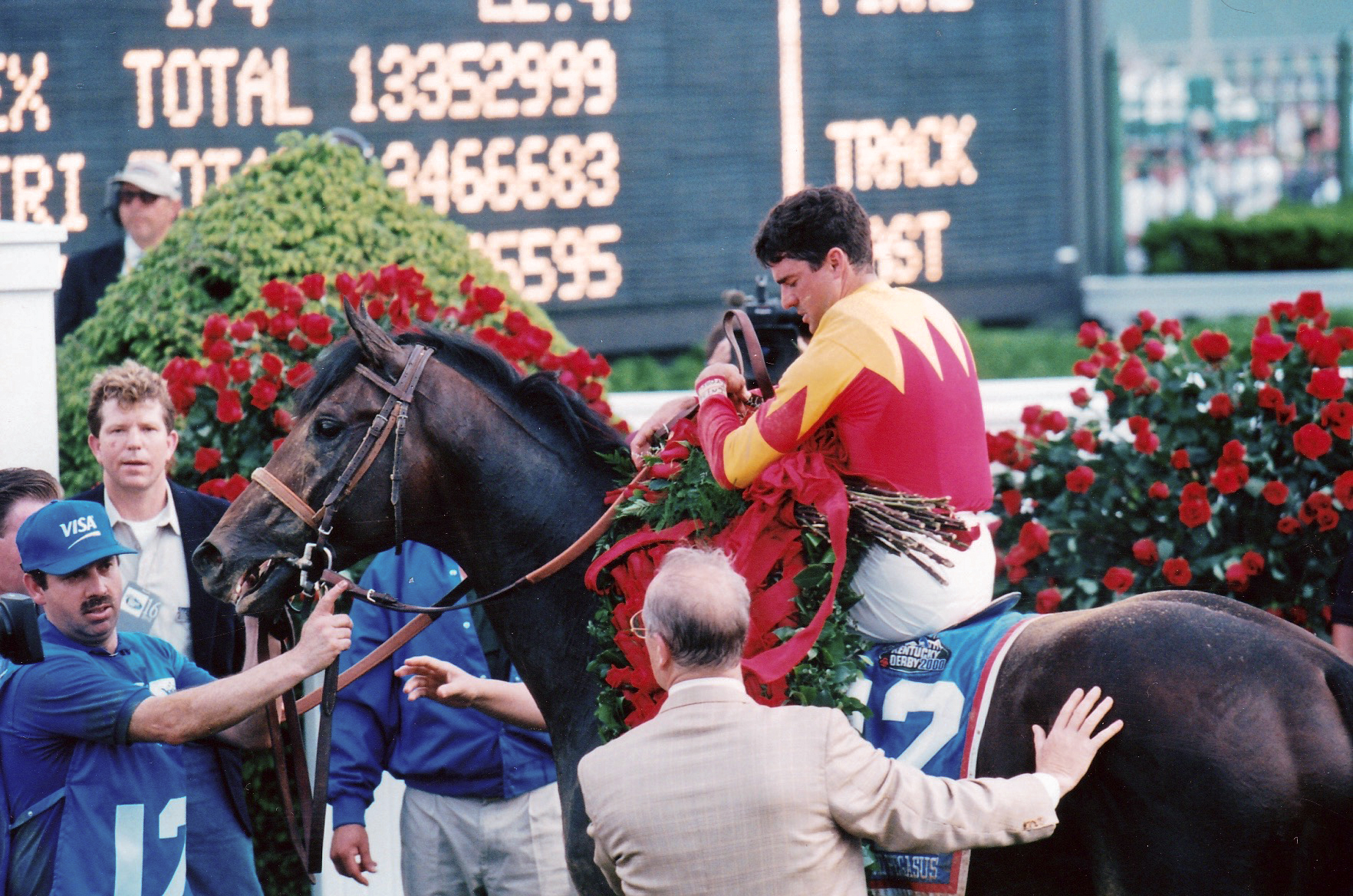

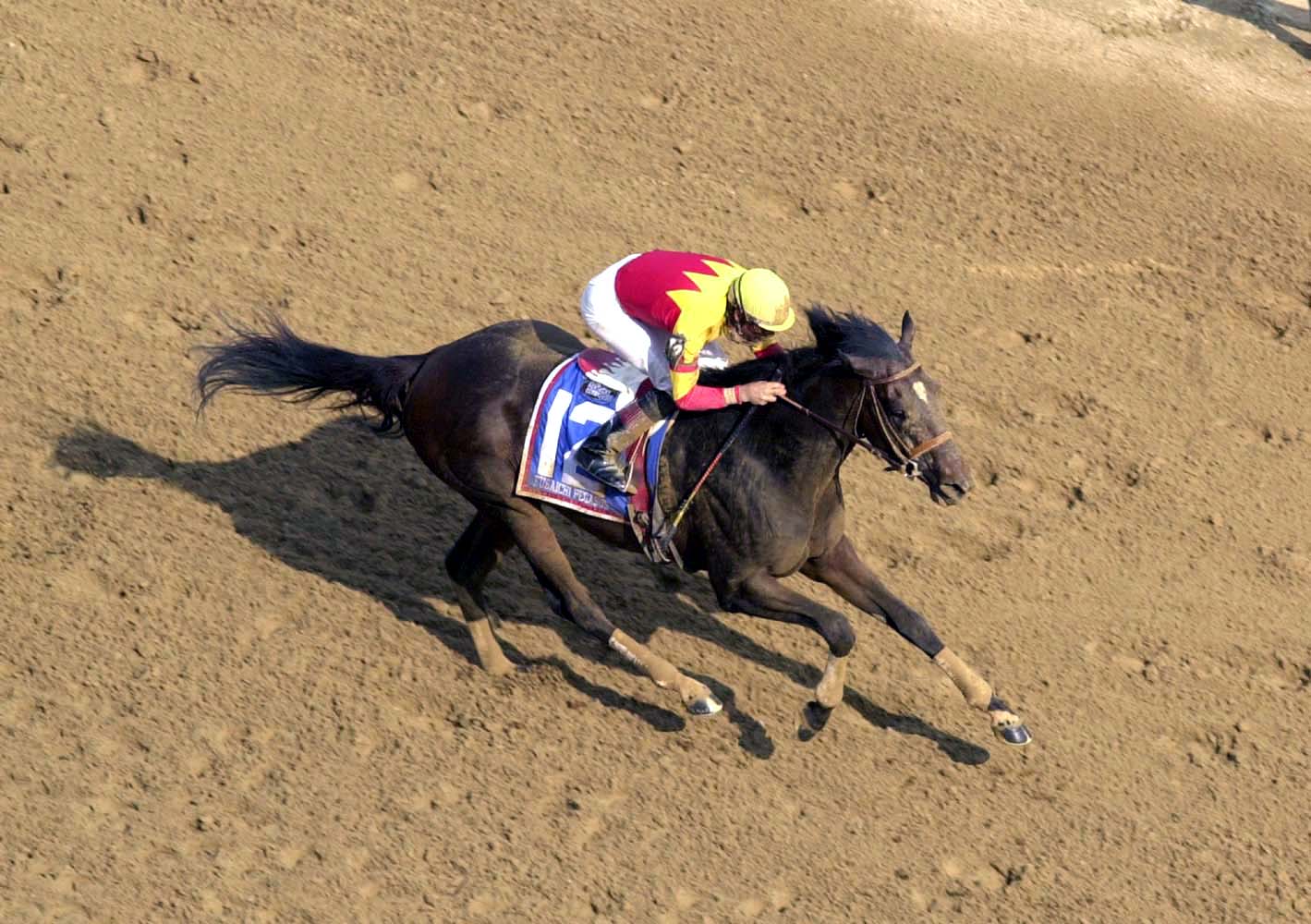
The most expensive horse who ever lived was a bargain first. In July 1998, a yearling colt sold at Keeneland for $4 million — then the most ever paid at auction for a horse who would go on to win the Kentucky Derby. Japanese businessman Fusao Sekiguchi bought him, Neil Drysdale trained him, and on May 6, 2000, he won the Derby as the 2-1 favorite, the first favorite to win it since 1979, with Kent Desormeaux riding him home by a length and a half.
UPDATE — Tuesday, November 3, 2026: This story has been expanded since it first published — the deal and the stud years are told in full below, and the record is collected in a numbers panel at the end of the piece.
He was excellent without being immortal. Second in the Preakness, retired after nine starts with six wins and $1,994,400 in earnings — a fine career, and next to what followed, a rounding error.
Weeks after the Derby, Coolmore, the Irish breeding empire, bought his stallion rights in a deal reported at around $70 million. Horse & Hound still gives him the title of most expensive horse in history. The honest version of the number, and this piece prints it plainly: the terms were never officially disclosed. The Associated Press reported at the time that the price was believed to be between $60 million and $70 million, and it was not a cash auction price — it was a syndication of breeding rights, split 60 percent to Coolmore and 40 percent to Japan's Shadai Farm. Even the bottom of that range was a record. The mark it broke had stood since 1983, when Shareef Dancer was syndicated for $40 million.
Nobody was buying the racehorse. They were buying the next twenty years of foals — hundreds of sons and daughters to sell at yearling sales and to race. A classic winner's early seasons at stud are a futures market in bloodlines, and his was the most fashionable on earth. The races were the advertisement. The breeding shed was the business.
Here is what a syndication actually sells. A stallion's breeding career is divided into shares, and each share carries the right to breed mares to him season after season. What changes hands each year is a nomination — one mare, one cover, at the advertised fee — and what comes back is a foal: conceived one spring, born the next, sold as a yearling the year after that, racing at two and three if it races at all. The buyers in 2000 were pricing horses that did not exist yet, off a pedigree page and a fashion cycle. That is what a figure like this is made of — not the horse standing in the barn, but two decades of unborn foals, every one of them a ticket in the same bloodline.
The market grades a bet like that in public, in stages. The first foals reach the yearling sales before any of them has raced, and the prices there are the first verdict — breeders voting with nothing but looks and pedigree to go on. Then the foals run, and the results re-price everything. A stallion's fee is never set once; it is reset every season by what breeders will still pay. Which makes the fee the most honest biography a stallion ever gets.
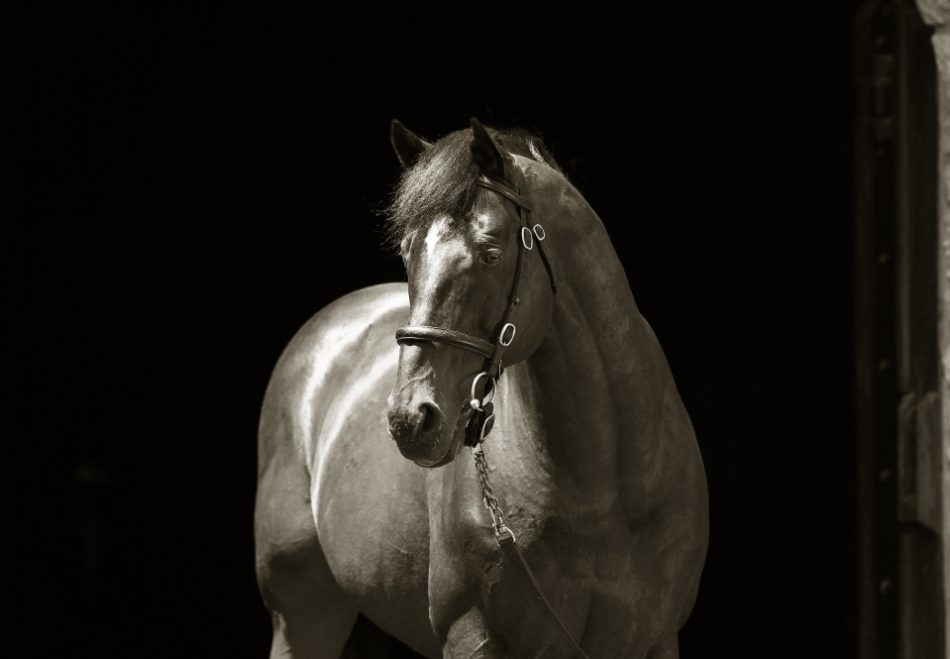
The years at stud graded the bet. He opened at Ashford Stud, Coolmore's Kentucky farm, in 2001 at a fee of $150,000 and sired six champions around the world — a return most stallions never produce, and still short of what the reported price had promised. His foals were good without becoming a dynasty, and the fee told that story season by season, sliding in stages across two decades until it reached $7,500 — one-twentieth of where it opened. His stud career ended in 2020.
He died at Ashford in May 2023, aged 26, and it was Coolmore, the buyer, that published the obituary. Horse & Hound still gives him the title he took in 2000: the most expensive horse in history. No later deal has been reported past the figure, because a figure like that was never really the price of a horse — it was the bloodstock futures market at its most fashionable, paid in full, up front. Those futures have all come due now. The record is what is left.
Previously's Take
Anyone who works around a sports book knows the purse is the money the crowd can see. Fusaichi Pegasus is the cleanest lesson in where the real money sits: he earned $2 million running and was worth a reported $70 million standing still, because a race can only be won once and a bloodline can be sold for decades. The slide from $150,000 to $7,500 is the other half of the lesson — most of a price like that is hope, and the foals eventually tell you how much.
The numbers
Sources · 4 sources
- Associated Press (via ESPN) — obituary, May 2023: Derby win, yearling price, earnings, Ashford Stud, reported stallion-rights figure
- Horse & Hound — most expensive horse in history, reported $70 million
- Coolmore — Fusaichi Pegasus 1997–2023 (stud career and death at Ashford)
- Stone Farm — breeder record: foaled, raised and sold the horse
Photography
Photographs: Stone Farm · Daily Racing Form · Coolmore
- Fusaichi Pegasus in the Kentucky Derby winner's circle at Churchill Downs, May 6, 2000: garland of roses on, Kent Desormeaux up in Fusao Sekiguchi's red-and-yellow silks, saddlecloth legibly reading 'KENTUCKY DERBY 2000' and 'PEGASUS,' tote board behind.
- Fusaichi Pegasus in full gallop during the 2000 Kentucky Derby, same silks, saddlecloth 'FUSAICHI PEGASUS' legible.
- The older stallion in his barn doorway at Ashford Stud, black-and-white portrait from Coolmore's own obituary gallery.