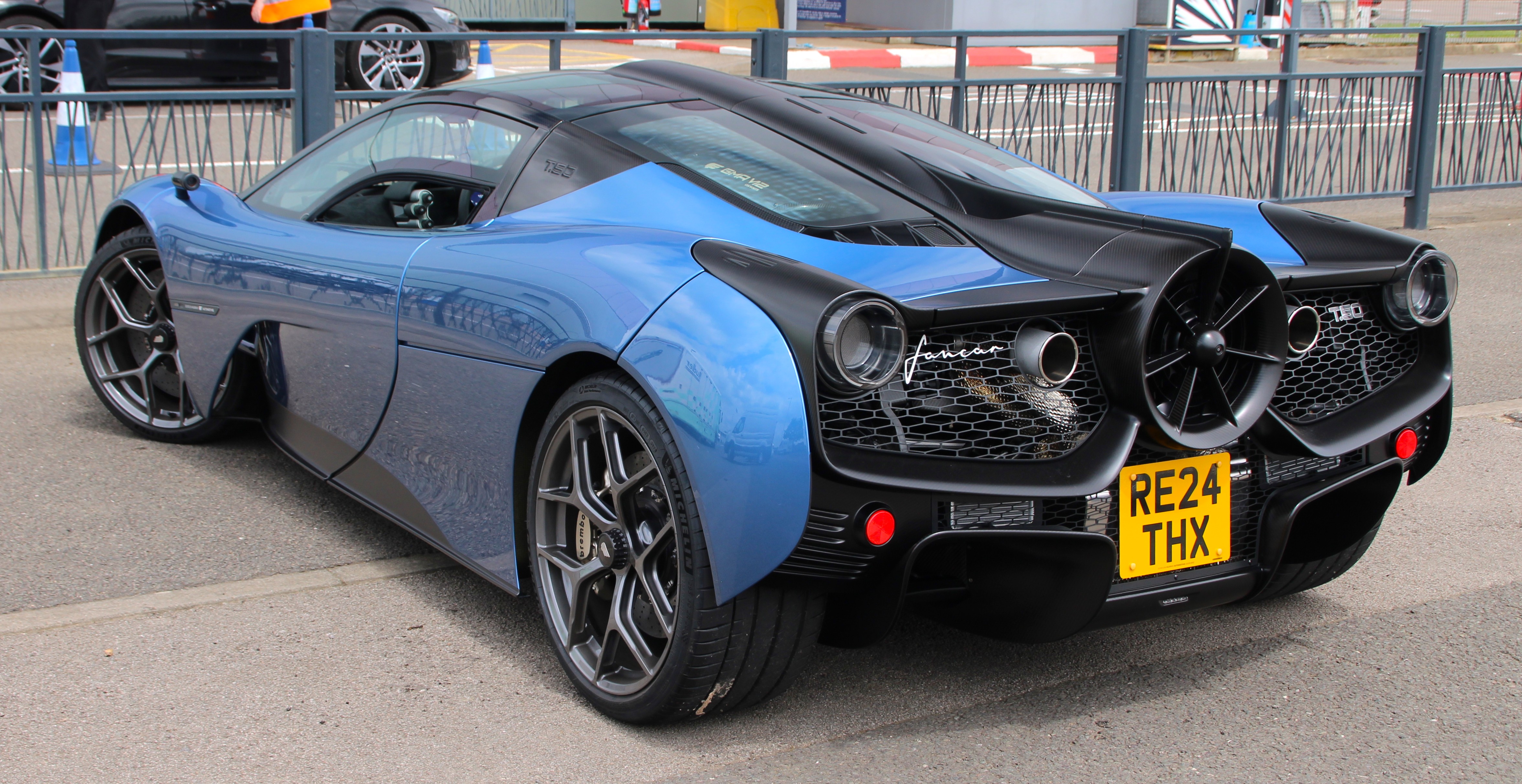

Every photograph of the Gordon Murray T.50 ends up at the same place: the back of the car, where a 400 mm fan sits in the middle of the tail like a jet intake. It reads as theatre. Gordon Murray's own explanation, walked through in his engineering vlog series, is more interesting than the theatre — because the fan's job is not the one most people assign it.
The obvious comparison is Murray's 1978 Brabham BT46B, the Formula 1 fan car. That car used its fan, side skirts and a sealed underfloor to pull a low-pressure pocket under the chassis — suction, in plain terms. It won the only race it entered and was withdrawn. The T.50's system works on a different principle, and the difference matters.
A modern diffuser — the upswept tunnel at the back of the T.50's floor — makes downforce by accelerating air beneath the car. Make the tunnel steep enough to work hard and the airflow gives up: it separates from the surface, the diffuser stalls, and the downforce goes away. The T.50's diffuser is deliberately too steep to work on its own. The fan, driven by a 48-volt electric motor at up to 7,000 rpm, draws air through ducts at the base of that diffuser. Pulling that sluggish boundary layer away keeps the main airflow attached to the tunnel walls, so the whole underfloor keeps accelerating air and keeps making downforce — with no wing, no splitter and no drag penalty worn on the bodywork.
Because the fan is electric and the diffuser ducts have valves, the system can change character. Gordon Murray Automotive counts six aerodynamic modes. In High Downforce mode the valves open and the fan spools up to raise downforce by half. Braking mode is automatic: under hard deceleration the twin rear spoilers rise to 45 degrees, the fan runs hard and downforce roughly doubles, which the company credits with cutting the 150-to-zero stopping distance. Streamline mode does the opposite — the valves partly close, the stalled diffuser gives up much of its downforce, and drag falls by about 12.5 percent. A test mode runs the whole sequence at a standstill, purely so an owner can watch it work.
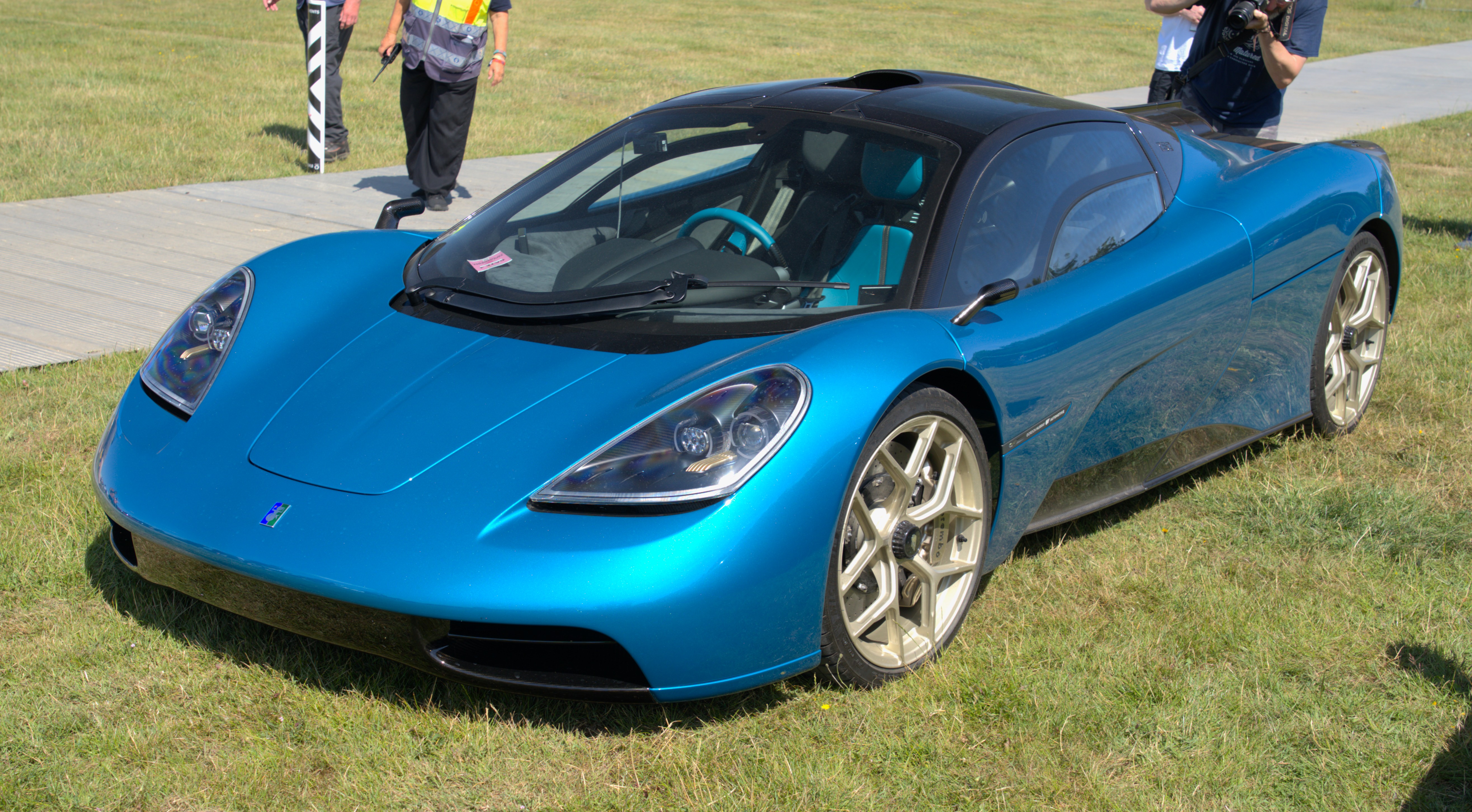
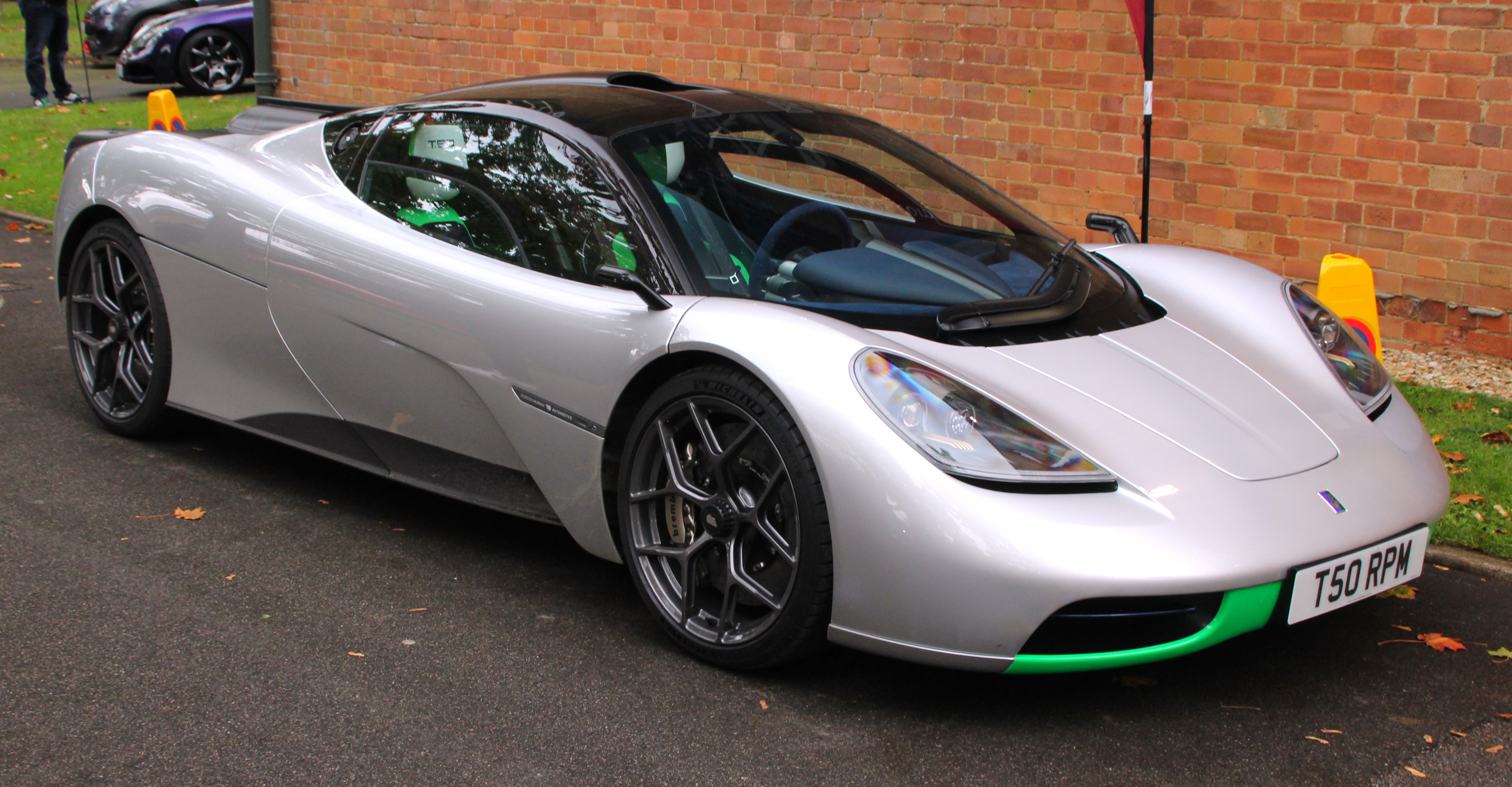
The rest of the car explains why Murray bothered. The T.50 weighs 986 kg, carries its driver in the centre of three seats, and is powered by a Cosworth-built 3.9-litre V12 that makes 663 PS and revs to 12,100 rpm, driving the rear wheels through a six-speed manual gearbox. It is a car engineered around lightness and response, and a conventional wing-and-splitter package would have taxed both. One hundred were built; at the car's August 2020 launch they were priced at £2.36 million before taxes, and the run sold out.
Previously's Take
The fan is best understood as a deletion, not an addition. It deletes the wing, the splitter and the stalled diffuser in one move, and lets the cleanest shape Murray has drawn since the McLaren F1 do its work undisturbed. The drama at the back of the car is real — it is just plumbing, pointed at a genuine problem.
The numbers
Sources · 4 sources
- Gordon Murray Automotive — T.50 Vlog Episode 5, "T.50 Aerodynamics Part 1" (official engineering film and transcript)
- Gordon Murray Automotive — T.50 launch specifications, August 2020
- Designfax — "FANtastic beast? T.50 supercar by Gordon Murray Automotive" (mode-by-mode aero figures)
- AirShaper — aerodynamic analysis of the T.50 fan and diffuser system
Photographs: Wikimedia Commons — MrWalkr, CC BY-SA 4.0 · Wikimedia Commons — MrWalkr, CC BY-SA 4.0 · Wikimedia Commons — MrWalkr, CC BY-SA 4.0