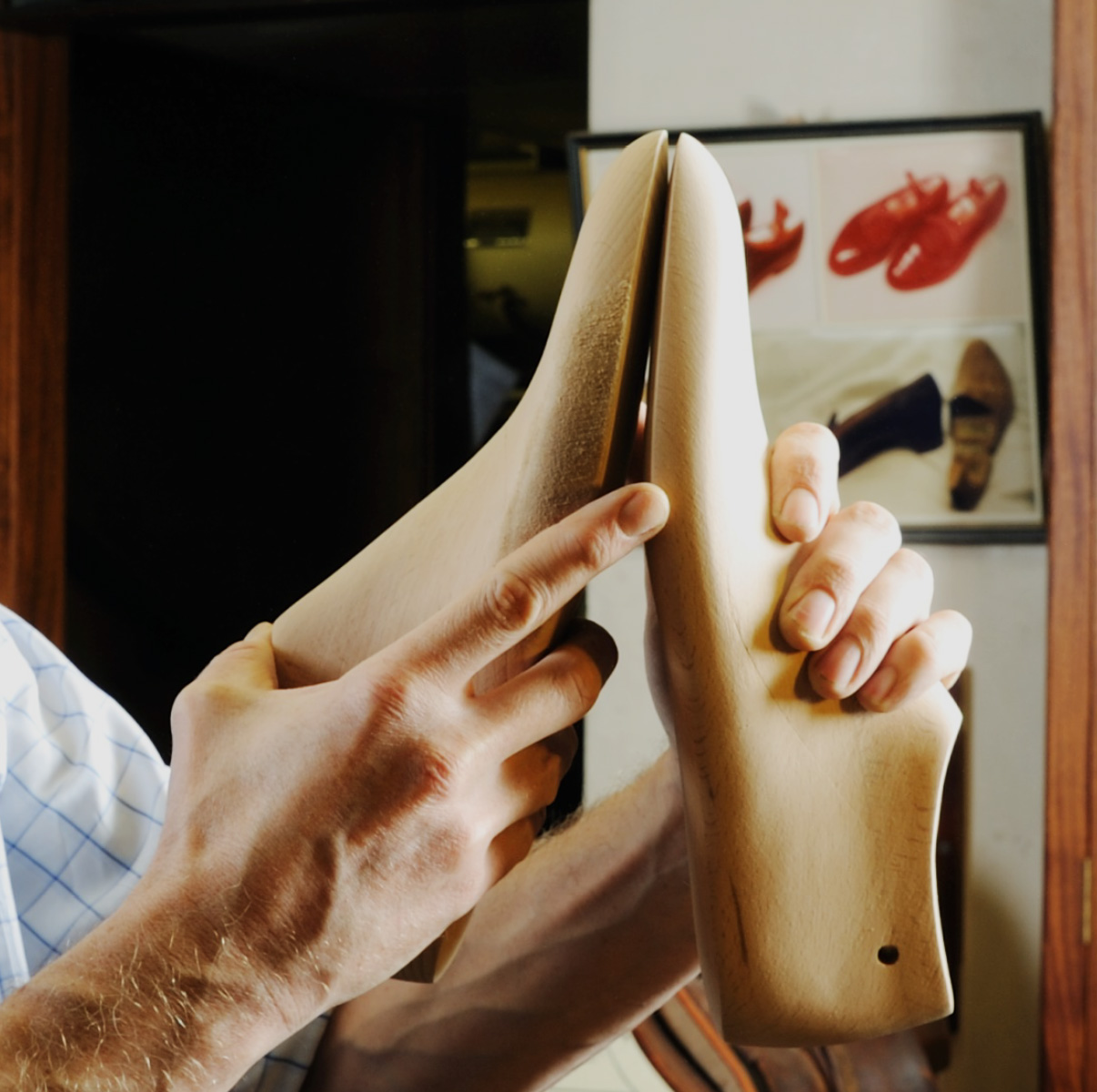

Start inside, where the signature is. Goyard states it as a point of pride on its own trunk-making page: each Goyard trunk is numbered, and it bears the initials of the very person who entirely handcrafted it. Not a department. Not a line. One maker, start to finish, signing the work the way a painter signs a canvas — except the signature goes where only an owner, a repairer or an auction specialist will ever find it.
An independent account of the Carcassonne workshops fills in the paperwork behind the romance. Each piece of hard-sided luggage, it records, is entirely handmade by one of around 20 highly skilled trunk makers; when the work is done, the maker writes the piece's serial number and their own initials on its identification tag, and the same number goes into the manufacturing register the workshops have kept since Jean-Michel Signoles took over the house in 1998. The trunk carries its maker's name, and the house keeps the book that proves it.
The object that earns that signature is mostly wood. Goyard's own account puts the material at the centre of the craft — wood has been at the heart of the house's making from the origins to today — and every trunk is handcrafted exclusively at the Maison's workshops in Carcassonne, in southern France, taking several weeks of exacting work. The famous chevron canvas, the Goyardine Edmond Goyard devised in 1892, is the skin. The trunk underneath it is joinery: a rigid wooden structure built to be dropped, stacked, shipped and opened ten thousand times without going slack.
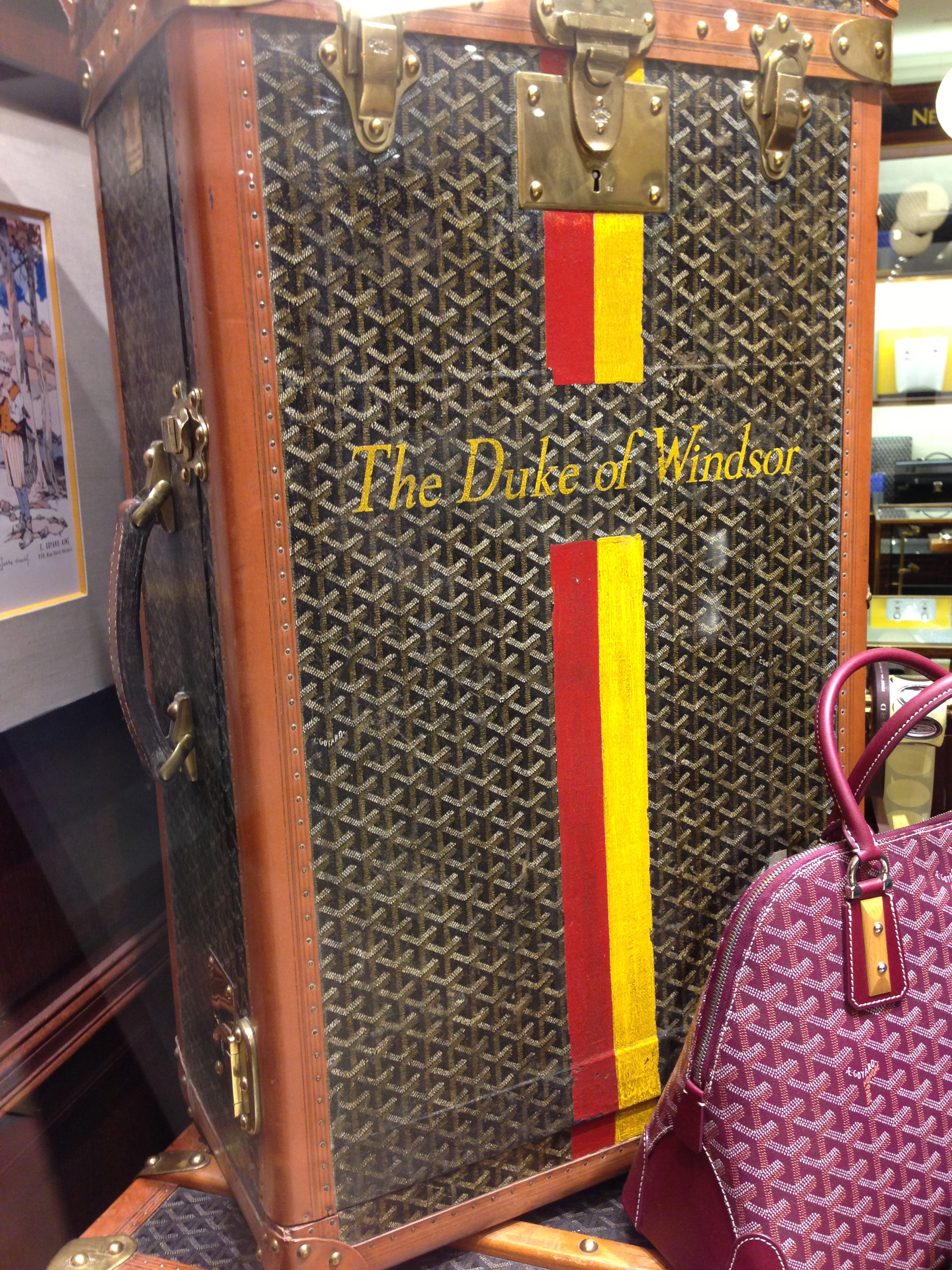
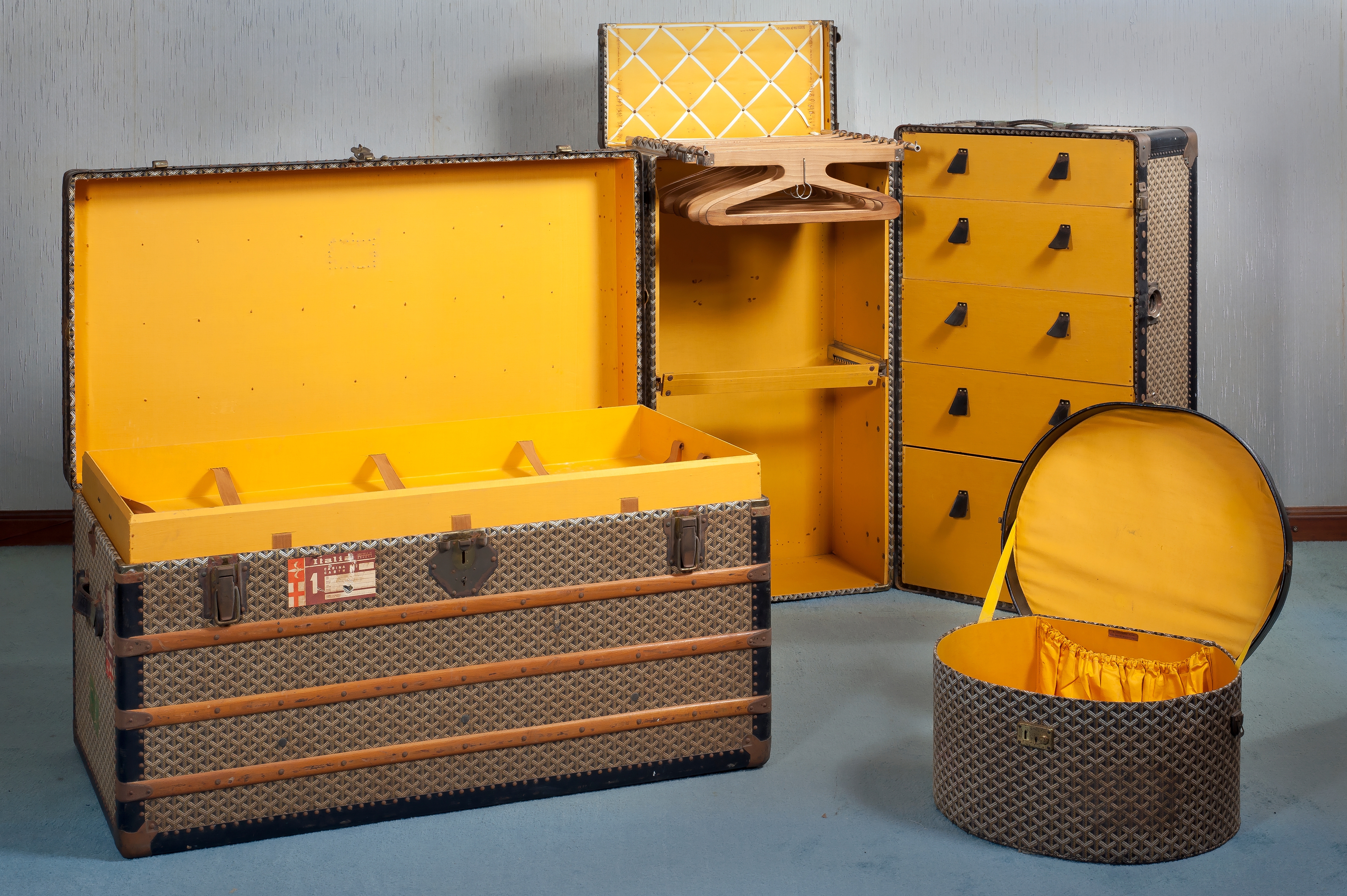
That is why the old ones survive to be photographed. The wardrobe trunk in this package's second and third photographs — one a full travelling set with its drawers, hangers and hat box, preserved in Rio's Casa Museu Eva Klabin — was built for a world of porters and steamships, and it still stands square. The Duke of Windsor's trunk in the lead photograph carries the other kind of mark Goyard is known for: his hand-painted red and yellow stripes and his name across the canvas, the owner's initials system the house calls marquage. Two marking traditions on one object — the customer's on the outside, in paint; the maker's on the inside, in ink.
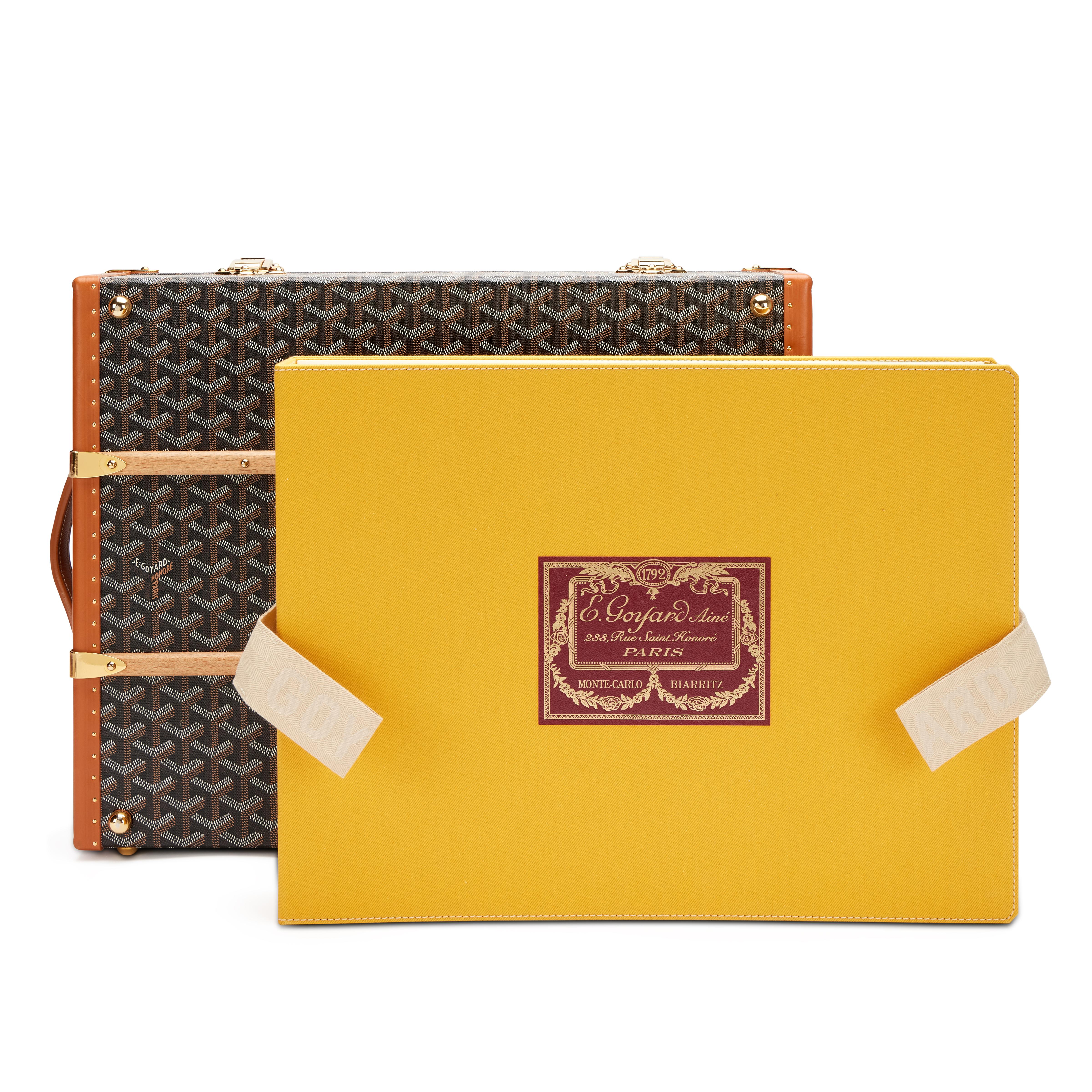
A house founded by François Goyard in 1853, a year before its great rival opened down the street, has had a long time to decide what a trunk is for. Goyard's answer is on its own page, unchanged in spirit across more than 170 years of workshop skill: it is a piece of furniture that travels, built by one person, whose name stays with it.
Previously's Take
Luxury usually signs the outside, where the cameras are. Goyard signs the inside, where only the owner will know — and keeps a register so the signature can be checked. That is not branding. That is accountability, built into a box.
The numbers
Sources · 6 sources
- Maison Goyard — "The Art of Trunk-Making" (official maker account, goyard.com)
- Maison Goyard — "The Art of Marquage" (official personalisation account, goyard.com)
- View from the Back, April 18, 2021 — "French Fancies: La Maison Goyard" (Carcassonne workshops; one maker per hard-sided piece; serial number, initials and register)
- Christie's — Goyard house history (1853 founding; Goyardine canvas, 1892)
- LAPADA — Goyard steamer trunk, circa 1915, object description and literature
- Sotheby's — Goyard Limited Edition Grand Tome trunk, 2011 (lot record; edition 232 of 233)
Photographs: Wikimedia Commons · Sotheby's · Casa Museu Eva Klabin