
PENSACOLA, FLA. THURSDAY, OCTOBER 15, 2026
Six days after Hurricane Isaias came ashore near Destin, the state of Florida has a headline number it is proud of: power restored to 95 percent of the customers who lost it. But in the two Panhandle counties where the storm hit hardest, the utility's own data tells a more complicated story — one in which tens of thousands of homes and businesses in Escambia and Santa Rosa counties were still in the dark on Wednesday afternoon, long after the official storm-outage count suggested the job was nearly done.
The gap is not a rounding error. According to the Pensacola News Journal, Florida Power & Light's official storm-related outage figures at 2 p.m. on October 14 stood at 4,770 customers in Escambia County and 3,100 in Santa Rosa County. Yet a county-level outage database on the same FPL system showed 24,750 customers out in Escambia and 16,061 out in Santa Rosa at the same hour — a combined difference of more than 31,000 customers between the two ways of counting. By early Thursday, just over 17,000 people across Florida remained without power, most of them in those same two counties, according to reporting by the Naples News.
Two different counts, one frustrated region
How can both numbers be real? The distinction, as FPL officials explained it this week, is between customers whose original storm outage has been formally closed out and customers who are without power right now for any reason — including new outages that began after their first restoration. Speaking at a Pensacola press conference on October 14, FPL's J.T. Young, the company's vice president and general manager for Northwest Florida, said crews remained on a round-the-clock schedule and acknowledged the frustration of residents still waiting. He added that some of the remaining outages involve homes that came back on and then went dark again, whether because of fallen limbs, fresh damage discovered during repairs, or damage to the home itself that makes it unsafe to reconnect.
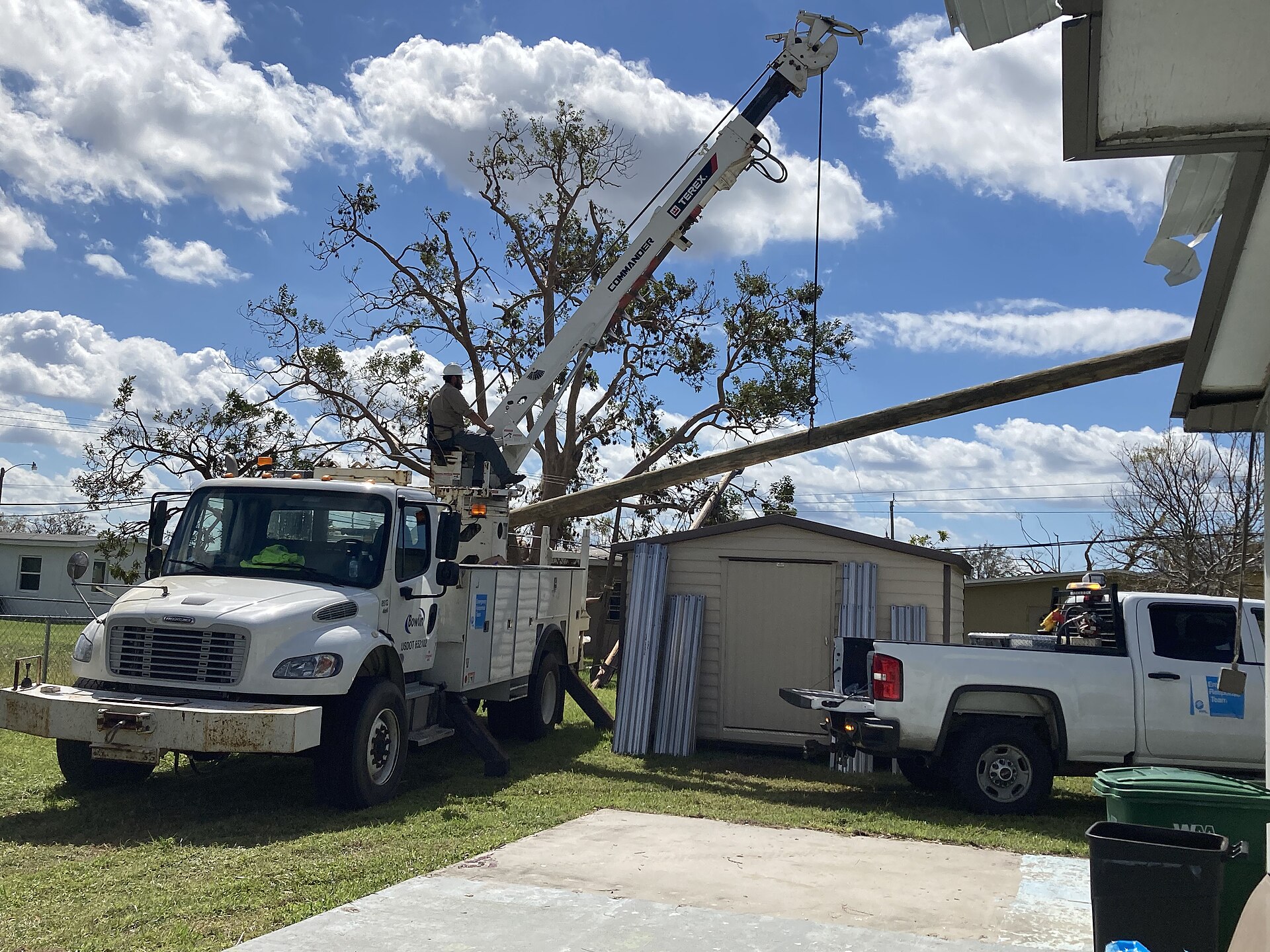
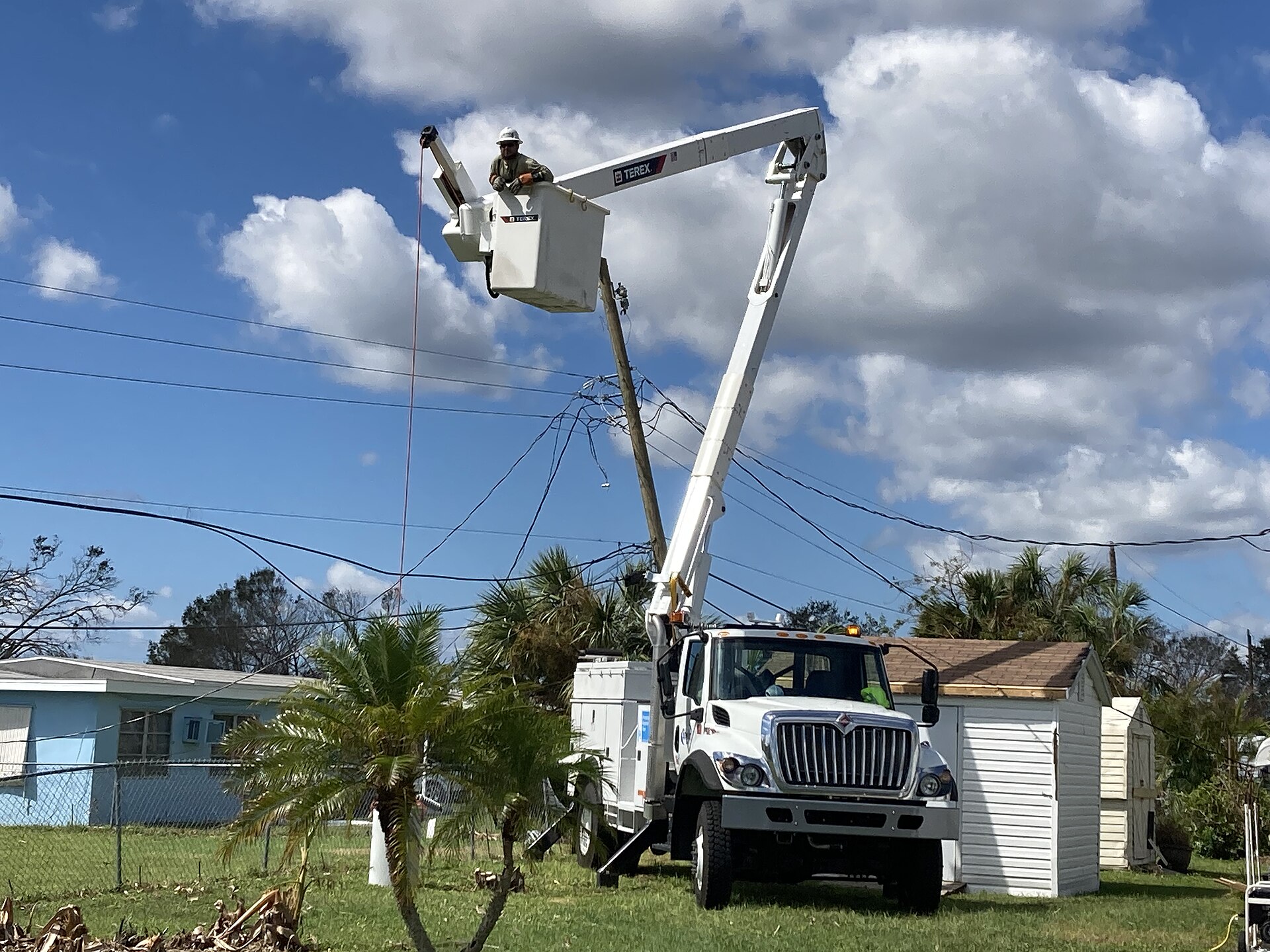
That explanation tracks with what restoration veterans describe as the hardest tail of any hurricane recovery. The first wave of repairs — re-energizing substations, feeders and main lines — restores power to thousands of customers at a time. The last wave is house-by-house work: a snapped service drop here, a damaged meter base there, a leaning pole at the end of a street that a crew could not safely reach until trees were cleared. Each of those jobs takes nearly as long as a feeder repair and restores a fraction of the customers, which is why the final few percent of a restoration always takes a disproportionate share of the calendar.
The storm, and the human cost
Isaias made landfall near Destin on October 9 as a Category 2 hurricane with winds of 105 mph. At its peak, roughly 450,000 customers in Florida were without power. The storm's toll has kept rising in the days since landfall. At least eight storm-related deaths have been reported across Florida and Alabama — six in Florida, a figure Governor Ron DeSantis cited on October 13, and two in Alabama. Florida's later deaths underline how dangerous the recovery phase can be: one person was killed in a tree accident during cleanup, another died in a crash at an intersection where the traffic signal was dark, and two people died after their medical treatment was interrupted.
Those details matter for how the restoration gap should be read. For a household that depends on powered medical equipment, a statistic about 95 percent restoration is not an abstraction. Neither is a dark traffic signal on a commute, or a fifth night of spoiled food and no air conditioning with a cold front — forecast to arrive this weekend — about to change the problem from heat to cold for families still without power.
The state's recovery operation
The official recovery apparatus, summarized in state updates reported by The Watchers, is extensive. Eleven distribution points are operating across Escambia, Santa Rosa, Walton and Washington counties, handing out water, meals, ice and tarps. About 2,013 Florida National Guard personnel have been activated to support the response. All state bridges in the affected area have been inspected and are open, 98 percent of traffic signals in the region are operational, and airports and seaports have reopened — milestones that mark real progress from the weekend, when the Panhandle's road network was the first obstacle every repair crew had to beat.
Restoration is not only about electricity. Mediacom, a major cable and internet provider in the region, said on October 14 that it had restored service to about 70 percent of its affected customers, according to a company announcement carried by Globe Newswire. For residents trying to work, file insurance claims or simply learn when their street is scheduled for repair, that connectivity gap compounds the power gap — and it is one reason utility outage maps, rather than press releases, have become the document Panhandle residents trust most this week.

What happens next
There were signs of movement inside Wednesday's numbers themselves. The Pensacola News Journal noted that by 2:38 p.m. — less than an hour after the 2 p.m. snapshot — FPL's county database had already fallen to 23,438 customers out in Escambia and 15,972 in Santa Rosa, evidence that crews are closing out jobs quickly even as new, smaller outages surface. If that pace holds, the honest count and the headline count should converge in the coming days.
Until they do, the Isaias restoration offers a lesson that applies well beyond Florida: after a major storm, ask not only what share of customers a utility says it has restored, but how many people are dark right now. The first number measures work completed. The second measures the emergency that is still ongoing — and in the western Panhandle this week, by the utility's own database, that emergency still numbered in the tens of thousands.
For more of today's national coverage, see our report on the Pope's upcoming surgery and our coverage of the EU leaders' summit in Brussels.
More from Previously
- Asia stocks sell off as the AI trade unwinds in Seoul and Tokyo
- EU leaders gather in Brussels over China exports and the bloc budget
- Pope Leo faces lung cancer surgery, Vatican confirms
Sources · 4 sources
- Pensacola News Journal — FPL says 95% restored; actual count much higher (Oct. 14)
- The Watchers — Florida state recovery update on Hurricane Isaias
- Naples News — Florida outages, early Oct. 15
- Globe Newswire — Mediacom restoration update (Oct. 14)