
NEW YORK
Earnings season's biggest evening delivered two beats and two very different after-hours stories. Meta Platforms and Tesla both topped Wall Street's estimates after the closing bell on Wednesday, according to Zacks, capping a day session in which the Nasdaq had already jumped about 1% on the strength of SpaceX's first public-company profit. By the time the numbers were an hour old, Meta was rising in extended trading and Tesla had gone up, come back down, and left investors arguing about which number in its report mattered most.
Meta: a record quarter with a $10 billion footnote
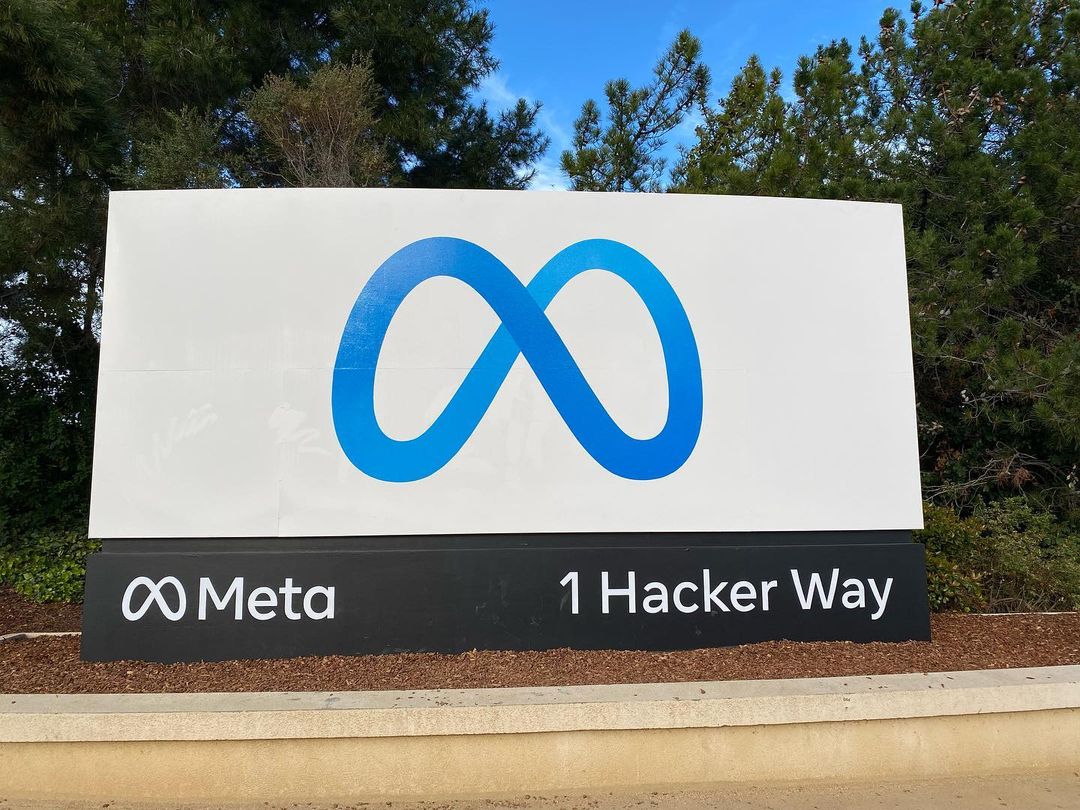
Start with the headline figures. Meta earned $3.83 per share in the third quarter, well ahead of the $3.45 analysts were looking for, on revenues of $64.6 billion — the highest in the company's history and up 26% year over year, according to Zacks. The revenue figure beat the $63.37 billion LSEG consensus, CNBC reported. Guidance did the rest of the work: Meta raised its fourth-quarter revenue outlook to a range of $73 billion to $76 billion, topping estimates, and the company rewarded shareholders with a 2-for-1 stock split. It is also creating a new class of non-voting stock to raise capital for its artificial-intelligence investments, according to Dow Jones reporting via Morningstar.
The costs were as large as the revenues. Earnings were held back by a $10 billion charge — part of an $18 billion multi-state settlement regarding social media addiction in young people, according to Zacks, whose account of the charge and the settlement CNBC's after-hours market coverage also reported. Meta projected between $135 billion and $145 billion in additional capital spending on AI infrastructure, according to Zacks, and Dow Jones reporting via Morningstar put the same capex figure at the center of its account of the quarter. That spending number is the one that has scared investors in past quarters. This time, at least one prominent bull shrugged. "The quarter showed the AI investment paying off in the core," said Dan Ives of Yorkville Ives in a post-earnings note quoted by CNBC, adding that spending looked "better controlled than feared" as Meta narrowed the range for its full-year data-center capital expenditures. Meta's stock rose in extended trading — about 5% after hours by CNBC's tally, with Zacks putting the late gain at 3.9% — after closing the regular session at $697.52, up 0.47%.
The settlement charge deserves a plain-English footnote, because it explains the gap between Meta's record revenue and its merely good earnings. According to Zacks, the $10 billion charge is one installment of an $18 billion multi-state deal resolving claims over social media addiction in young people — a legal cost, not an operating one, which is why analysts quoted by CNBC focused on the revenue beat and the raised guidance instead. Morningstar's Dow Jones summary likewise led with the record revenue and the new non-voting stock class rather than the charge. In other words, two independent reads of the same report — Zacks' earnings analysis and the Dow Jones newswire summary — agree on the shape of the quarter: the core business has never printed more money, and the bills, legal and otherwise, are the price of the AI build-out Meta has decided to run through its income statement.
Tesla: a beat, a battery problem and a round trip
Tesla's report was a study in competing headlines. The company earned $0.48 per share, three cents ahead of estimates, on revenues of $28.05 billion against a $27.78 billion consensus, according to Zacks. Automotive gross margins excluding EV credits improved to 18.1%, better than analysts had projected. The software story kept compounding: Full Self-Driving subscriptions rose 67% year over year to 1.74 million, the robotaxi fleet has now clocked 2 million unsupervised miles, and production of the Optimus humanoid robot has begun at the Fremont, California plant, Zacks reported.
And yet. Operating income fell 56% on essentially flat revenue, according to the Global Close summary from MarketBriefer, and Dow Jones reported that executives said a battery shortage is holding up production. The stock told the story in real time: Tesla edged higher immediately after the release, then slid, and was recently down 2.3% at $377.48 in after-hours trading, according to Morningstar's summary of Dow Jones reporting, after closing the day session up 3.41% at $386.47. The shares remain down more than 12% year to date, according to Zacks.
Hovering over both reports was the third Musk company in the room. SpaceX, now publicly traded, posted blowout results after Tuesday's close — its first public profit, with revenue up 161% — and Musk said each of his companies has formed a special committee to discuss a possible Tesla-SpaceX merger, a development Previously covered earlier today. One analyst told Reuters, in the day's market coverage, that SpaceX's results fed fears of a stronger wireless rival and helped sink AT&T, which fell 6.45% despite beating estimates.
What the evening set up
Late futures suggested the celebration would be restrained: Dow futures ticked down 0.3%, S&P 500 futures fell 0.5% and Nasdaq-100 futures dropped 0.7% as investors digested the reports, according to CNBC's live market coverage. IBM, Lam Research and Texas Instruments also reported after the close — a full chip-and-enterprise undercard we break down in our companion earnings story. The regular session had been strong: the S&P 500 notched a three-day winning streak, the Dow jumped 360 points and the Nasdaq closed 1% higher, according to CNBC.
The clean summary is this: the AI trade asked two of its biggest spenders to show receipts on the same evening, and both did — Meta with record revenue it is plowing back into data centers, Tesla with software growth papering over a factory problem it was unusually candid about. Whether candor about batteries is worth more than a 56% drop in operating income is the argument Thursday's session gets to settle. More on the News front.
Sources · 4 sources
- Zacks — Q3 earnings beats for Meta, Tesla, IBM and T.I. (October 21, 2026)
- Morningstar — Stocks to watch: Meta Platforms, Tesla, IBM, Lam Research (October 21, 2026)
- CNBC — The Global Close: October 21, 2026 (October 21, 2026)
- CNBC — Stock futures fall as investors digest earnings from Meta and Tesla: Live updates (October 21, 2026)