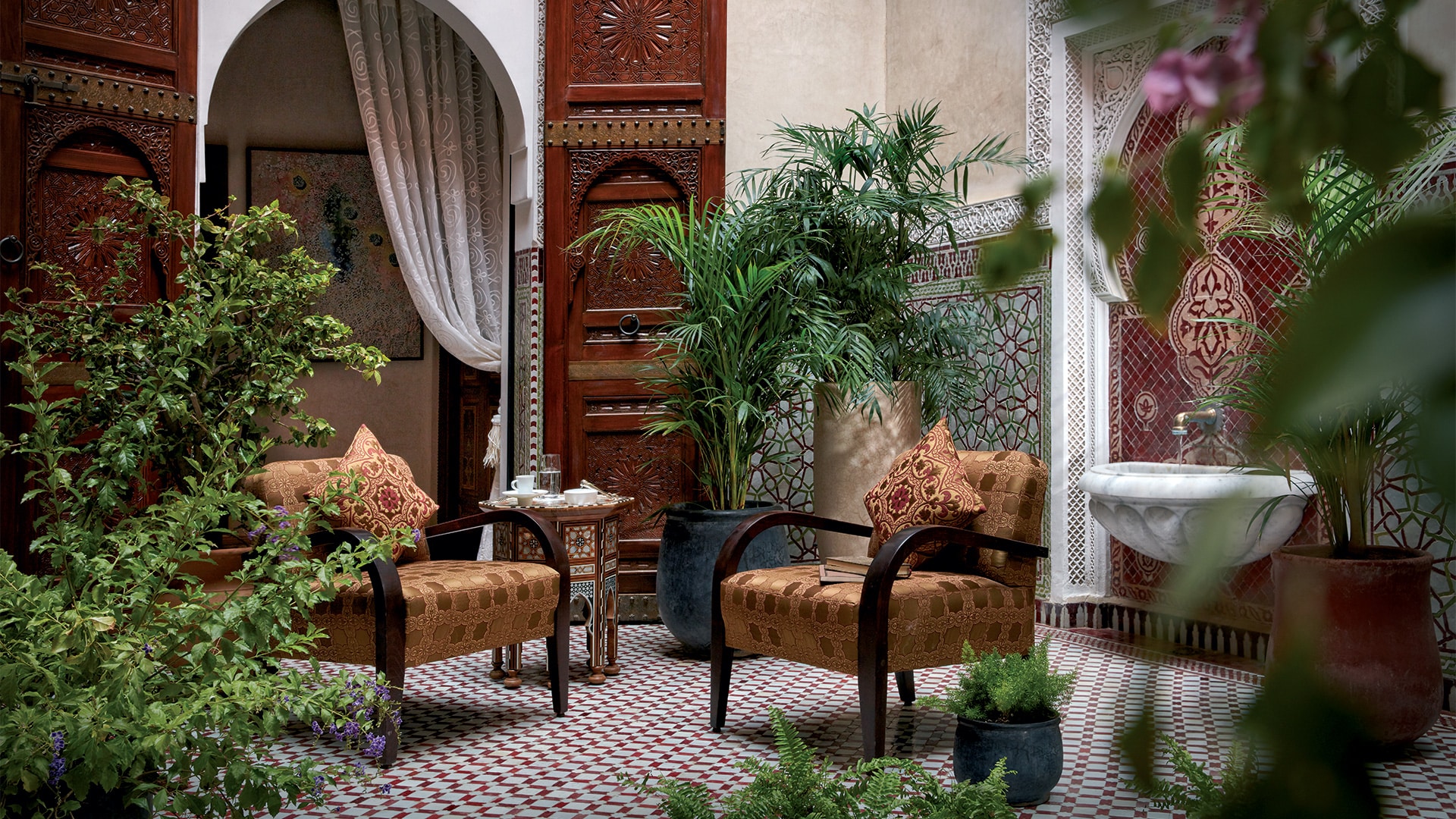

Most hotels are a building with rooms inside it. The Royal Mansour, which opened in Marrakech in 2010 under King Mohammed VI, is a small town instead: 53 individual riads arranged along winding lanes inside the old city walls, each one a private house of three floors built around its own courtyard, with a roof terrace and plunge pool on top. There is no corridor, no lift lobby, no housekeeping trolley parked outside your door. That absence is the design — and it takes a remarkable amount of hidden labour to sustain.
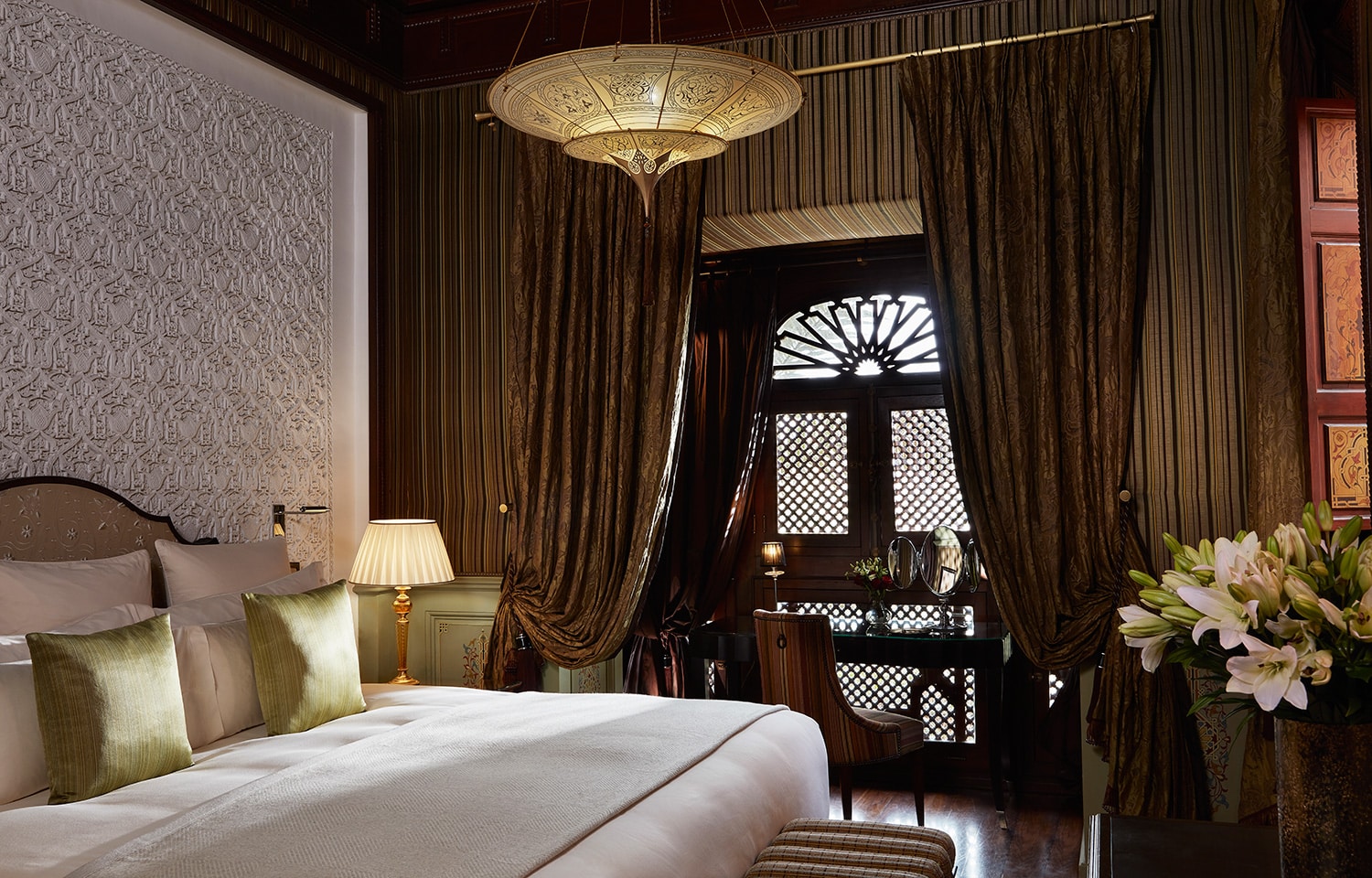
Start with the curtains. When the BBC series Amazing Hotels: Life Beyond the Lobby filmed inside the property in 2017, executive housekeeper Laurence taught presenter Monica Galetti how to "show love to curtains" — the house phrase for pleating them by hand. The hotel counts 350 pairs, and every set is worked by hand until the pleats fall exactly right. Nobody books a riad because of curtain pleats. But everybody notices, without knowing why, when a room feels finished. This is why.
Then go underground. A network of service tunnels — about a kilometre of them, by the accounts of those who have walked them — runs beneath the lanes and connects every riad. Butlers, housekeepers and florists move through that second, invisible hotel and surface through discreet doors inside the riads themselves. Presenter Giles Coren put on a butler's uniform and worked the tunnels for the same BBC episode; from a guest's side of the wall, breakfast simply arrives, flowers simply appear, and a room left messy at noon is immaculate by lunch. The property's own description says it plainly: the galleries exist so staff can work discreetly and guests keep their privacy. The magic trick is logistics.
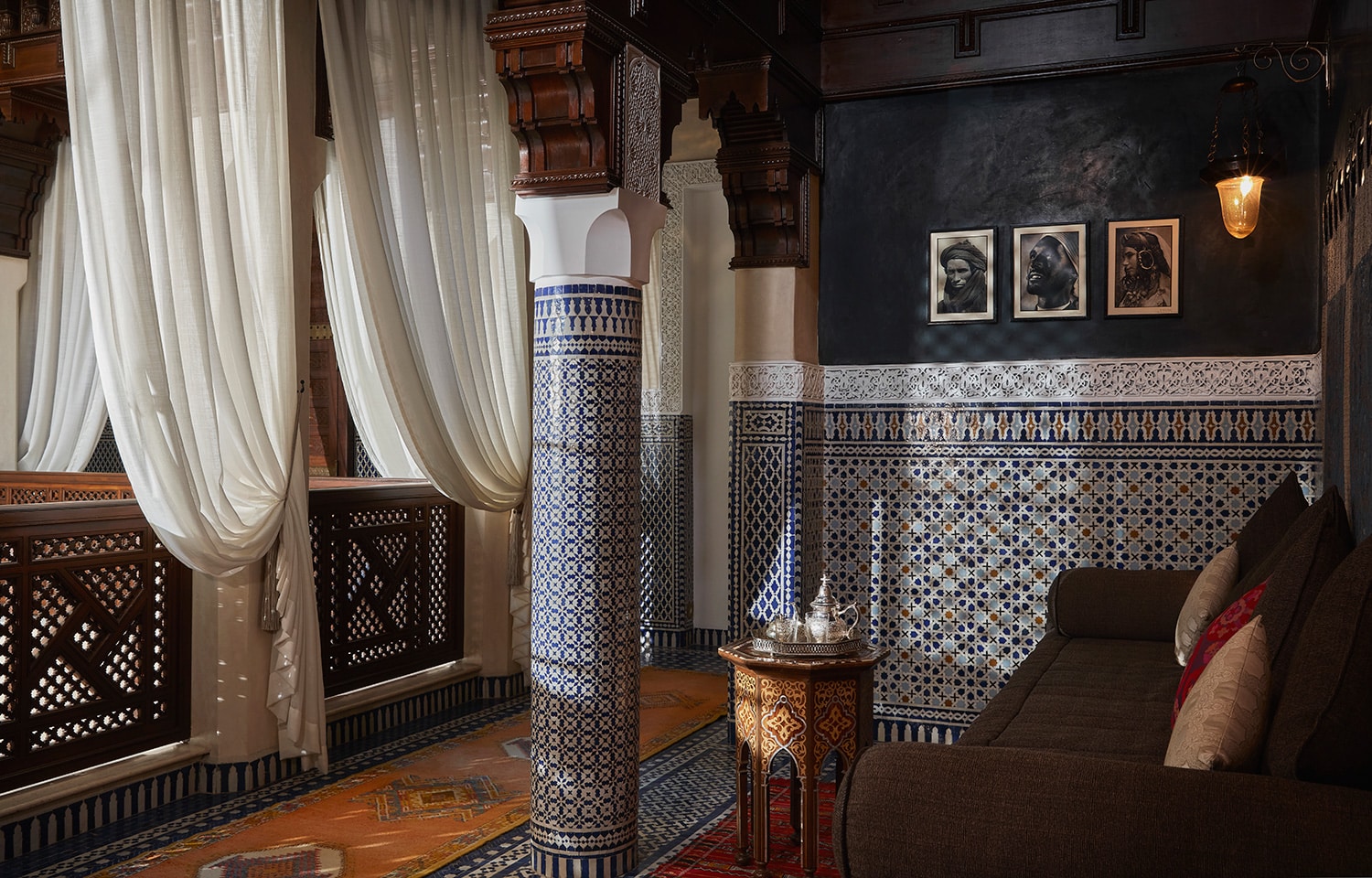
The surfaces those staff protect are the other half of the story. The riads are finished in the full vocabulary of Moroccan craft: hand-cut zellige tilework, carved plaster, cedar woodwork, tadelakt, custom-made furniture — the work of the maâlems, the master craftsmen the hotel names with respect in its own materials. Contemporary reporting on the build puts the artisan count above a thousand. Craft like that is not install-and-forget. Zellige needs cleaning that respects its glaze, carved plaster gathers dust in every cut, cedar and silk and suede all age if they are not tended. A medina built in 2010 out of medieval techniques inherits medieval maintenance, done daily, by hand.
That is the real organisational fact of the place: roughly ten staff per riad by some published accounts, a staff body in the hundreds for 53 keys, and almost none of it visible. Luxury hotels everywhere promise seamless service. The Royal Mansour built a separate circulation system — part tunnel network, part choreography, part curtain-pleating ritual — so the promise could survive contact with reality.
Previously's Take
A finished photograph of a riad courtyard tells you what money bought. The tunnels tell you what luxury actually is: labour, organised so carefully that the guest never has to think about it. The Royal Mansour's most expensive feature is not a suite or a spa. It is the invisibility of the work — 350 pairs of curtains, pleated by hand, in rooms whose occupants will never know a hand touched them.
The numbers
Sources · 3 sources
- Royal Mansour Marrakech — official riads page (property architecture, craft materials and underground galleries)
- BBC — Amazing Hotels: Life Beyond the Lobby, Series 1 Episode 4, "Royal Mansour, Morocco," 17 April 2017 (episode synopsis via BBC programme record and TVmaze episode guide)
- The World's 50 Best Hotels — Royal Mansour listing (2010 opening under King Mohammed VI; 53 riads; hidden tunnel service)
Photographs: Royal Mansour Marrakech · Royal Mansour Marrakech · Royal Mansour Marrakech