
Two states, two Republican strongholds and one simple message for the final stretch: turn out
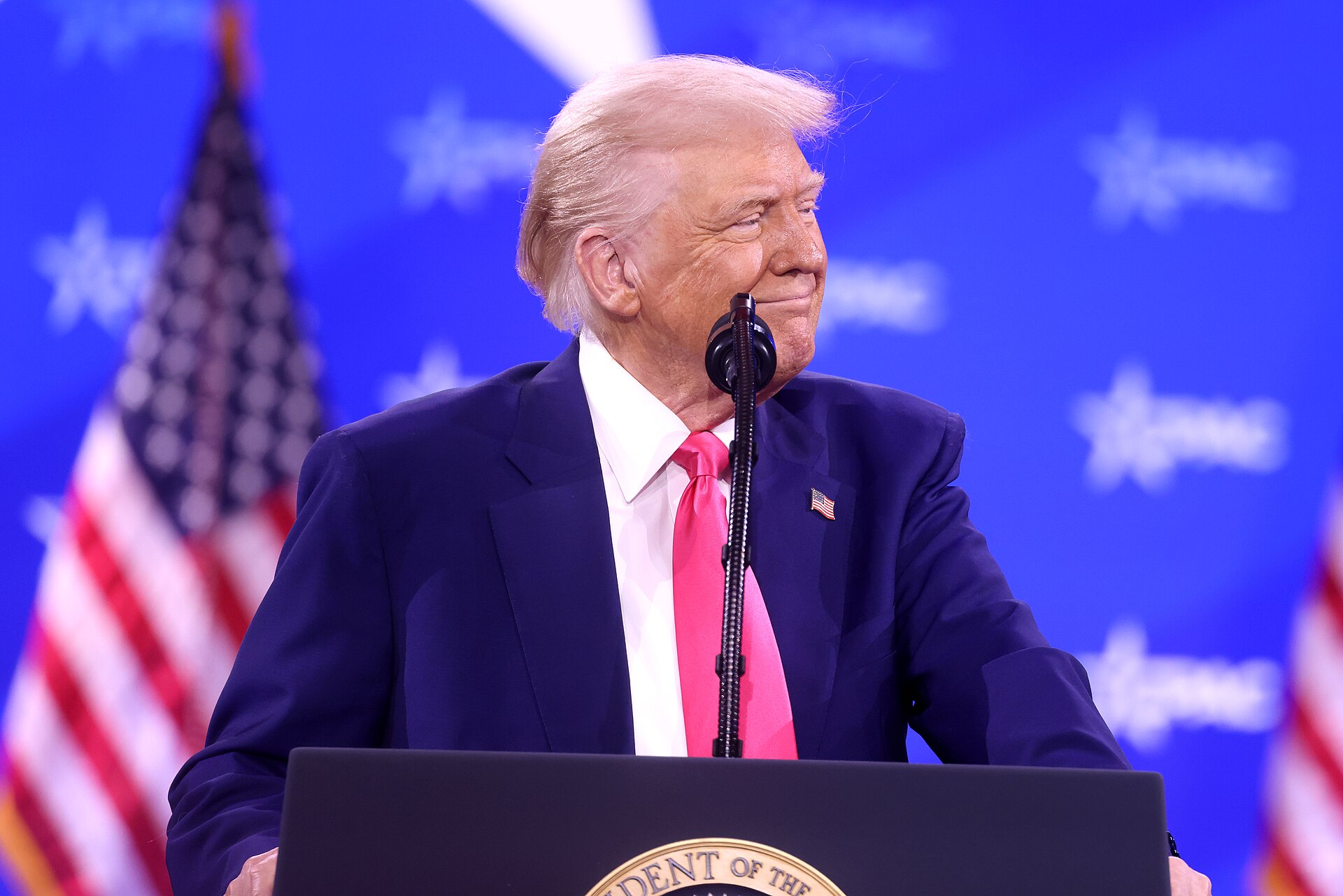
There is a particular kind of campaign day that tells you exactly how a president sees the map. Wednesday is one of those days. President Donald Trump is not spending it in a toss-up suburb or a media market where every camera in the country is already waiting. He is spending it, first, in one of the reddest corners of Arizona, and then in northwestern Montana — two places where his support in 2024 was not close, not contested, and not subtle.
According to the Arizona Republic and its azcentral live coverage, Trump begins the day in Las Vegas, then speaks at a rally at Laughlin/Bullhead International Airport in Bullhead City, Arizona, scheduled for 1 p.m. local time. From there, according to reporting cited by The Hill and iHeart, he travels to Kalispell, Montana, for a 6:15 p.m. rally at Majestic Valley Arena supporting congressional candidate Aaron Flint.
Two rallies, two states, one afternoon and evening. It is a long day by any normal standard, and it is deliberately built that way. With Election Day on November 3 now less than three weeks away, the question for any campaign is no longer just persuasion. It is turnout — who actually shows up, who returns a ballot, and who brings somebody else with them.
Why Bullhead City, of all places?
If you have never driven through Bullhead City, the logic might not jump off the map at first glance. It sits in Mohave County, in western Arizona along the Colorado River, across from Laughlin, Nevada. It is not Phoenix. It is not Tucson. It is not one of the fast-growing suburbs that usually dominate Arizona political coverage.
That, in a way, is the point. According to azcentral, Mohave County is deep-red territory: Trump won more than 77 percent of the vote there in 2024. A rally there is not primarily about winning over undecided voters in the room. It is about generating energy, attention and turnout in a place where the president's supporters are concentrated — and where that energy, if it travels, can matter statewide.
Former Arizona GOP executive director Brian Murray explained that logic to azcentral, in paraphrase: driving record turnout in Mohave County can help Republican candidates in statewide races that may be decided within a much narrower margin elsewhere in Arizona. In other words, you do not only campaign where the margin is close. You also campaign where your voters are, in numbers large enough to change the statewide total.
That is an old idea in politics, but it still works for a simple reason. Statewide races are statewide. A vote banked in Bullhead City counts the same as a vote banked in Scottsdale or Mesa. If a rally in Mohave County produces a surge of early votes, mail ballots returned, and Election Day turnout from people who were already inclined to support Republican candidates but might not have voted in a midterm, that surge is real — even if the county itself was never in doubt.
The Arizona lineup tells its own story
The speakers expected alongside Trump in Arizona underline what this stop is about. According to azcentral, citing campaigns and spokespeople, the Arizona speakers include gubernatorial nominee U.S. Rep. Andy Biggs, who is challenging Democratic incumbent Gov. Katie Hobbs, along with U.S. Reps. Paul Gosar and Abe Hamadeh, and former Pinal County Sheriff Mark Lamb, who is running for Biggs's House seat.
Start with Biggs. His race against Hobbs is the headline statewide contest attached to this rally, and it carries a national wrinkle that makes Arizona especially interesting this year. Arizona is one of five states with a Democratic governor up for re-election in a state Trump won in 2024. That combination — a Democratic governor, a Republican-leaning presidential result in the last cycle, and a midterm electorate that is usually smaller and older than a presidential one — is exactly the kind of setup that draws a president into a state in mid-October.
Gosar and Hamadeh bring congressional presence from the Republican side of Arizona's delegation, and Lamb's candidacy connects the rally to the next layer down the ballot: as Biggs runs for governor, his House seat becomes its own contest. A rally like this is therefore doing several jobs at once. It is a show of unity for cameras, a turnout event for local organizers, and a chance for down-ballot candidates to be seen, literally, standing in the same frame as the president.
Whether that frame helps in every race is a separate question, and campaigns argue about it constantly. What is not in doubt is the intent. Nobody schedules a presidential rally at an airport in Bullhead City three weeks before Election Day by accident.
Then, on to Montana
The second half of the day takes the same idea north. According to The Hill and iHeart reporting on the day's schedule, Trump heads to Kalispell, Montana, for a 6:15 p.m. rally at Majestic Valley Arena supporting Aaron Flint.
Flint is running against Democrat Sam Forstag to replace retiring Rep. Ryan Zinke in Montana's 1st District. That detail matters because an open seat — a district without an incumbent running for re-election — is a different kind of race. There is no sitting member with an established operation and a record voters already know. Both candidates are trying to define the race, and a presidential visit is one of the loudest defining tools a campaign can get.
The geography rhymes with Arizona, too. Montana's Flathead-area county, where Kalispell sits, went more than 65 percent for Trump in 2024, according to the reporting provided for this cycle. Again: not a coin-flip venue chosen to chase undecided voters in the room, but a stronghold venue chosen to mobilize supporters who are already there, in a district where an open-seat race will be decided in part by which side turns its base out more completely.
There is also a practical, almost logistical poetry to the day. Las Vegas in the morning, Bullhead City — just south of the Nevada line — in the early afternoon, then a flight north to Kalispell by evening. The president is tracing a line through the interior West, through places that do not always get a presidential visit in the final stretch, and telling voters in those places that they are the reason for the trip. Politicians say that everywhere, of course. But showing up is a stronger version of saying it.
What to watch next
The honest way to read a day like this is to watch what happens after the speeches end. Do early-vote and mail-ballot numbers in Mohave County move in the days that follow? Does the Biggs campaign get a visible bounce in attention — and, more importantly, in volunteer and turnout activity — in western Arizona? In Montana, does Flint's race against Forstag tighten, or does the visit mainly solidify a base that was already inclined his way?
Those are measurable things, and over the next three weeks they will matter more than any single crowd count or applause line. Midterms are, at their core, turnout elections. Presidential rallies in stronghold counties are a bet that enthusiasm is a resource you can manufacture on a Wednesday afternoon and spend on a Tuesday in November.
Trump has made that bet before, in Arizona and elsewhere. Wednesday, he is making it twice in one day — once in the desert along the Colorado River, and once in the Flathead Valley. By the time the lights go down in Kalispell, the campaign will have its pictures, its clips and its headlines. The ballots, as always, will deliver the actual verdict on November 3.
Sources · 4 sources
- Arizona Republic / azcentral — live coverage of Trump in Arizona, October 14, 2026
- Arizona Republic / azcentral — Trump set to rally in Bullhead City as midterm voting gets underway
- The Hill — reporting on Trump's October 14 Arizona and Montana rally schedule
- iHeart — reporting on Trump's October 14 rally schedule and the Kalispell appearance for Aaron Flint