
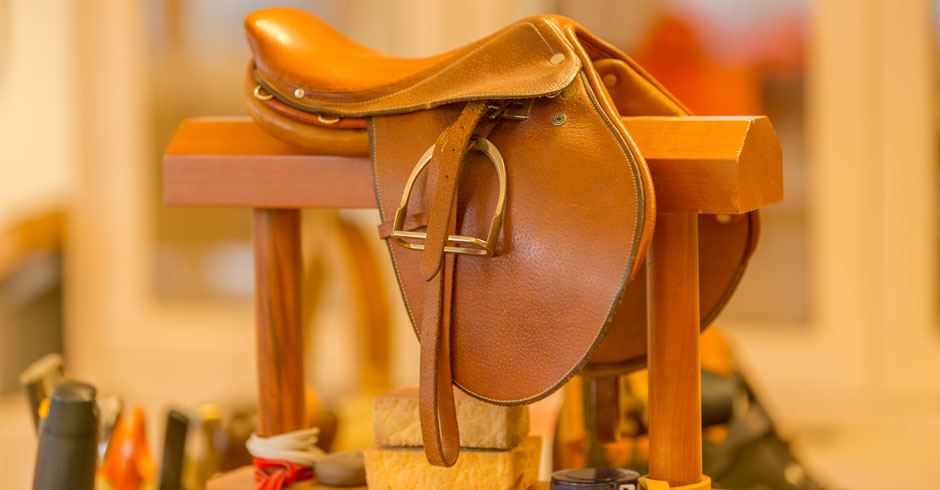
- A Hermès saddle is built around balance — tree, seat, flaps and girths tuned as one system - Each bespoke saddle is made start to finish by a single master saddler - The fit is doubly custom: measured for the horse first, then for the rider - The workshop has sat above the Faubourg Saint-Honoré flagship since 1880 - Master saddler Laurent Goblet was explaining the parts of a saddle on film in 1997 — and was still designing them nearly thirty years later
A Harness Maker First
Hermès began in 1837 as a harness maker, and the saddle workshop has worked above the flagship at 24 Rue du Faubourg Saint-Honoré since 1880. The house's name was built on what it made for horses long before it was built on anything else, and the saddle has never stopped being a working object: it has to sit on a moving animal, carry a moving rider, and keep the two of them in equilibrium. That is why the house talks about a saddle the way an engineer talks about a structure. In the house's own film of its saddle-making, the parts are named plainly — tree, seat, flaps, girths — and the verdict follows immediately: it is all a matter of balance.
One Saddler, Start to Finish
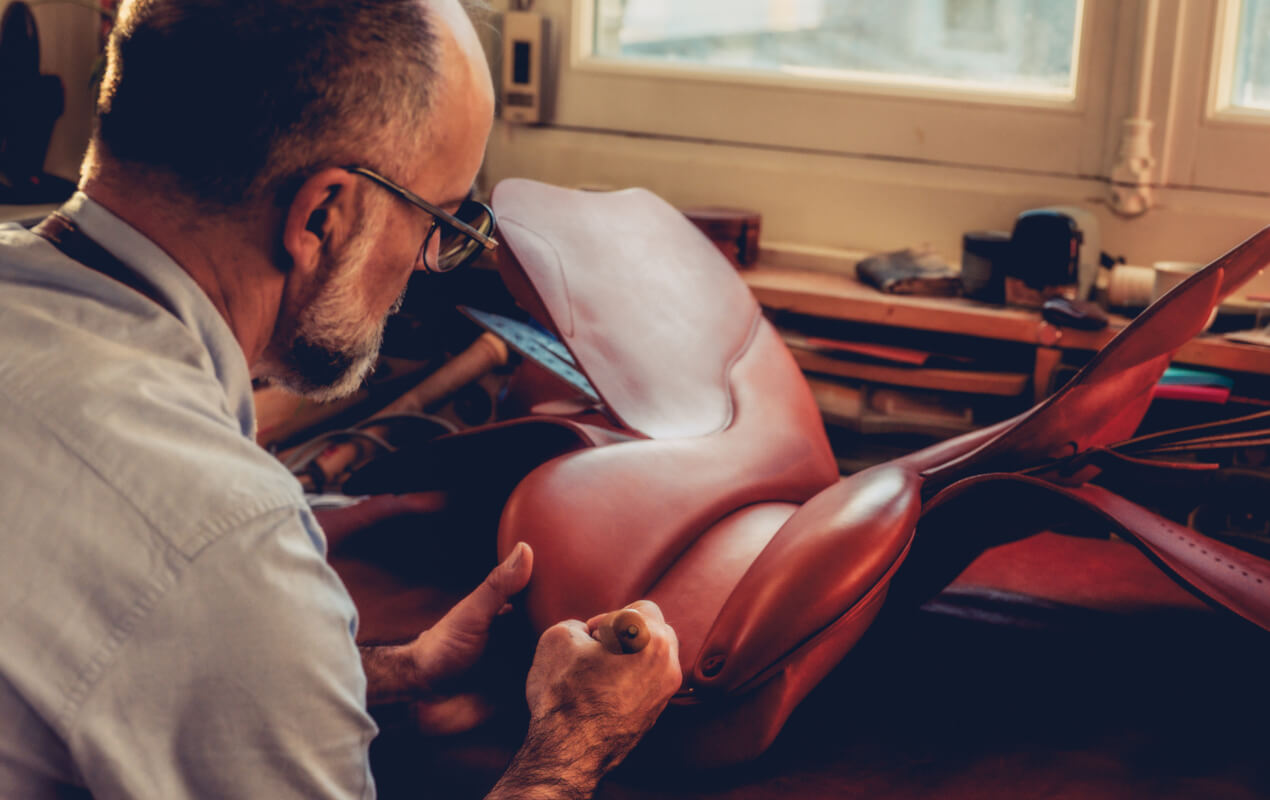
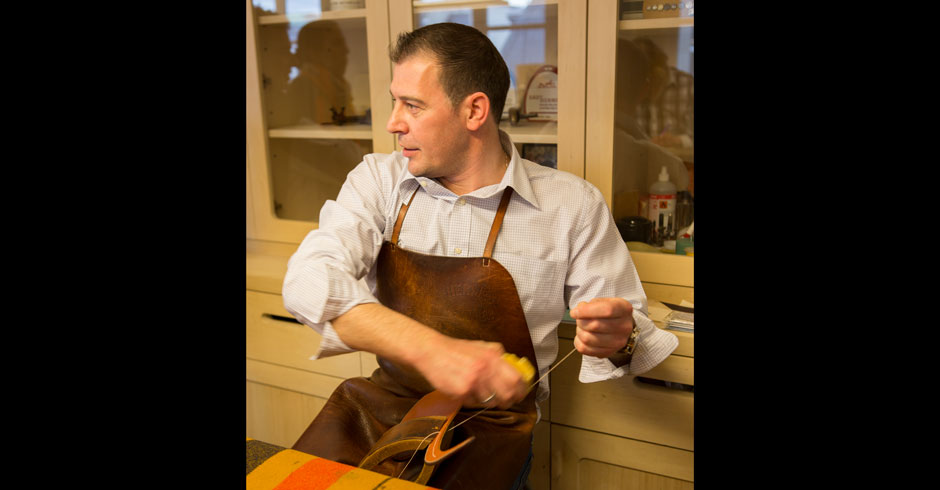
A bespoke Hermès saddle is made by one master saddler, who carries it from the first measurements to the last stitch in the house's Paris and Normandy workshops; the work takes some 25 to 35 hours at the bench. Nothing is handed down a line. The leather is stretched and hammered home with tacks, the panels are shaped by hand, and the saddle stitch — the two-needle hand stitch that has defined Hermès leatherwork for generations — is pulled by the same pair of hands throughout. Every finished saddle is recorded in the workshop's ledgers with its specifications, the name of its maker and its year, so a saddle can come back decades later and be met by its own file.
Measured Twice: Horse, Then Rider
The fitting runs in a deliberate order. As the head of the métier puts it, the saddles are made for the horse first and then the rider — doubly custom-made. The tree is chosen and set for the horse's back, because a saddle that fights the horse helps nobody; the seat is then built for the rider who has to live in it. The current bespoke range shows how far the tuning goes. The Faubourg, a deep-seat saddle developed with the show jumper Jérôme Guéry, is listed by the house in the United States at $11,000; the Cavale II was built around what the house calls central balance, with a mid-depth, stitch-free seat developed with Simon Delestre; the flat-seat Vivace descends from the Steinkraus and Allegro, the classic Hermès jumping saddles; and the Arpège, the extra-deep dressage saddle, was designed with Jessica von Bredow-Werndl. Each is a different answer to the same equation.
The Man on Film, Twice
On 15 February 1997, a France 3 crew filmed master saddler Laurent Goblet in the Faubourg workshop for the Institut national de l'audiovisuel, talking through the parts of a saddle and demonstrating the saddle stitch while a companion piece showed the workshop's collaboration with riders. Nearly three decades later, Hermès's own Footsteps Across the World film finds Goblet in the same trade, in his fifth-floor workshop at the Faubourg — the room turned design office for the Arpège, working the dressage saddle out with von Bredow-Werndl. Workshops change hands around a man like that; the bench, the stitch and the system of balance do not.
A Hermès saddle is priced like jewellery and justified like equipment. One craftsman, one horse, one rider, and a structure tuned until the balance is right — the house has been solving that single problem above the same Paris street since 1880, and it still refuses to solve it any other way.
The numbers
Sources · 5 sources
- Hermès — bespoke equestrian page and the house's Footsteps Across the World film (hermes.com; youtube.com/@hermes)
- Institut national de l'audiovisuel / France 3 Rennes record, 15 February 1997 (catalogue row H17)
- Equestrian Living, "Inside the Hermès Atelier"
- Food Industry Network, Hermès atelier visit
- Auberge Collection, the Hermès saddle story
Photographs: Auberge Collection · Equestrian Living · Equestrian Living