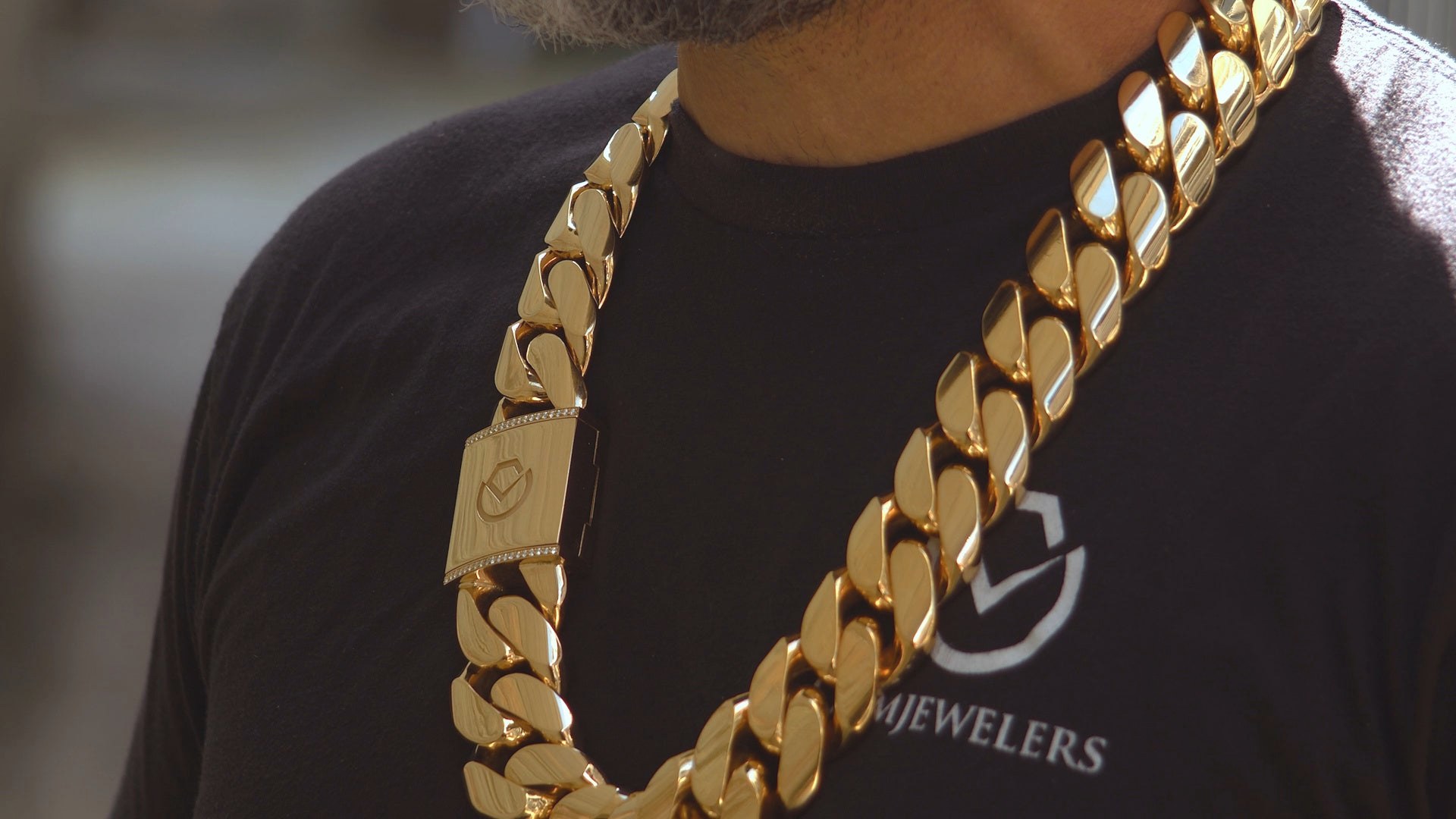

Everybody has seen a Cuban link. Fewer people have watched one become a Cuban link.
The copies are everywhere — cast, machine-cut, polished up and sold under the same proud name. But the handmade Miami Cuban, the one that sits at the center of hip-hop's jewelry language, starts somewhere much less glamorous: at a bench, with a calculation, raw gold, and a maker willing to file away a fortune in order to get the face right.
Not moulded. Not stamped out by the tray. Made.
CRM Jewelers in Miami documents its builds in full, because the first step is arithmetic. Chain gold is figured in pennyweights and alloyed: 14-karat gold is 58.33 percent gold, with copper, zinc and silver added for strength. Pure 24-karat sounds richer until you remember a chain has to survive being worn. On CRM's two-kilo build, an X-ray analyser read the finished bar at about 59 percent — above standard.
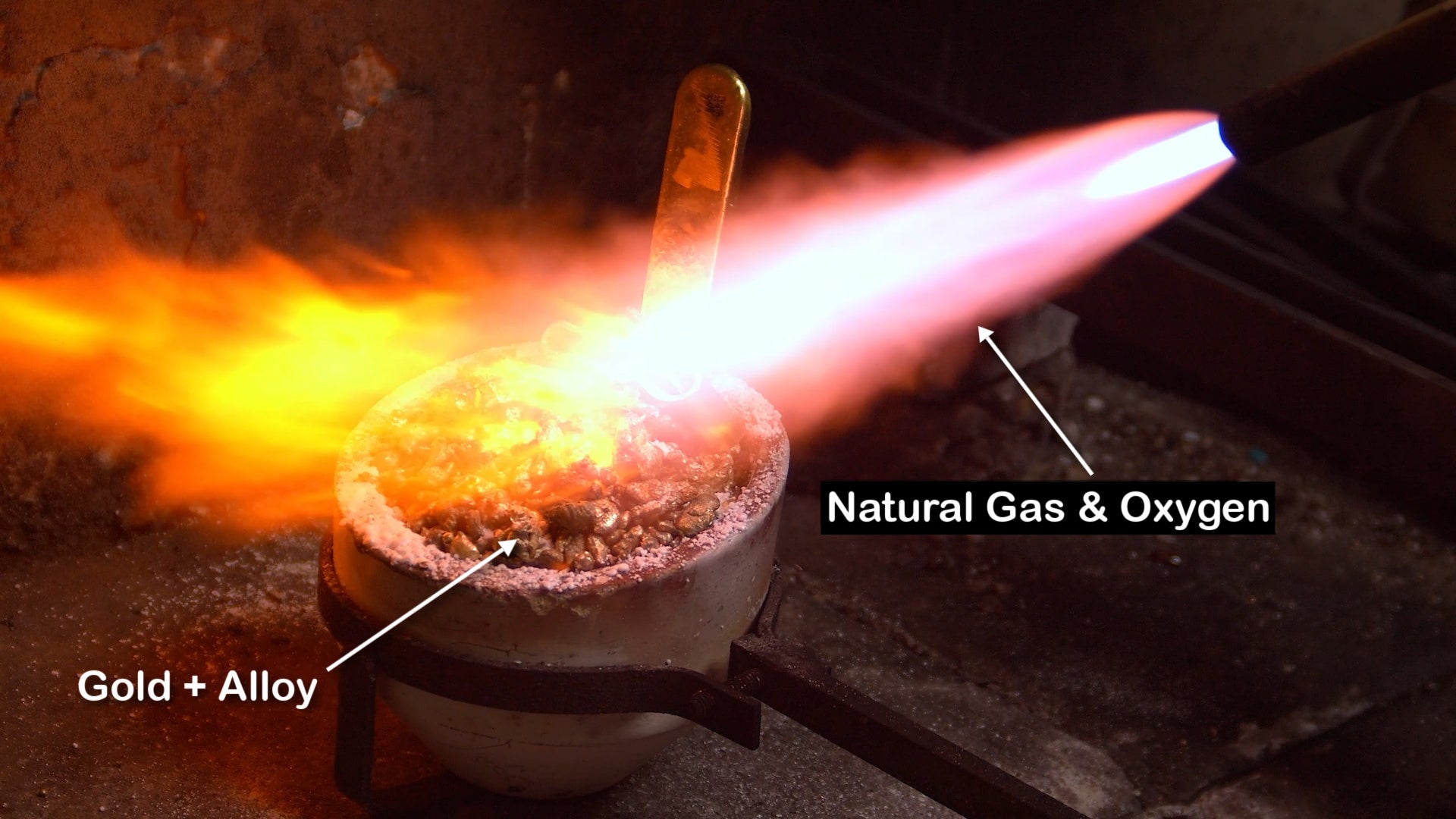
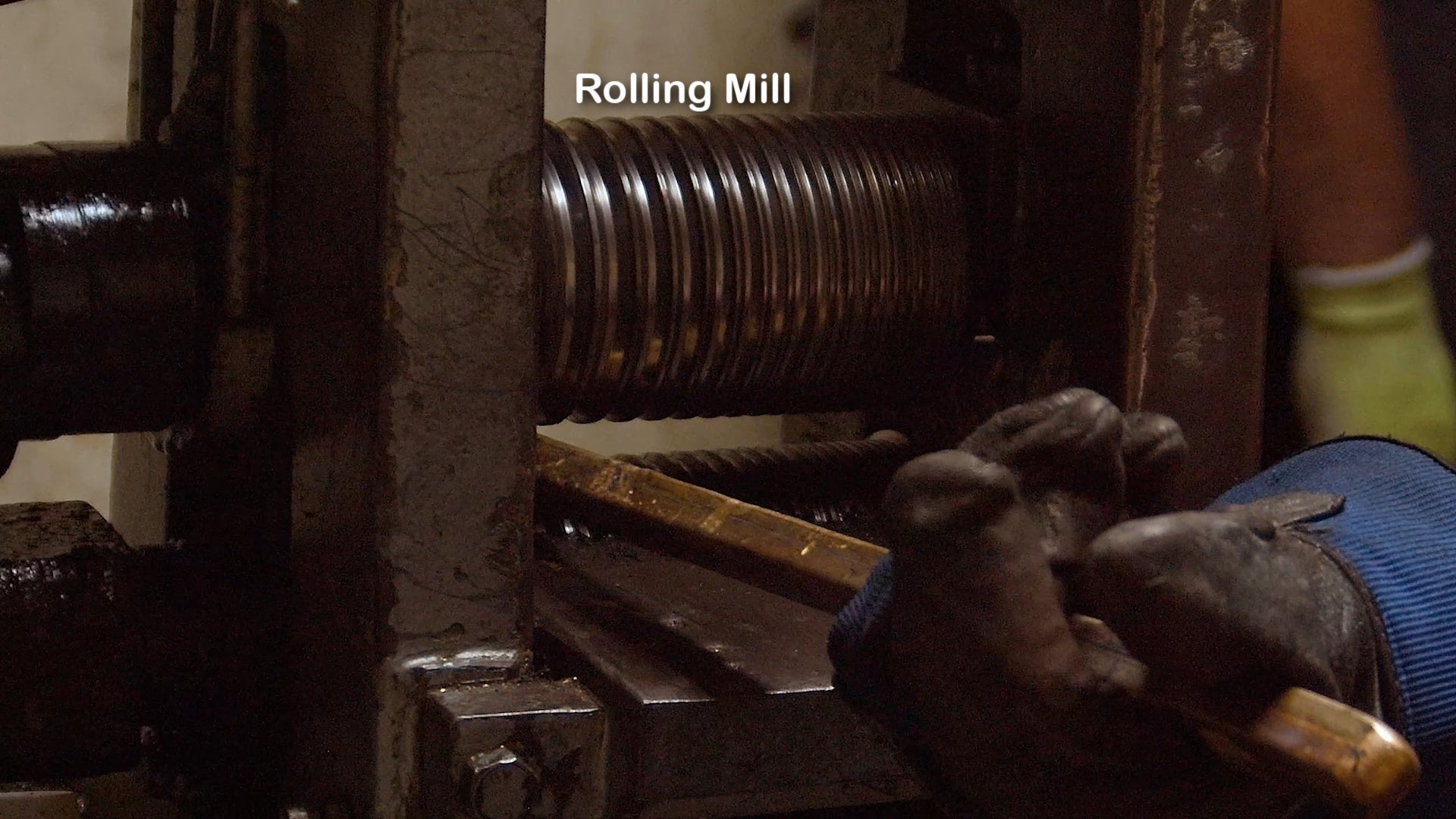
The alloy is melted into an ingot. Then the work slows down. Bar through the rolling mills. Heat it to anneal it, soften it, run it again. Pull it through a drawplate until it becomes wire at exactly the gauge the links demand. Nothing about that rhythm belongs to mass production. It belongs to a person who knows how metal behaves when it is tired, hot, thin and close to refusing.
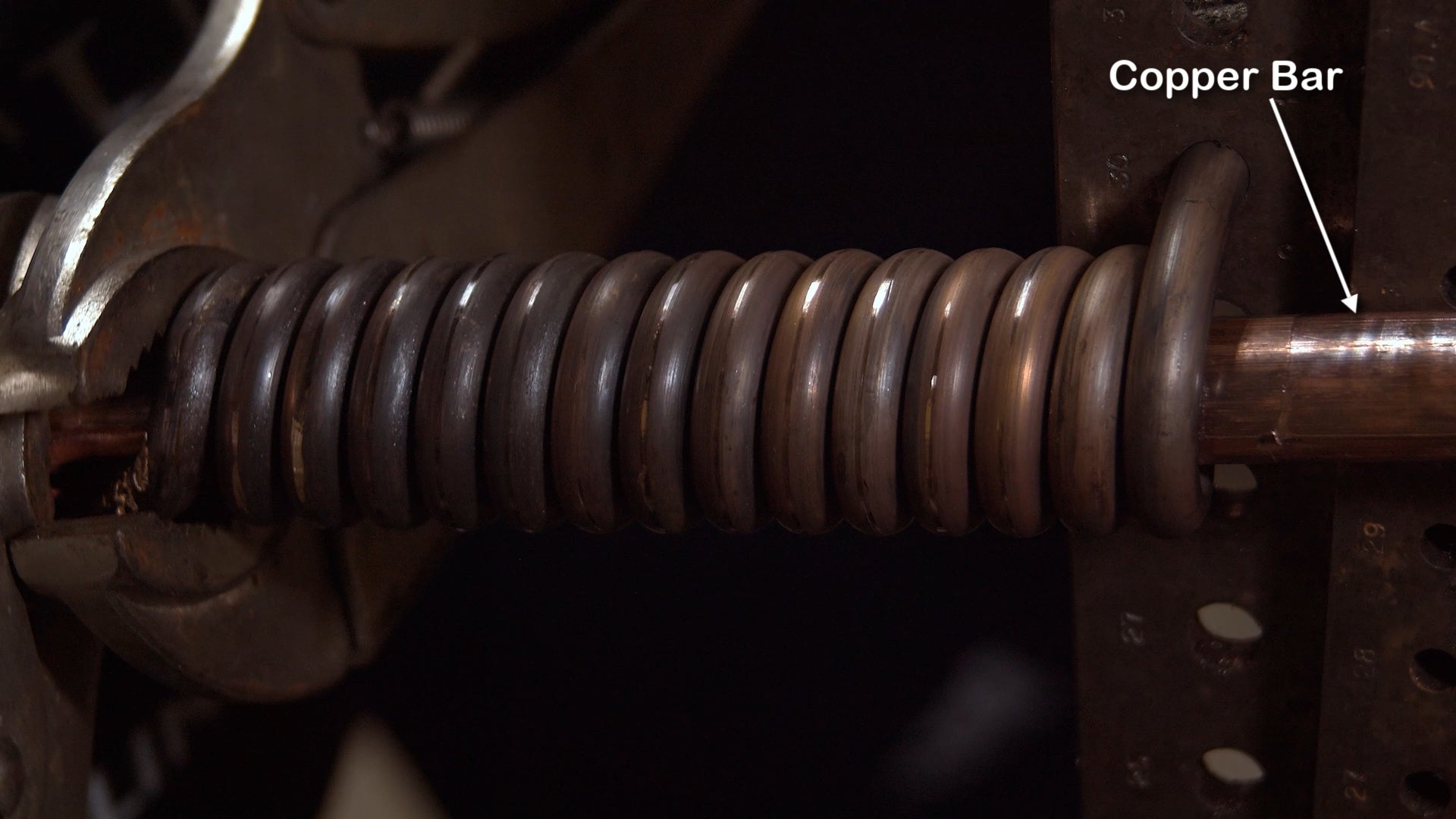
The wire gets coiled by hand around a metal bar. For a heavy chain, thick wire doesn't care what your machine thinks — CRM's two-kilo build took two people and four sets of locking pliers just to wind it. A saw cuts down the coil and frees the links. Each link is pried open, locked into the next so the cut faces meet flush, and soldered shut. One at a time. Hundreds of times. Too much heat and the link melts. Too little and the join leaves a gap.
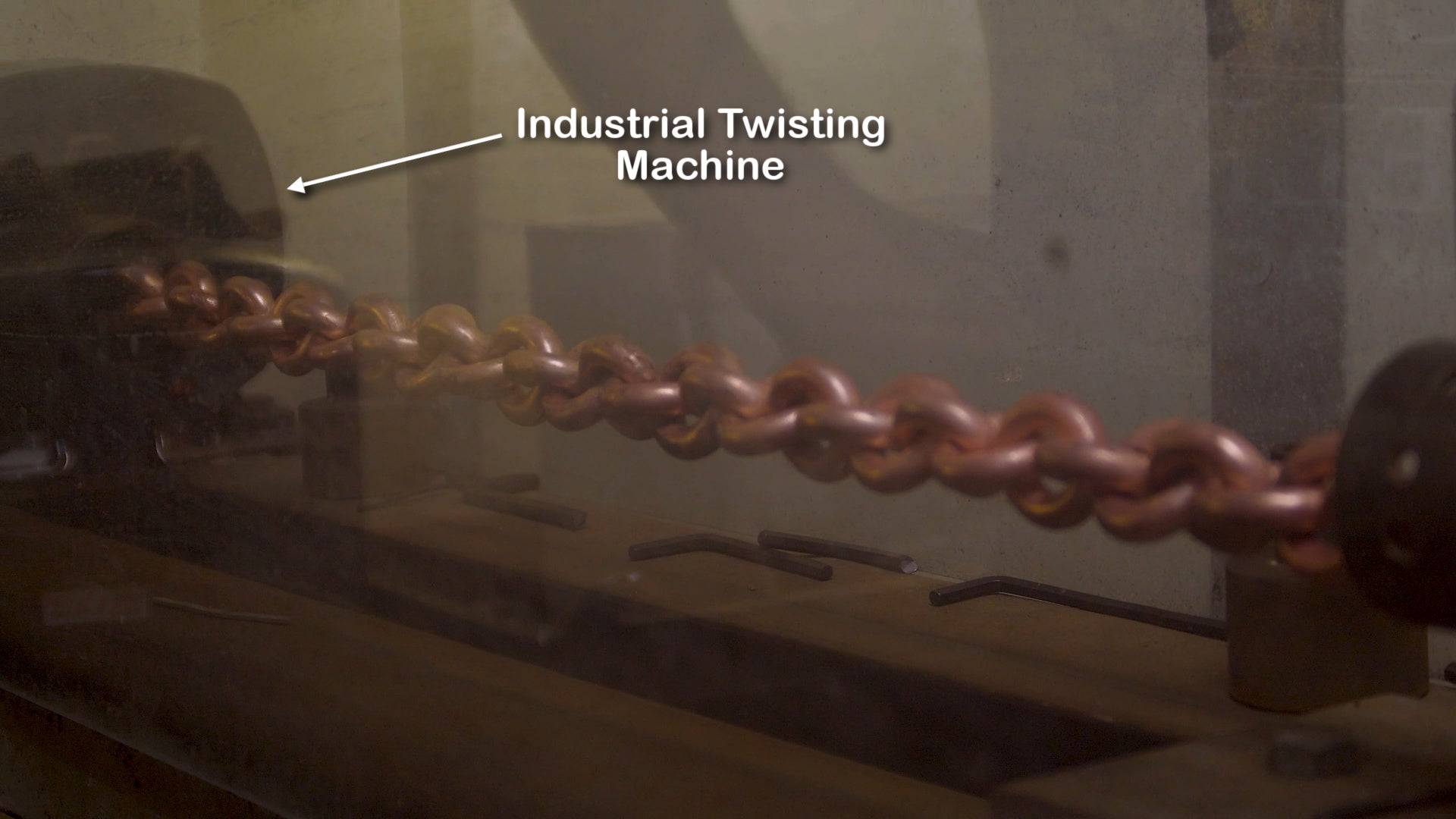
After that, the soldered chain is twisted on an industrial machine and annealed as it goes, until the links settle into that one flat plane your eye recognizes instantly. Smaller chains can snap during the twist. Then somebody repairs them, welds them, and starts back into the patience.
All of that happens before the file even comes out.
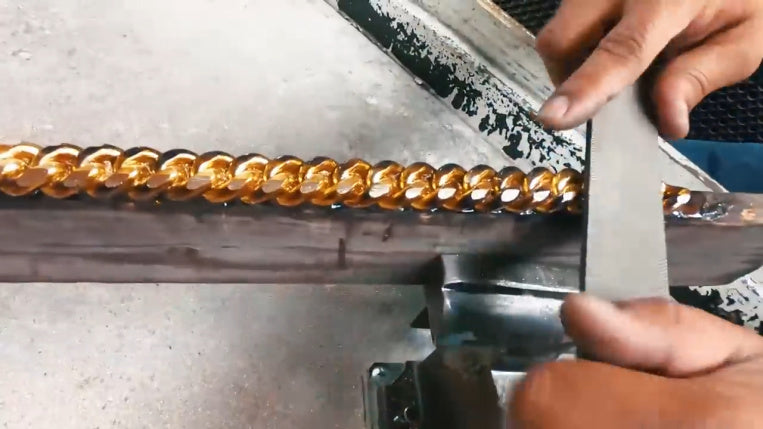
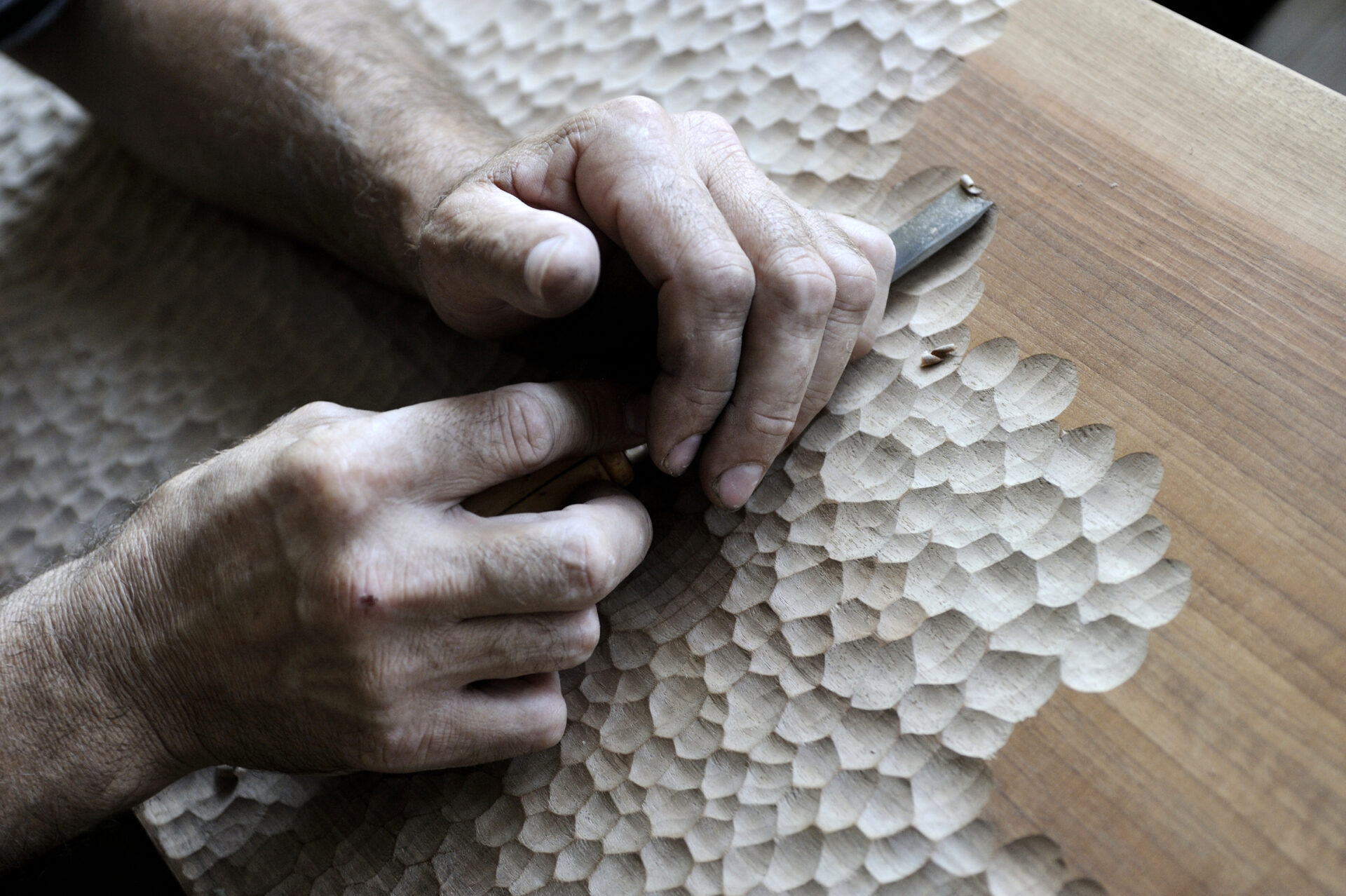
Here is where a handmade Cuban tells on itself. A freshly soldered chain is deliberately overweight, its links still round. The flat Miami face isn't cast into it — it's filed into it. The chain is fixed to a wooden board with shellac resin, the board locked in a vise, and the maker goes to work by hand: three files of decreasing coarseness, then sandpaper, then turn it over and repeat the whole education on the other side.
CRM says a Miami Cuban needs 50 to 70 percent more gold than its finished weight because of what the file takes off. The two-kilo chain began at roughly 3,450 grams and finished at 2,086. The dust isn't thrown away; it gets collected and melted into future chains. The gold survives. The hours don't come back.
Miami jeweler Gus Villa, writing about his own trade, said it in one line: "An original handmade file can never be duplicated."
A hand-stroked file leaves a deeper groove and a slightly oval link. Makers carry their own handwriting in that pass — Daniel Jewelry's file runs very flat, old-school filing is bubblier, Villa's sits between. A machine can cut every link top the same, on this chain and every chain after it. Perfectly. Identically. And that is exactly the difference. One object remembers a hand. The other remembers a setting.
Now put the scale beside the signature. CRM's finished two-kilo chain measures 28.5 inches long, 33 millimetres wide and 12 thick. Its box clasp was cast by master jeweler Gaston Rives and finished with two rows of small diamonds. The build took more than twelve hours of continuous labor; the one-kilo version took at least ten. CRM values the finished piece at over $100,000, with roughly $115,000 of gold in the starting ingot alone at the price when it was filmed.
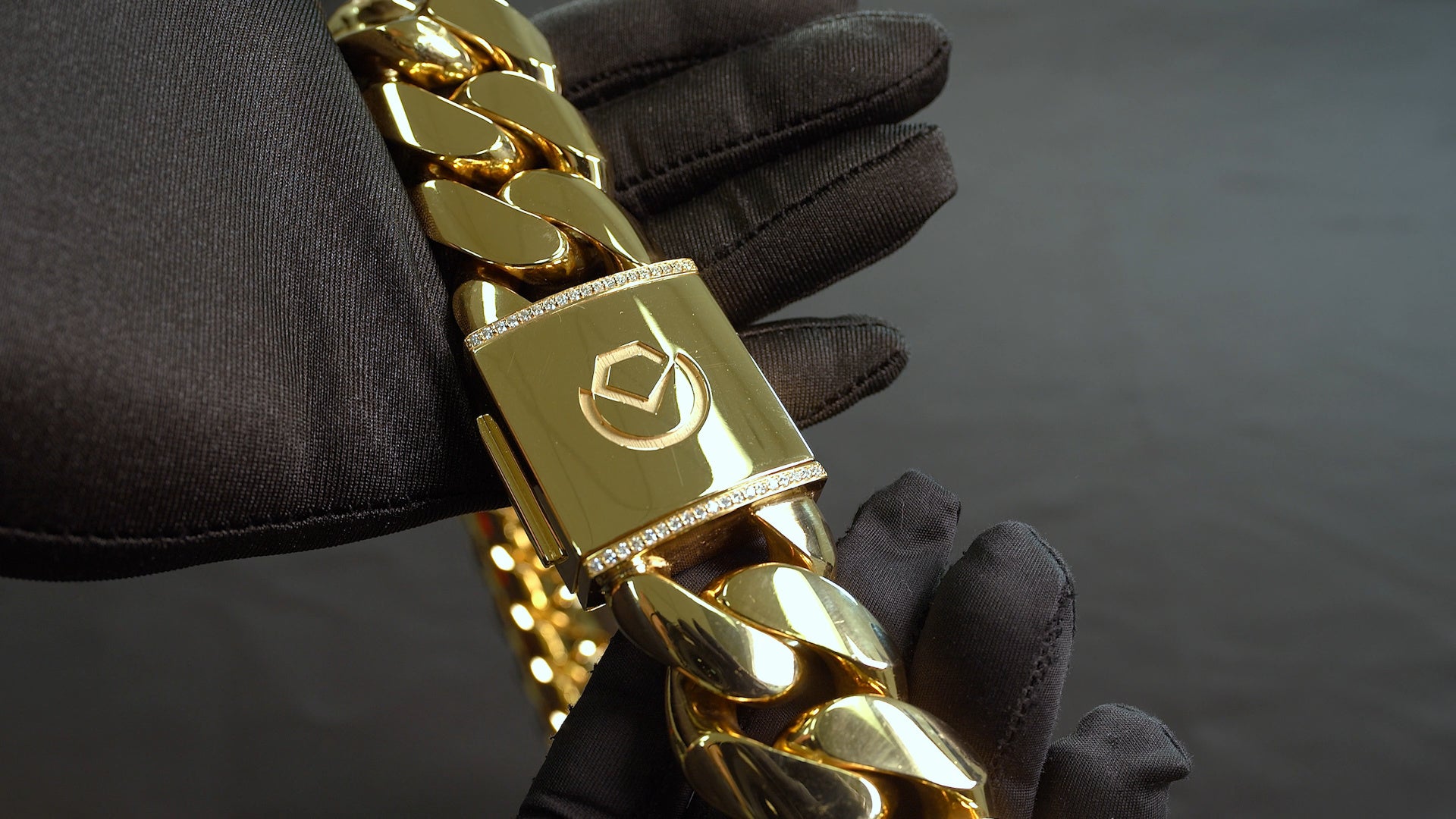
At Daniel Jewelry Inc — family-run in Miami since 1995 — the refusal to cut corners reaches the clasp. The house won't cast its box clasps at all. Its triple-lock clasps are entirely handmade so the links run continuously over the lock. A wearable 6-millimetre 14-karat handmade chain from Daniel lists at $8,485. That's the tradition with its sleeves rolled down, not the red-carpet version of it.
Getting one made sounds less like shopping than commissioning a portrait. At IF & Co., Ben Baller's Los Angeles house, you start with a consultation — ideas, materials, budget — with a floor of 14-karat gold. After design agreement, the client approves a physical wax model or digital design before the piece is finalised. Timelines run from ten days to several weeks.
Johnny Dang & Co. in Houston starts with a $500 deposit, applied to the final price, for the consultation, the quote and a 3D rendering. Custom work is final sale. TraxNYC, up in the Diamond District, lays its sequence out in public: idea, price range, deposit covering the 3D design, up to three rounds of revisions — "nothing is made until you say yes" — then weeks at the bench. Gus Villa's clients can wait up to three weeks for a handmade Miami Cuban.
A machine-made chain can be in stock in three days. Nobody in this tradition apologizes for that gap. The wait isn't a defect in the service. The wait is evidence the service happened.
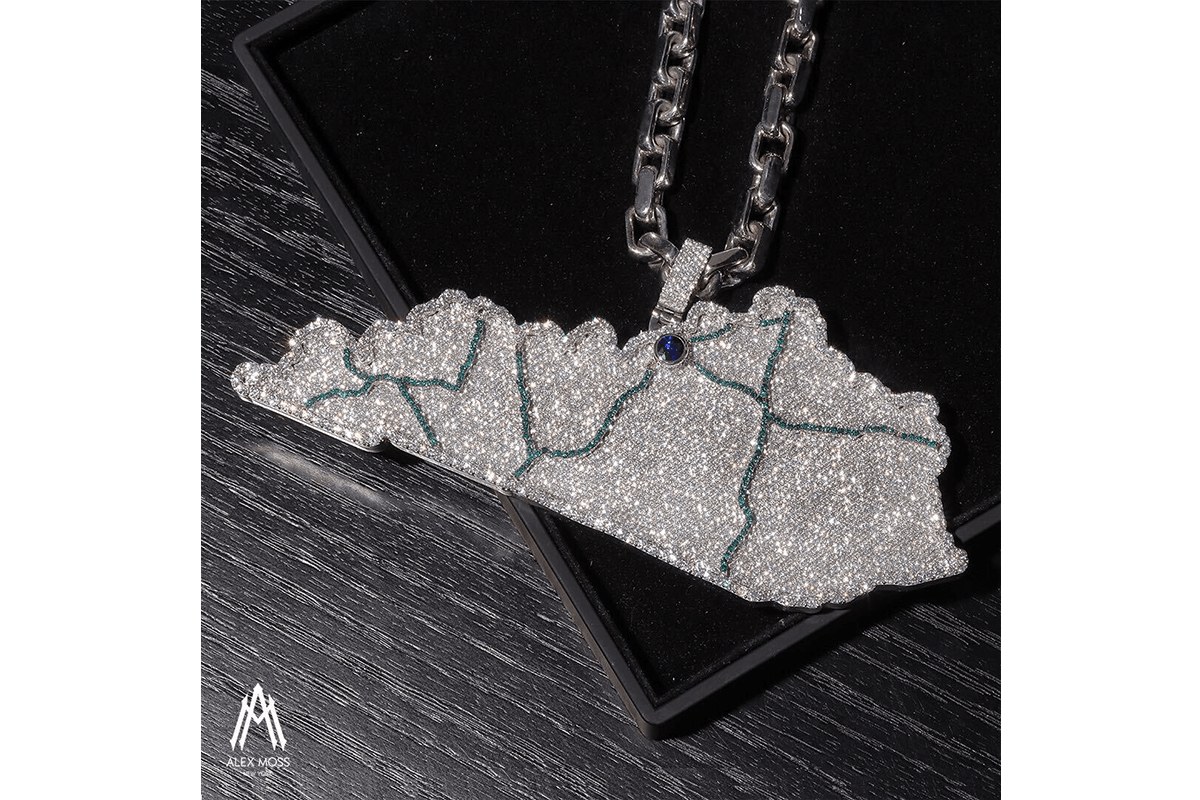
At commission scale, the setting work becomes its own kind of athletic feat. Alex Moss made Jack Harlow's Kentucky pendant as an homage to the late Static Major's iconic chain: the state rendered in pavé diamonds, a sapphire marking Louisville. The finished piece carries 61 carats of VVS diamonds in 560 grams of 14-karat white gold — more than 4,500 stones, each one set by hand.
No price was published. In this trade, silence can be its own kind of quote.
Moss's "Previous Engagements" necklace for Drake set 42 diamonds totaling 351.38 carats in 18-karat white gold, using an eagle-claw setting. Moss said the project "took 14 months to complete top to bottom, and was built by hand in New York City." Again: no price.
Fourteen months. For a necklace people on the internet would reduce to a flex in half a second. The photograph travels fast. The labor doesn't care; it took as long as it took.
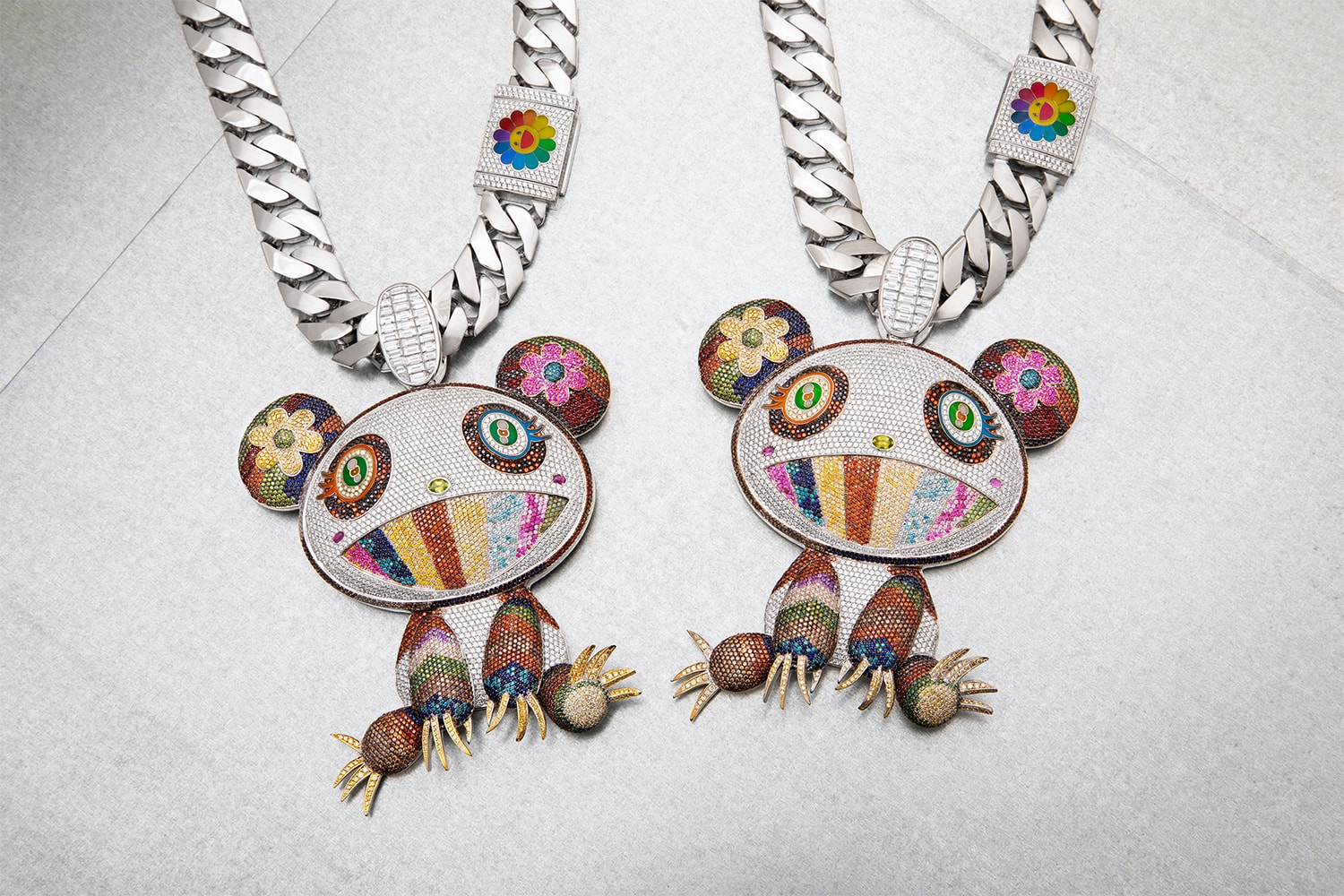
When a number does get attached, it behaves like a watch number. IF & Co.'s Murakami chain for J Balvin pairs a 300-gram pendant with a 400-gram snake-cut Cuban, more than 5,000 stones and about 42 carats altogether. Hypebeast reported an estimated $560,000 per piece. Two exist: Balvin's commission and Murakami's artist's proof.
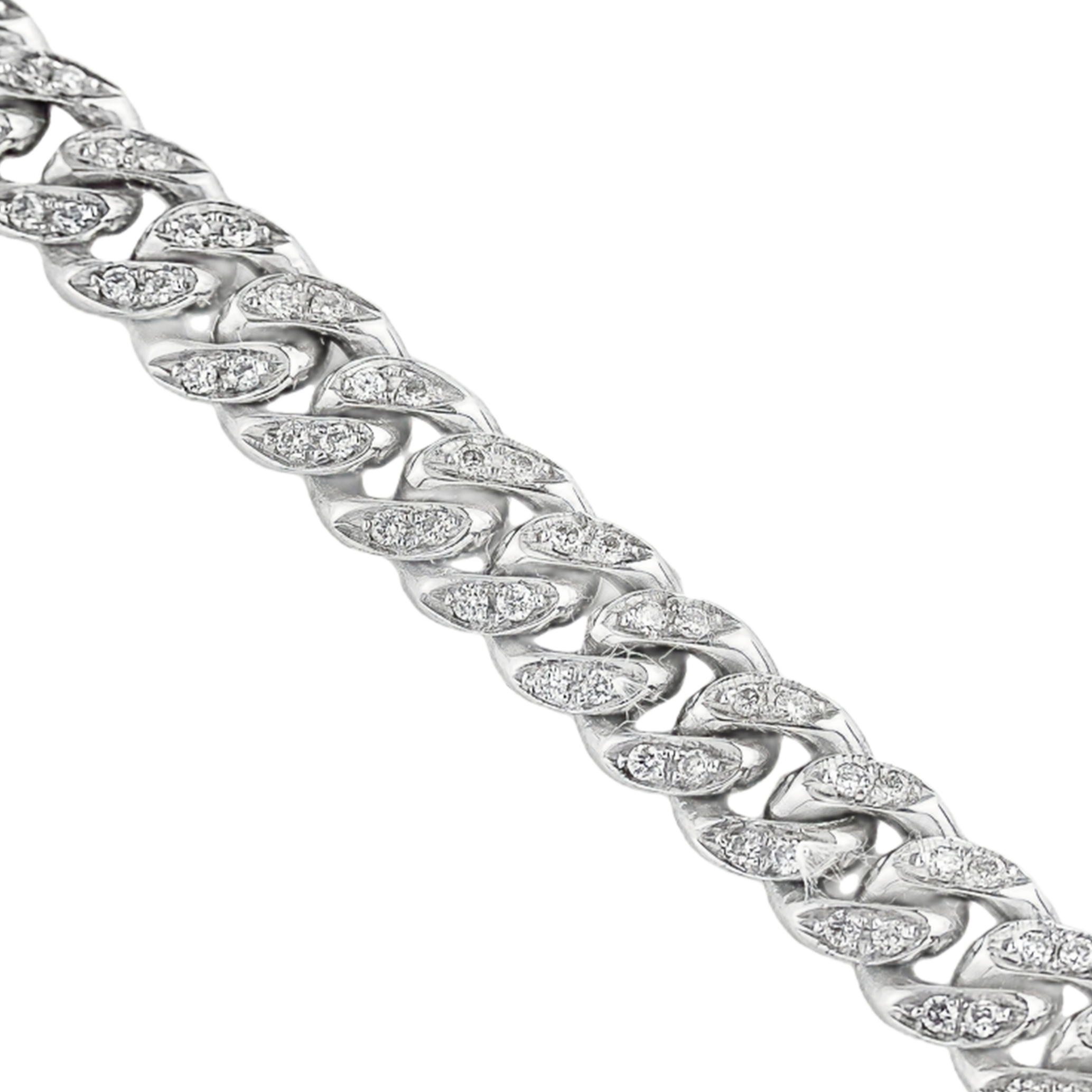
Even pavé has a misunderstanding to clear up. An "iced" Cuban is not a finished chain dipped in sparkle. New York house Avianne & Co.'s own specifications make the labor plain: stones are set into every individual link of a chain that was already built by hand — 8.50 carats across one 91-gram handmade chain. Link by link. Stone by stone. Patience stacked on patience.
Fine watchmaking gets reverence almost by default. People lower their voices for a hand-beveled bridge, a signed movement, a waiting list that behaves like a velvet rope. The chain world keeps the same discipline in a different language: alloy checked by X-ray, a filing style no second maker can reproduce, twelve hours at a bench for one chain, fourteen months for one commission.
Cut the craft out of a Cuban link and you still have the outline — gold, heavy, recognizable from across the room. What you lose is the handwriting.
And handwriting is the whole point. In a culture where jewelry has never been only decoration, a real handmade Cuban doesn't just say somebody had money. It says somebody knew where to take it, who to trust with it, and why the slow way was the only way worth wearing.
Sources · 4 sources
- CRM Jewelers — the house's own build logs for its 1-kilo and 2-kilo handmade Cuban link chains (alloying, filing, weights, bench time)
- Gus Villa Jewelry — handmade vs machine-made Cuban links, in the maker's own account; Daniel Jewelry Inc — handmade house history and clasp construction
- Hypebeast — the Kentucky chain (Alex Moss for Jack Harlow), "Previous Engagements" (Alex Moss for Drake), and the Murakami chain (IF & Co. for J Balvin)
- IF & Co., Johnny Dang & Co., TraxNYC — the houses' own published commission terms; Sixtysix — Alex Moss studio profile