
A PSA 6 is supposed to come with an apology. In the card world, 6 means EX-MT — good, honest wear, not the gem-mint beauty collectors put on a pedestal. You explain the corners. You explain the surface. You do not expect the room to lose its mind.
On August 23, 2025 — what would have been Kobe Bryant's 47th birthday — a PSA 6 drew 82 bids at Heritage Auctions in Dallas, doubled its $6 million estimate and sold for $12,932,000. Most expensive sports card ever.
The buyers were a syndicate: Kevin O'Leary, Matt Allen and Paul Warshaw. So what did they buy, if it wasn't condition?
They bought proof — the part nobody can fake later.
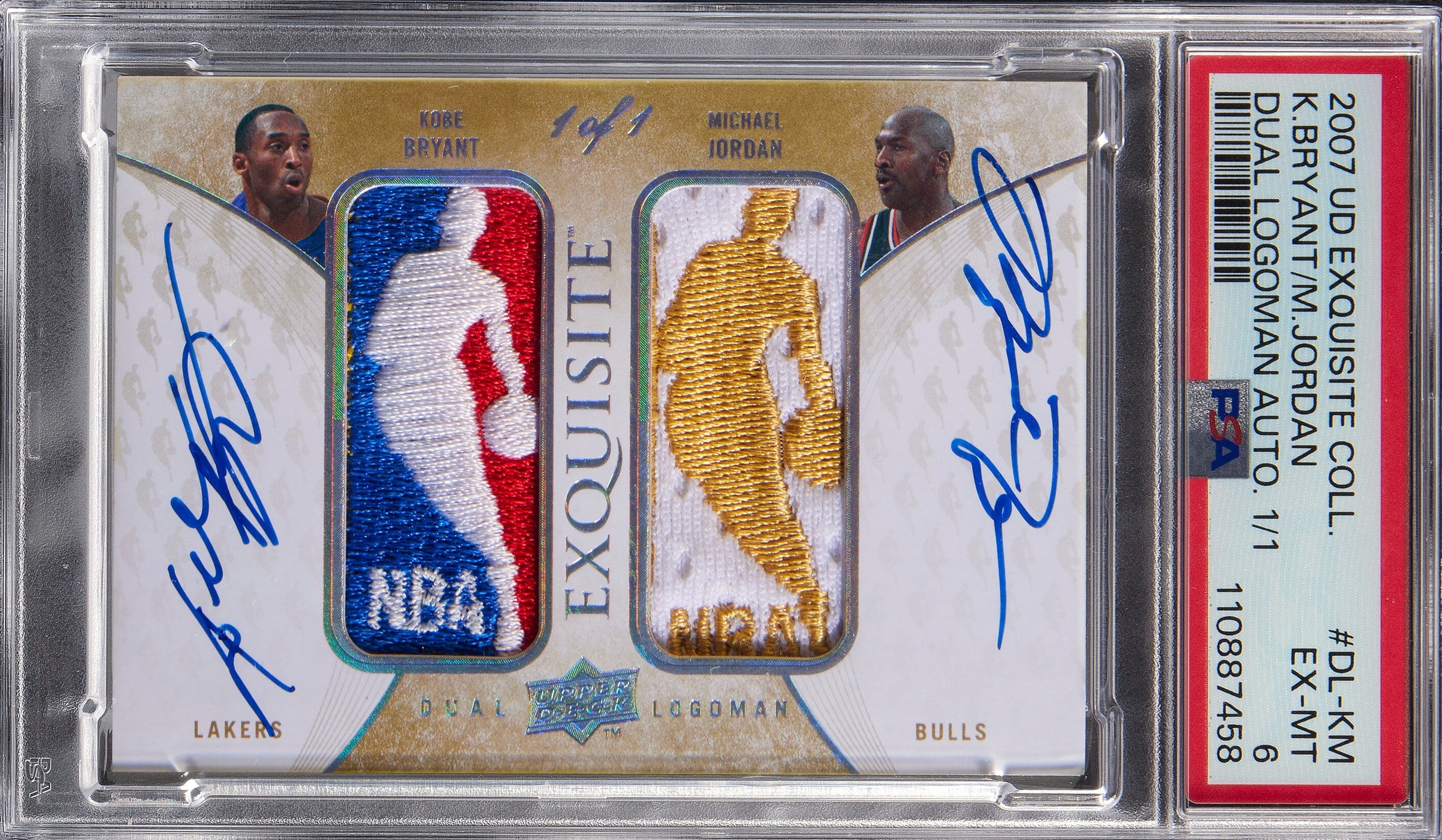
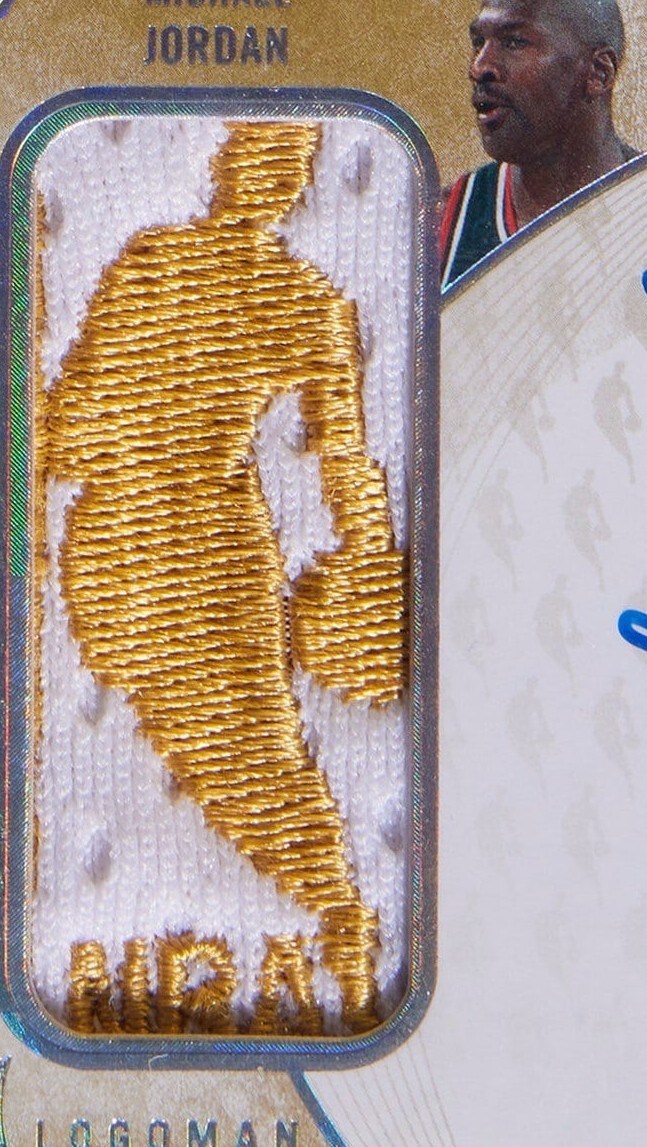
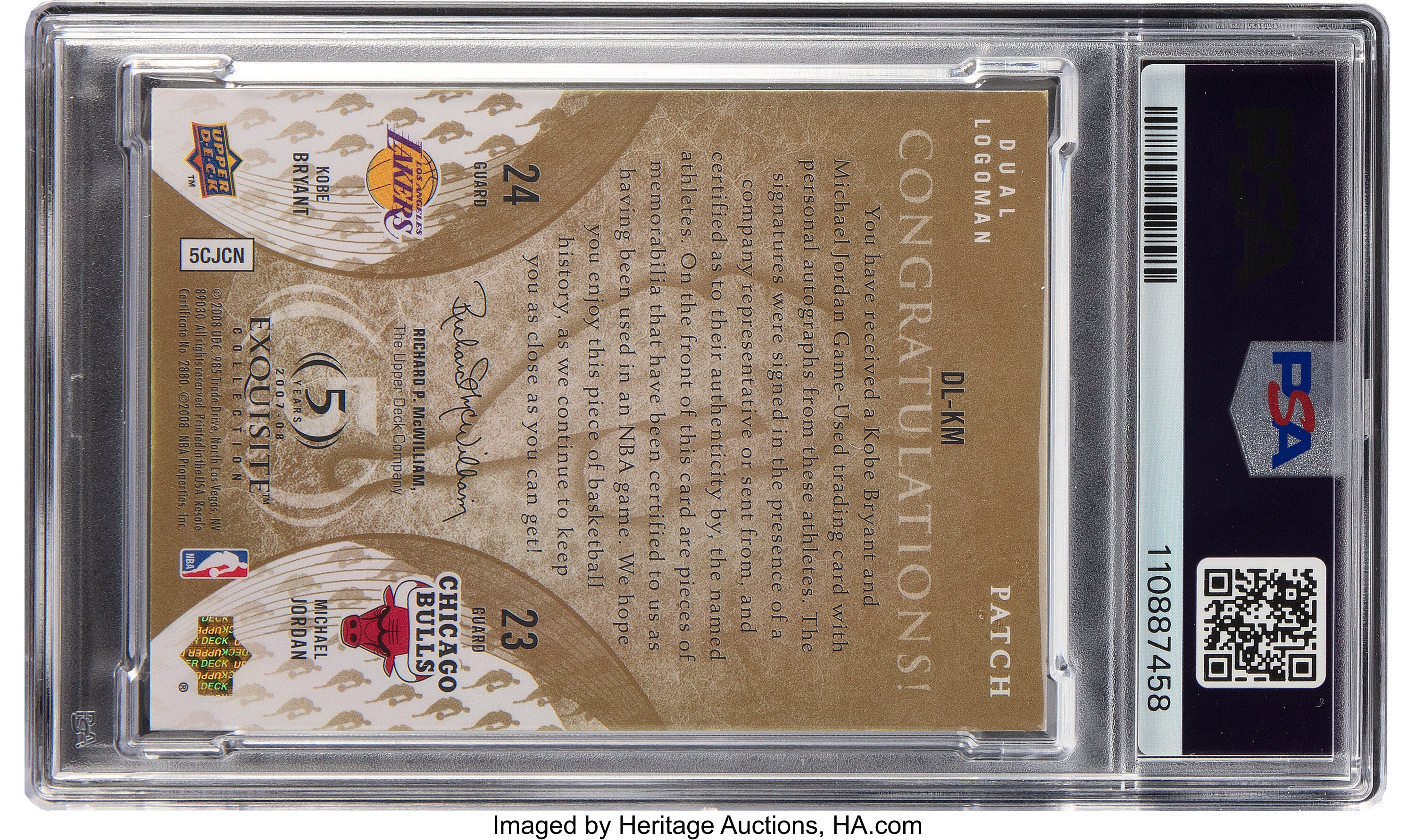
The card is the 2007-08 Upper Deck Exquisite Dual Logoman Autographs #DL-KM, numbered 1/1. There is not another one hiding in a warehouse. Inside it are two NBA logo patches cut from game-worn jerseys — Jordan's gold Logoman from the league's 50th-anniversary season, 1996-97, and Bryant's red, white and blue. Both men signed it.
That combination closed forever when Bryant died in January 2020. Upper Deck's exclusive relationship with Jordan means the pairing cannot be remade. The signatures are guaranteed by Upper Deck and authenticated by PSA. What the patches are, whose jerseys they came from, who signed the card, who certified it — every link is documented, and every link can be checked.
Scarcity alone doesn't explain the number. Modern sets are full of 1/1s nobody will remember in ten years. A chain of proof is rarer than a low print run, because paper can be printed and stories can grow in the telling. Documentation either survives the questions or it doesn't.
Heritage's director of sports auctions, Chris Ivy, put it plainly after the Mantle sale: "That's why you see a premium for items that have verified provenance and authentication."
Strip away the paperwork and a PSA 6 is still a PSA 6. Keep it intact, and the card becomes something closer to a title deed — not just to cardboard, but to a meeting that can never happen again.
The Mantle had to be beaten before the Logoman could wear the crown, and the Mantle's proof doesn't live in a certificate. It lives in names, dates and one dealer's letter.
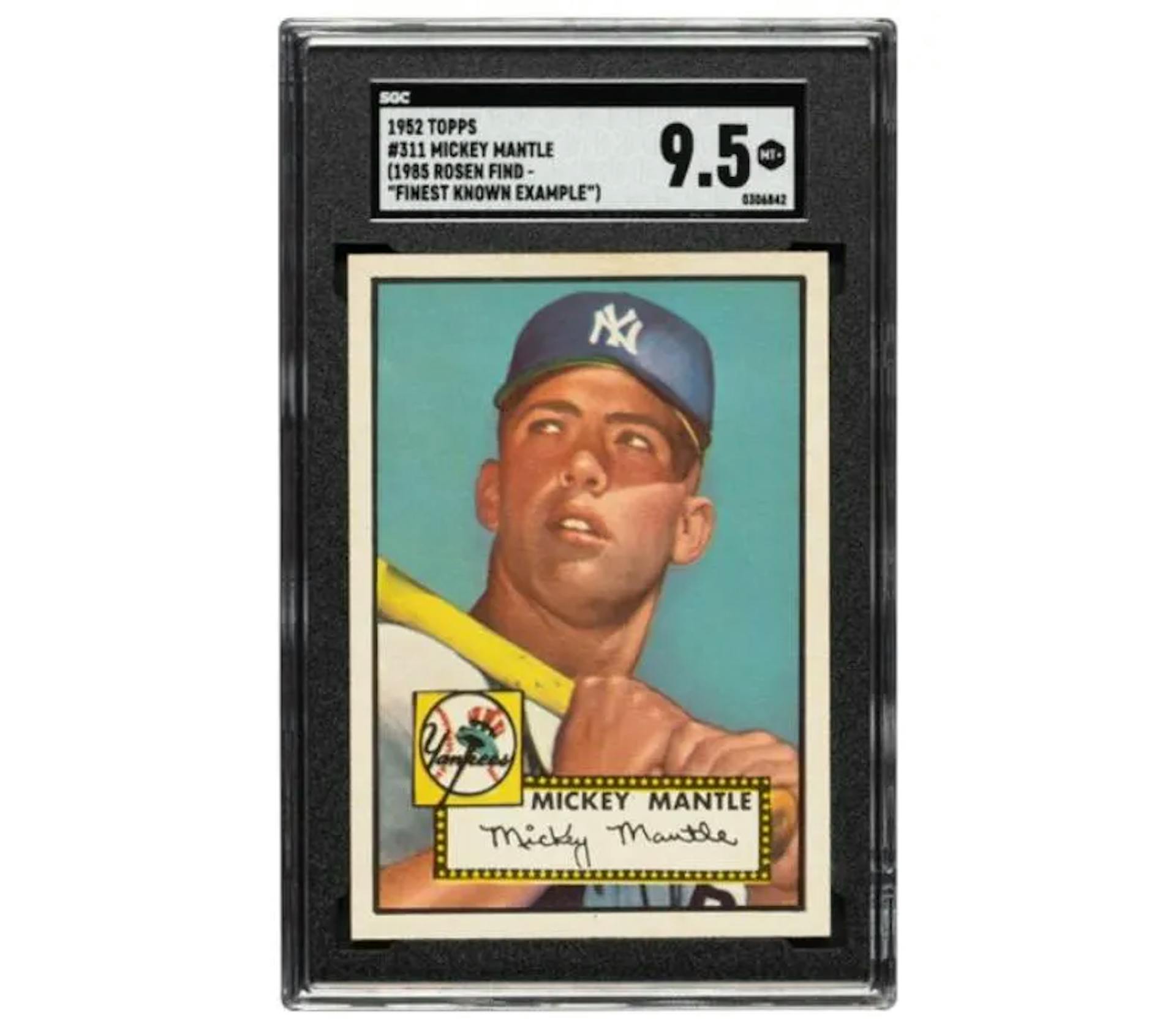
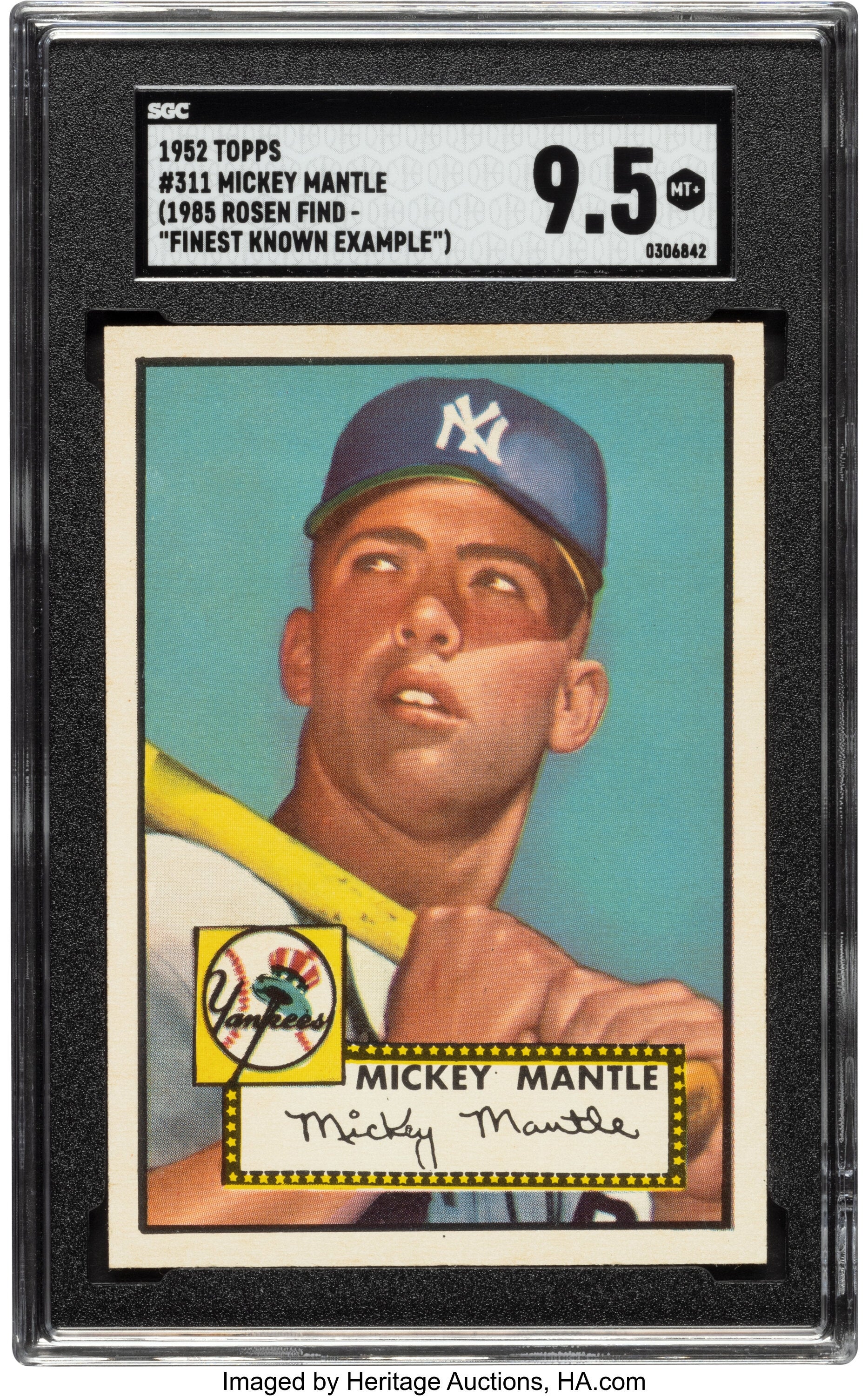
The card is the 1952 Topps Mickey Mantle, graded SGC Mint+ 9.5. Heritage sold it on August 27–28, 2022, for $12,600,000 — then the most expensive sports collectible ever sold at auction. It drew 116 bids. But the number is only the last line. The reason people trusted the card is the seventy years before it.
It begins, as a lot of hobby mythology does, with a business mistake. Topps botched the distribution of its 1952 set, and a case of cards ended up with the family of Ted Lodge, a man who had driven for that distribution run. The family kept the case for more than thirty years, untouched. That neglect turned out to be preservation. Cards from a print run that almost never survived clean somehow did.
In the mid-1980s, the case surfaced in the Rosen Find, the discovery that still sits at the center of hobby lore. Dealer Alan "Mr. Mint" Rosen bought roughly 5,500 cards from it for a little over $125,000 and counted 75 Mantles in the haul.
Rosen sold this one around 1986 for $1,000.
Read that number slowly. One thousand dollars.
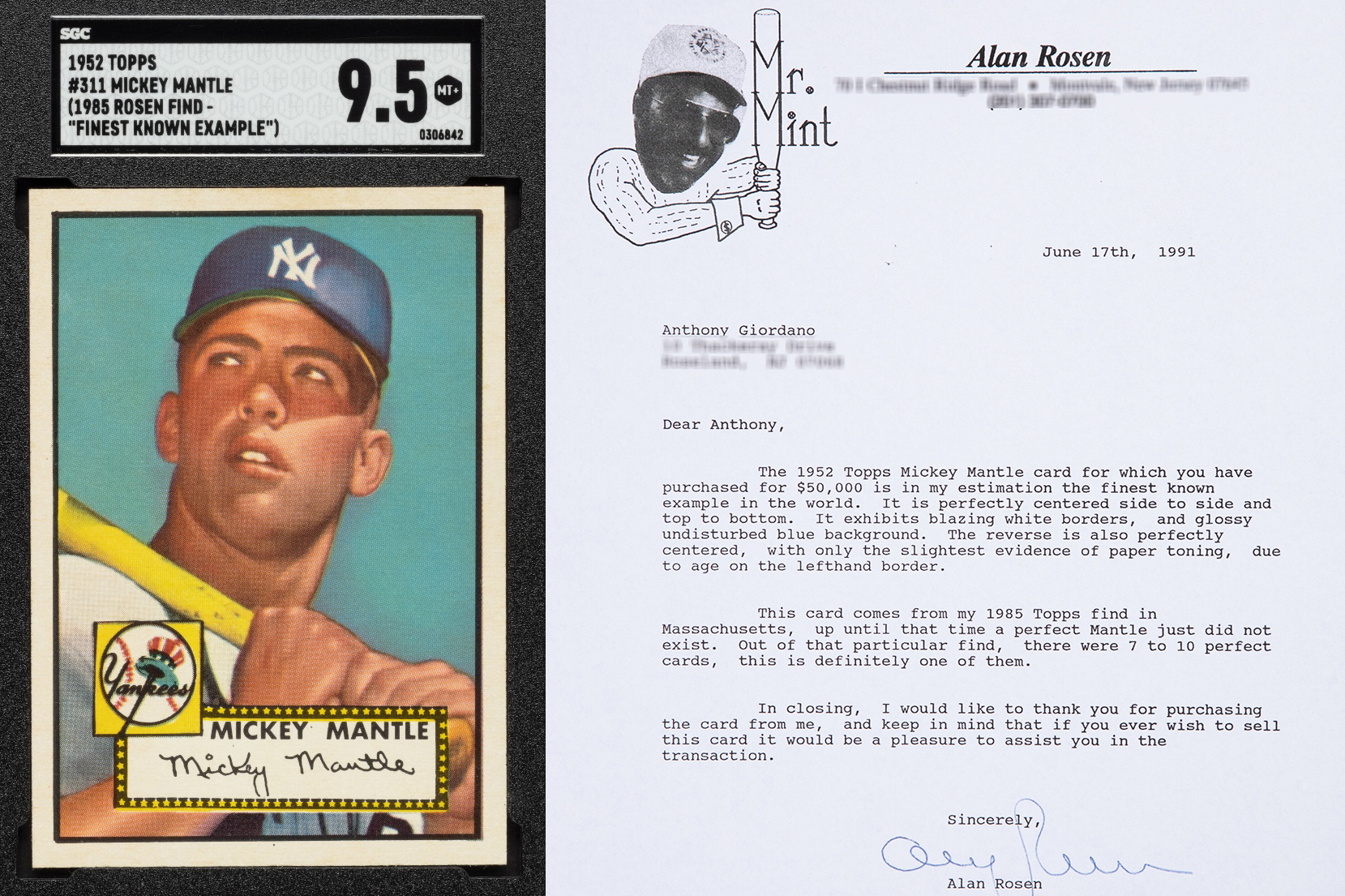
In 1991, Rosen bought the same card back for $40,000. Then, on July 2, 1991, at Madison Square Garden, he sold it to Anthony Giordano for $50,000 — a record for a card at the time — and signed a letter calling it the finest known example in the world. That letter still travels with the card.
Then Giordano did the hardest thing in collecting. He left it alone.
For thirty-one years, he held the Mantle ungraded and out of public sight. No victory lap. No annual reminder that he owned the one everybody would someday want. When it finally came back and SGC graded it Mint+ 9.5, the hobby wasn't meeting a stranger. It was being reunited with a card whose owners were known, whose transfers were priced, and whose dealer's letter had been riding with it since 1991.
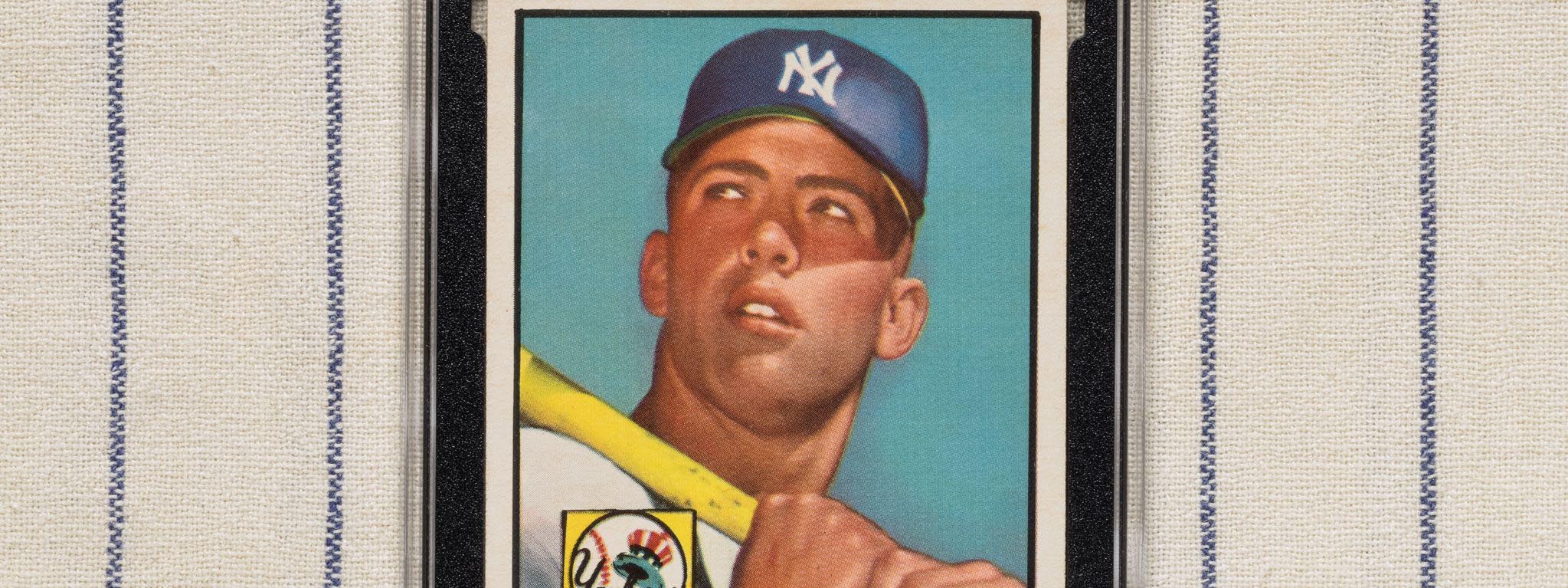
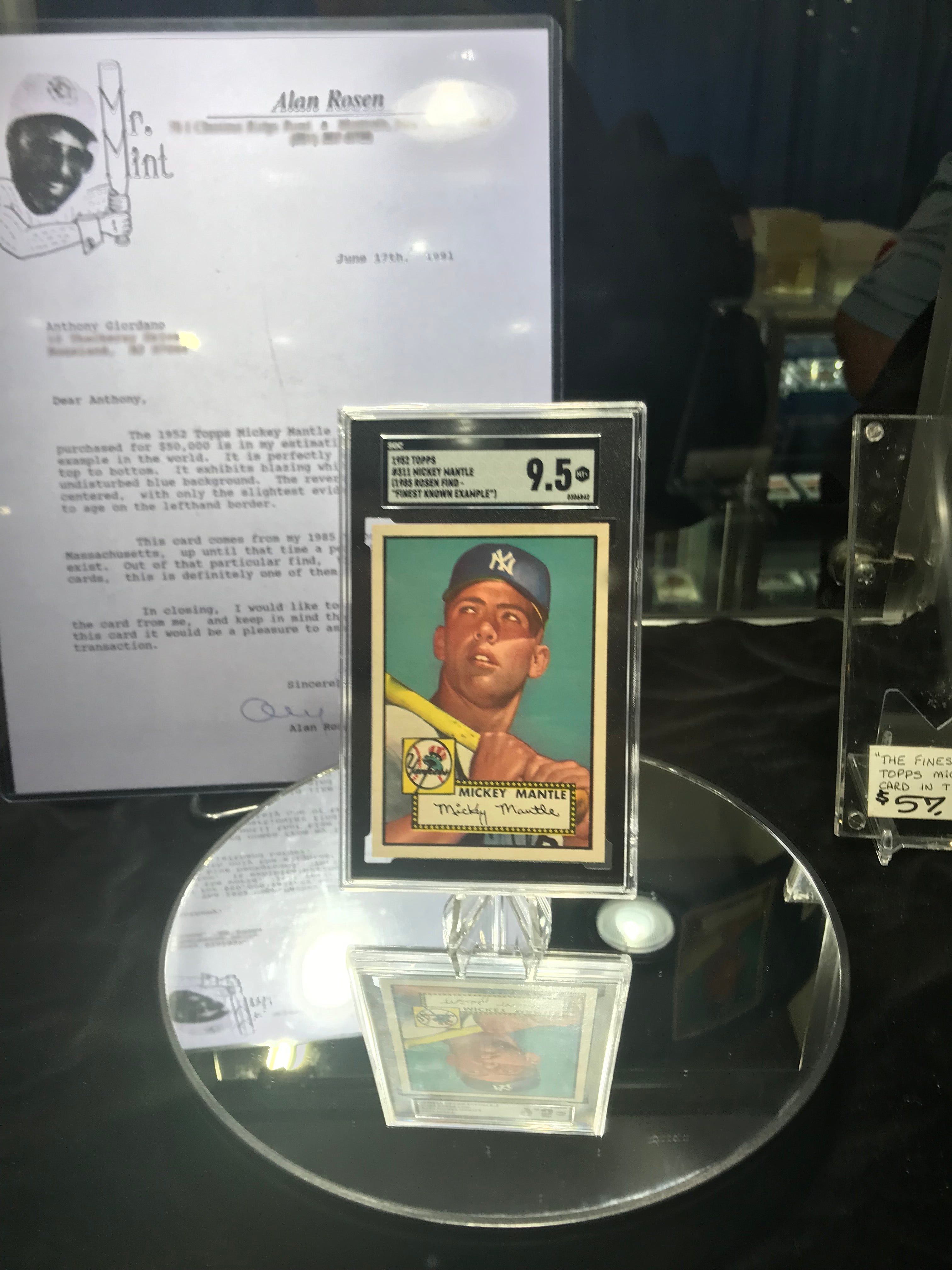
Ivy called the premium what it was: the result of "documented provenance from the most storied find in hobby history."
Put the two record cards beside each other and they show provenance wearing two different suits. The Mantle has a story — a botched print run, a family case, a famous find, named owners, dated money, a letter. The Logoman's early ownership is not public; for more than a decade it moved through private hands before Heritage. Its chain is made of certificates instead: manufacturer's guarantee, grader's authentication, auction-house vetting.
The market did not choose one language over the other. It paid the record for the certificate and the second-highest price in history for the story. Both currencies spend.
One shelf down, the comparison gets cruel. The unsigned Jordan–Bryant dual Logoman from the same Exquisite era — same pairing, same kind of patches, no signatures — sold at Heritage in December 2025 for $3,172,000. Nobody should sneeze at $3.17 million. But stand it next to $12.932 million and the missing signatures leave a hole worth roughly $9.7 million.
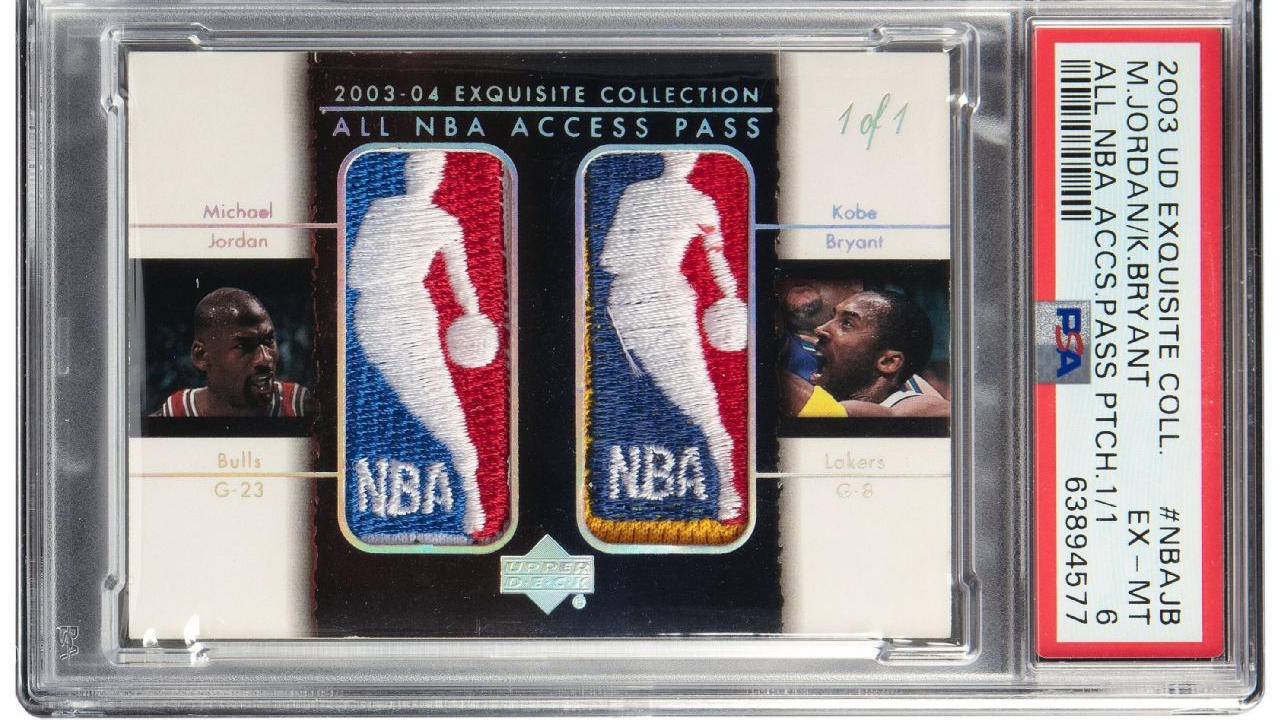
That hole has a name. Documentation.
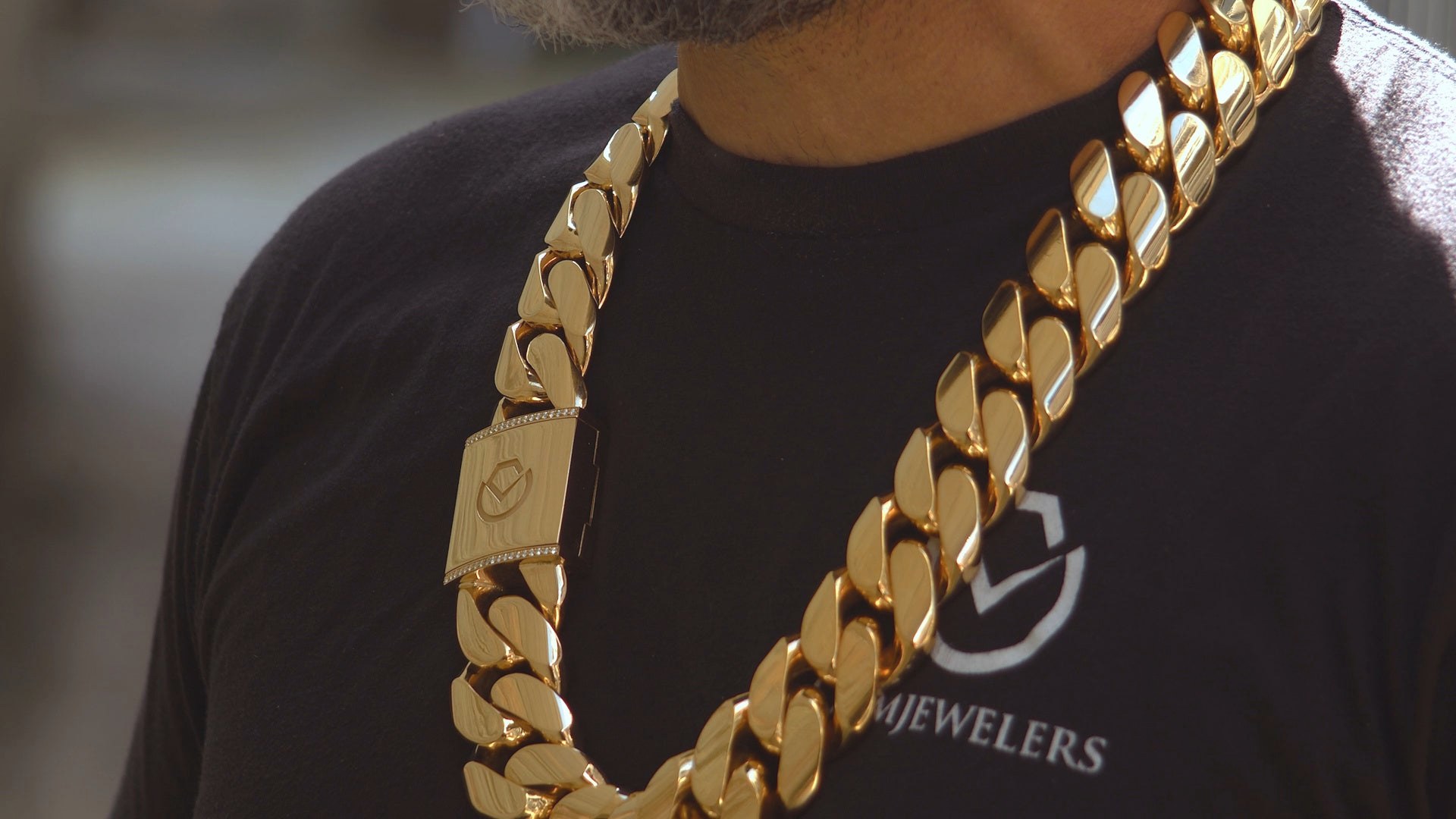
Kevin O'Leary has since worn the signed Logoman in a diamond necklace and said it is worth $20 million now. That's his number, unverified — and if we're being honest, wearing a record card around your neck is extremely good television. But the flex only works because nobody in the room has to ask whether the card is what he says it is.
The chain already answered.
At the very top, the cardboard is just the address. The product is the proof that the house is real.
Sources · 3 sources
- Heritage Auctions — Summer Platinum Night Sports Auction, August 23-24, 2025 (Sale 50079, Lot 80063) and August 27-28, 2022 (Sale 50058, Lot 53014); lot listings, provenance notes and post-sale releases
- ESPN — reporting on both record sales, the buyer syndicate and Chris Ivy's remarks
- Guinness World Records — most expensive sports trading card sold at auction (verified listing)