
PHOENIX, TUESDAY, OCTOBER 13, 2026
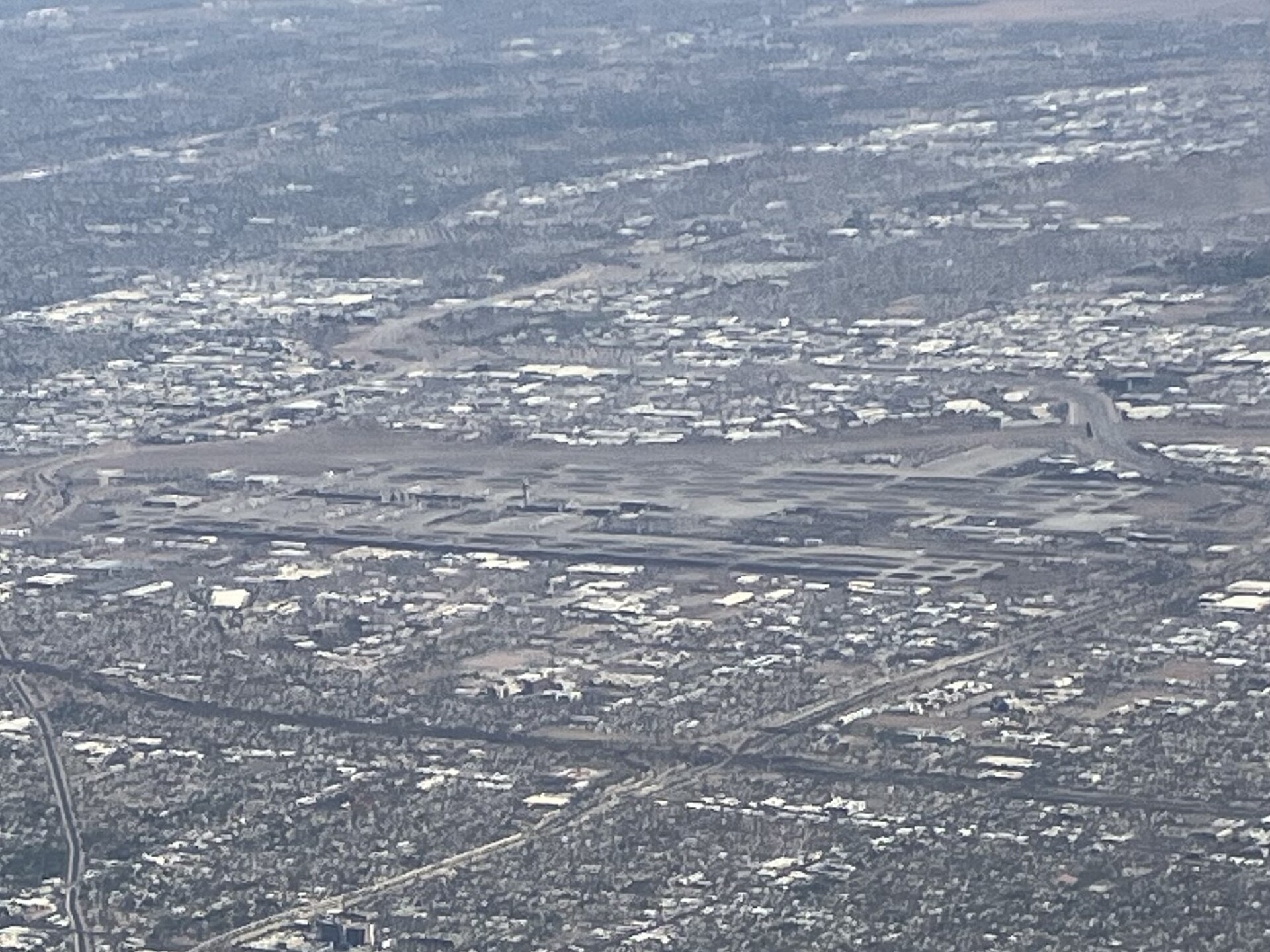
This is our evening update to a story Previously has followed through the day at Phoenix Sky Harbor International Airport. We first reported the morning disruption in our morning Sky Harbor report and updated the tally at midday in our report when 132 flights were delayed. The final picture for Tuesday is now clearer, and it is considerably larger than the mid-morning count suggested. By 2:30 p.m., FlightAware counted 292 flights delayed and one flight canceled at Sky Harbor, according to the Arizona Republic, which cited the Federal Aviation Administration and FlightAware in its reporting. The ground stop that started the day had long since expired, but its effects continued to work through schedules into the afternoon and evening.
The day began with low ceilings over the airport. The FAA ordered a ground stop on Tuesday, Oct. 13, that took effect at 6:30 a.m. and expired about 9 a.m., the Republic reported. A departure delay replaced the stop as conditions began to ease, and that delay later expired as the rain let up. That sequence matters because it explains why a problem measured in hours at the start of the day can still shape travel well after the weather improves. A ground stop keeps aircraft on the ground. When it lifts, the airplanes, crews and passengers who missed their planned departures do not instantly return to their original positions. Later flights depend on equipment and people arriving from earlier flights, so a disrupted morning bank can produce delays across the afternoon even under improving skies.
The arithmetic of the day tells that story plainly. At 10:30 a.m., as we reported at midday, FlightAware had counted 132 delayed flights. By 2:30 p.m., the count stood at 292 delays, with the cancellation total still at one flight. That increase does not mean a new ground stop occurred in the afternoon, and this update does not present it as a separate event. It means the consequences of the morning stop and the weather around it continued to accumulate as more scheduled departures and arrivals encountered aircraft, crews or connections affected earlier in the day. For a connecting passenger, the distinction between a morning cause and an afternoon delay offers little comfort. A missed connection is a missed connection whenever it appears on the departure board.
Tuesday also followed a difficult Monday at Sky Harbor. The Republic reported that more than 200 flights were delayed or canceled on Monday during various ground stops and delays tied to weather. Two disrupted days in a row place additional strain on an airport and on the airlines that use it. Aircraft may end one day in a different city from the one the next day’s schedule expects. Crews may be closer to duty limits. Travelers who were rebooked from Monday into Tuesday can find themselves affected again, through no fault of their own, when the second day’s weather arrives before the system has fully recovered from the first.
There were signs in the FAA’s figures that Tuesday’s disruption, while broad, was not expected to keep intensifying. Average delays ran about 30 minutes and were expected to decrease as conditions improved, according to the FAA information cited by the Republic. That pattern is consistent with an airport moving from a stop, to a controlled delay, to a gradual recovery. It also helps explain why the number of delayed flights can climb while the average delay remains moderate. Many flights can be somewhat late without any single delay becoming extreme, especially when an airport and its airlines are working a backlog rather than facing a complete shutdown.

The forecast helps explain the morning. The Republic’s report described morning showers as likely, with a 70 to 75 percent chance of rain in parts of the morning and winds around 5 to 15 mph, citing figures from The Weather Channel. Those wind speeds are not, by themselves, the dramatic part of the story. The operational issue was the ceiling — how low the cloud layer sat over the field — combined with rain during the busy morning period. Phoenix is accustomed to clear weather for much of the year, and its airport schedule is built around that reliability. When low clouds arrive at the wrong hour, the effect can be immediate even if conditions later improve.
It is also worth separating the roles of the FAA and the airlines, because travelers often experience them as a single system. The FAA orders ground stops and departure delays to manage traffic safely in the conditions available. Airlines decide whether to cancel individual flights. That is why Tuesday could end with nearly 300 delayed flights but only one cancellation in the 2:30 p.m. count. Airlines chose, in most cases, to operate flights late rather than cancel them. That choice preserves travel for most passengers, but it also means people should expect posted departure times to keep moving while a recovery is underway. A flight shown as delayed is not necessarily finished moving.
For travelers using Sky Harbor tonight, the practical guidance follows directly from the day’s pattern. Check your airline’s own flight status before leaving for the airport and check it again after you arrive, because the airline controls the final decision on your specific flight. If you are connecting, look at the status of both the incoming and outgoing legs where your airline app provides them, and contact the airline early if the connection no longer looks workable. If you are picking someone up, follow the flight’s updated arrival time rather than the time printed on an itinerary days ago. Because average delays were expected to decrease as conditions improved, the evening picture should be better than the afternoon tally suggests, but residual delays from a 292-flight day rarely disappear all at once.
For Wednesday, the central question is whether the airport begins the day with its aircraft and crews back in position after two weather-affected days. Nothing in the Republic’s Tuesday reporting, as cited here, establishes a new Wednesday ground stop or a specific Wednesday delay forecast, and travelers should rely on their airlines and the FAA for any fresh advisories rather than assuming Tuesday’s problems will repeat. The responsible expectation is narrower: a busy recovery evening, shrinking delays if conditions continue to improve, and a system that needs an uneventful morning to fully reset. After Monday’s more than 200 disrupted flights and Tuesday’s 292 delays, that reset would be welcome for the whole Southwest travel network. For a different side of Phoenix in calmer weather, see our coverage of saguaros and the Desert Botanical Garden.
By evening, then, Tuesday at Sky Harbor was neither the brief inconvenience the early expiration of the ground stop might have suggested nor a collapse of air travel in Phoenix. It was a full day of compounding, manageable disruption: a 6:30 a.m. stop for low ceilings, a departure delay as rain eased, 132 delayed flights by 10:30 a.m., 292 by 2:30 p.m., and one cancellation across that count. That is the complete arc of the day, and it is why this evening update replaces the midday numbers as the record travelers should use when they judge what Tuesday actually cost them.
Sources · 3 sources
- Arizona Republic, Phoenix Sky Harbor flight delays and ground stop reporting, citing the FAA and FlightAware, Oct. 13, 2026
- FAA advisories for Phoenix Sky Harbor, Oct. 13, 2026, via the Arizona Republic
- FlightAware delay and cancellation counts for Phoenix Sky Harbor, Oct. 13, 2026, via the Arizona Republic





