
A transparency fight over an office that has already ended reaches the nation's highest court for a full hearing
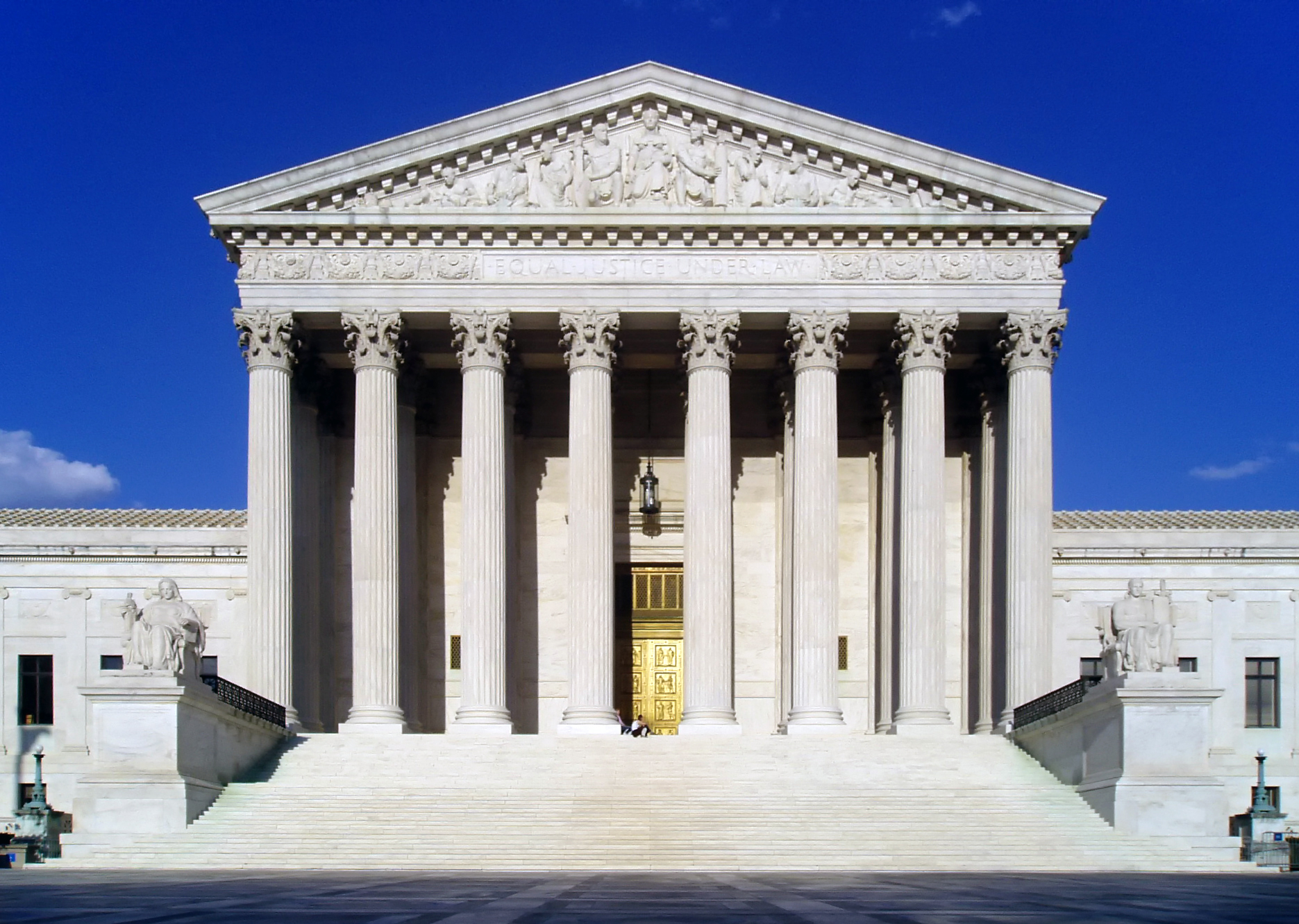
The Supreme Court has stepped into one of the defining transparency fights of the second Trump administration, and it is a fight about a very basic question that turns out not to be basic at all: what, exactly, was DOGE?
According to the Associated Press, Reuters and NBC News, the justices agreed on Tuesday, October 13, to hear the administration's appeal in a lawsuit filed by Citizens for Responsibility and Ethics in Washington, the watchdog group known as CREW. CREW wants records from the Department of Government Efficiency effort under the Freedom of Information Act. The administration argues it should not have to hand them over in the way FOIA requires. The court will now decide which side has the better reading of the law.
That may sound like a paperwork dispute. It is not, really. FOIA is one of the main tools the public, journalists and watchdogs have to see inside the federal government. If an entity is an agency for FOIA purposes, its records are presumptively subject to requests, with specific exemptions. If it is merely an advisory body to the president, a very different set of expectations applies. Where DOGE falls on that line will shape what the public can learn about how it worked, who worked in it, and what it recommended or did.
What CREW asked for, and when
CREW filed its request in early 2025, as Reuters and the Associated Press have reported in their coverage of the case. Among the material it sought were basic organizational records, including an organizational chart and financial disclosures — the kind of documents that, for a normal agency, help outsiders understand who is in charge, how an office is structured, and whether officials have conflicts that need to be managed.
Those are not exotic requests. They are, in a sense, the starter kit for accountability. An org chart tells you whether an effort was a handful of advisers offering ideas or a sprawling operation exercising real authority. Financial disclosures tell you whether the people involved had interests that overlapped with the work. If you cannot get even those, you are left to piece together a powerful government initiative from press releases and social media posts.
CREW's position, paraphrased from its public statements reported by the outlets above, is that it will keep pursuing transparency in this case. Nikhel Sus of CREW has been cited by Reuters and NBC News as saying the group intends to continue pressing for disclosure. That stance is unsurprising for a watchdog whose mission is built around exactly this kind of record, but it also signals that CREW sees the principle as larger than any single document production.
What the lower courts did
The trial court went first. In April 2025, District Judge Christopher Cooper ruled that DOGE likely is an agency covered by FOIA, according to Reuters and the Associated Press. The word likely matters in procedural terms — judges at early stages often frame findings in terms of likelihood — but the direction was clear enough: Cooper was not persuaded that DOGE should be treated as existing outside FOIA simply because of how it was described.
The administration sought relief higher up, and the U.S. Court of Appeals for the D.C. Circuit refused to halt Cooper's order, the outlets reported. That refusal did not end the case, but it left the disclosure fight alive and set up the possibility that records would move while the legal argument continued — which is often the moment when the Supreme Court is asked to intervene.
And intervene it already had, once. In June 2025, the Supreme Court issued a provisional, 6-3 decision that set aside a broad lower-court disclosure order and blocked the deposition of DOGE administrator Amy Gleason, according to the Associated Press and Reuters. Provisional is an important qualifier. That earlier action dealt with the immediate orders in front of the court at that time; it was not a final merits ruling that DOGE is, or is not, an agency under FOIA. Tuesday's grant is different: it puts the underlying question on the court's docket for full briefing and argument.
If you have watched enough Supreme Court emergency-docket fights, you know the temptation to treat every interim order as a final score. Resist it here. The June move told us a majority was uncomfortable with the breadth of what had been ordered and with a deposition of Gleason at that stage. It did not, by itself, answer the FOIA coverage question the justices have now agreed to decide after argument.
An entity that, formally, has already ended
There is an unusual timing wrinkle that makes this case feel a little surreal. DOGE's formal mission ended on July 4, 2025, according to its own post, as noted in Reuters coverage, and Elon Musk — the figure most publicly associated with the effort — has left government service. In other words, the Supreme Court is about to spend months deciding the disclosure status of an initiative whose formal lifespan has already closed.
That does not make the case moot in any simple, human sense, even if lawyers will argue about the legal nuances. Records do not disappear just because a mission statement expires. Decisions were made, recommendations were offered, personnel moved through the system, and money and programs were affected. Whether the public can use FOIA to reconstruct that record is precisely what is at stake. A ruling will also matter for the next administration, and the one after that, that tries to set up a fast-moving, White House-centered effort and argue that its structure places it outside the ordinary transparency rules.
Think of it as a template question. Modern presidents love task forces, czars, special initiatives and advisory groups because they can move quickly and cut across agency silos. Some of those bodies genuinely only advise. Others, critics argue, effectively direct. The FOIA line between advising and operating is where this case lives, and the court's answer will be read closely by every White House counsel who drafts the next charter.
The savings debate in the background
Separately, Reuters has reported that the Government Accountability Office found some of DOGE's claimed savings were calculated incorrectly or lacked documentation. It is important to be precise about what that is: those are auditor findings reported by Reuters from the GAO, not findings by the Supreme Court or by Judge Cooper in the FOIA case. They belong in the story because they help explain why records matter — if headline savings numbers are disputed by auditors, the underlying documents are how the public sorts out what actually happened — but they are not proof, in court, of the FOIA question itself.
That distinction is worth keeping, and frankly it is the kind of distinction this whole case is about. Assertions are cheap in Washington. Records are slower, duller and much harder to argue with. FOIA exists because Congress decided, decades ago, that the public should not have to rely solely on what an administration says about itself.
What happens next
Arguments are ahead, and a decision is expected by next summer. Reuters reported a ruling is due by the end of June, which fits the court's usual pattern of resolving argued cases before the term closes. Between now and then, expect detailed briefing on DOGE's structure, authority and day-to-day functions, because under FOIA the label an entity gives itself rarely ends the inquiry — what it actually did matters.
For CREW, a win would keep the path open to the records it requested in early 2025 and affirm that DOGE-like entities can be treated as agencies when they function that way. For the administration, a win would shield DOGE's records under the advisory-body view and give future White Houses more room to design initiatives outside FOIA's reach. Either outcome will be cited far beyond this one effort.
There is, if we are honest, something fitting about the fact that a project launched with so much public noise — big claims, bigger headlines, a famous leader who has since departed — will have its lasting legal legacy decided in the quieter language of statutory definitions. Did it exercise substantial independent authority? Was it established to advise, or to act? The justices will have their say, probably by next June, and until then the records CREW asked for at the start of 2025 remain at the center of a question the country is still arguing about: when the government reinvents itself on the fly, do the old transparency rules follow it into the room?
Sources · 3 sources
- Reuters — Reuters — reporting on the Supreme Court agreeing to hear the DOGE FOIA appeal, the lower-court history, the expected timing by the end of June, and GAO findings on claimed savings.
- Associated Press — Associated Press — reporting on the October 13 grant, the June 2025 provisional 6-3 action, and Judge Cooper's April 2025 ruling.
- NBC News — NBC News — reporting on the CREW lawsuit, the FOIA question, and CREW's response.